The real issue is not whether engines exist. It is when and how they are used.
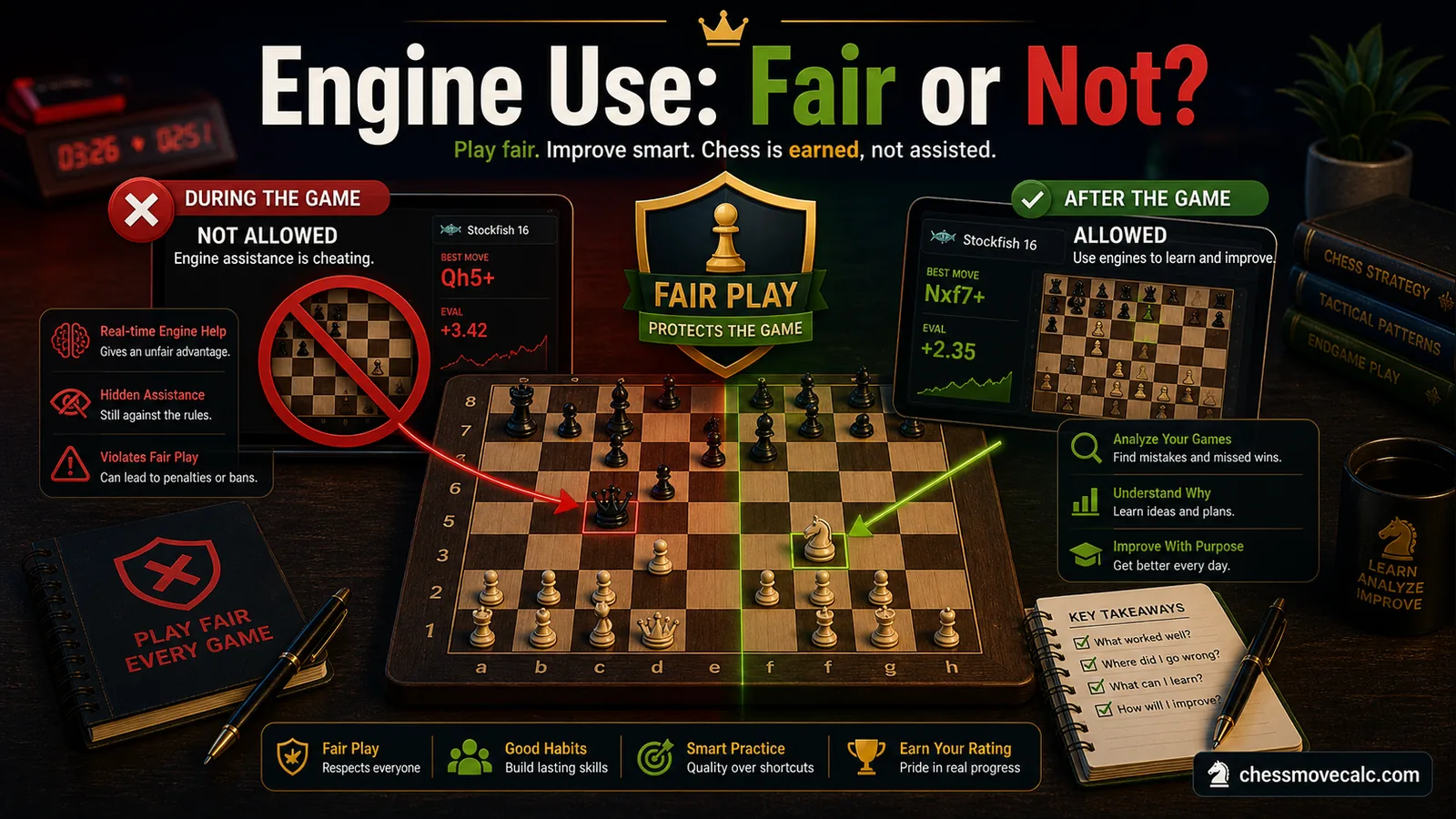
the line must be defined clearly before fair-play discussion becomes useful.
Searches around chess cheats, helpers, and engine assistance often mix genuine curiosity with harmful intent. A trustworthy page has to answer the fair-play question clearly without turning into a guide for abuse.
The core principle is straightforward: live outside assistance in a normal game is cheating. That includes engine lines, move suggestions, helper overlays, second-device analysis, or any other tool that changes your decision while the game is in progress.
That clarity matters because the same software can be perfectly legal in one context and completely forbidden in another. Post-game review is good training. Live engine help is not. The timing is the difference.
This page is therefore about rule clarity, not about shortcuts. It complements the cheat-detection guide by explaining the behavior side rather than the detection side.
It also helps position ChessMoveCalc correctly: as a learning and analysis site, not as a live-game crutch.
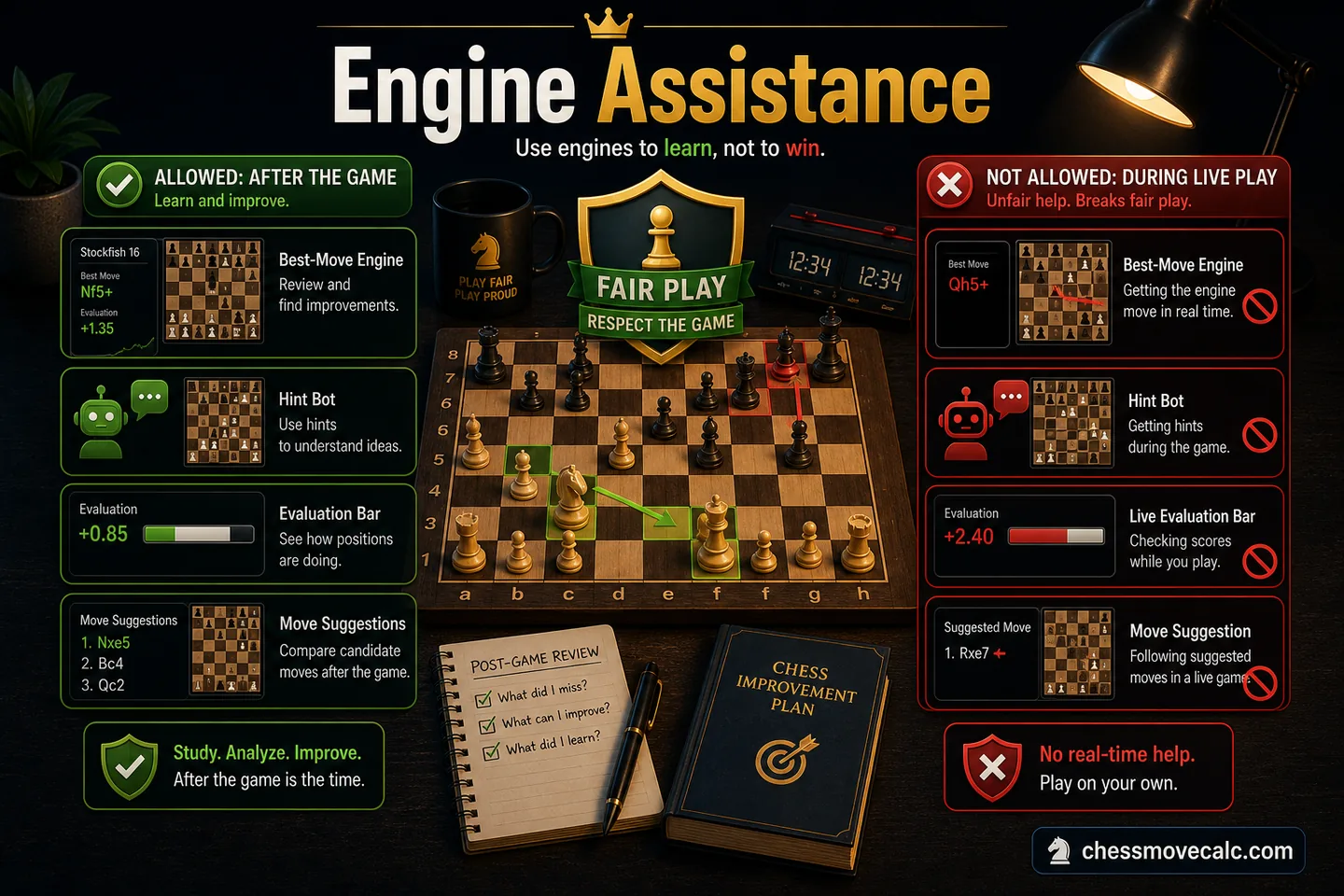
What counts as engine assistance
Engine assistance includes any outside tool that influences your move choice during the game. A second device with analysis running is still assistance even if it is not the main screen. A helper overlay that points toward good moves is still assistance even if it does not announce mate in five.
That is where a lot of online discussion becomes either too vague or too reckless. The issue is the unfair decision support, not only the exact shape of the tool. That is why rebranding cheating as a helper does not change the fair-play problem.
The goal here is to explain the topic clearly without making the page harmful or sloppy.
- A second device with analysis running is still assistance even if it is not the main screen.
- A helper overlay that points toward good moves is still assistance even if it does not announce mate in five.
- The issue is the unfair decision support, not only the exact shape of the tool.
- That is why rebranding cheating as a helper does not change the fair-play problem.
Simple test
If the tool helps you choose a live move that you would not have found on your own, it crosses the line.
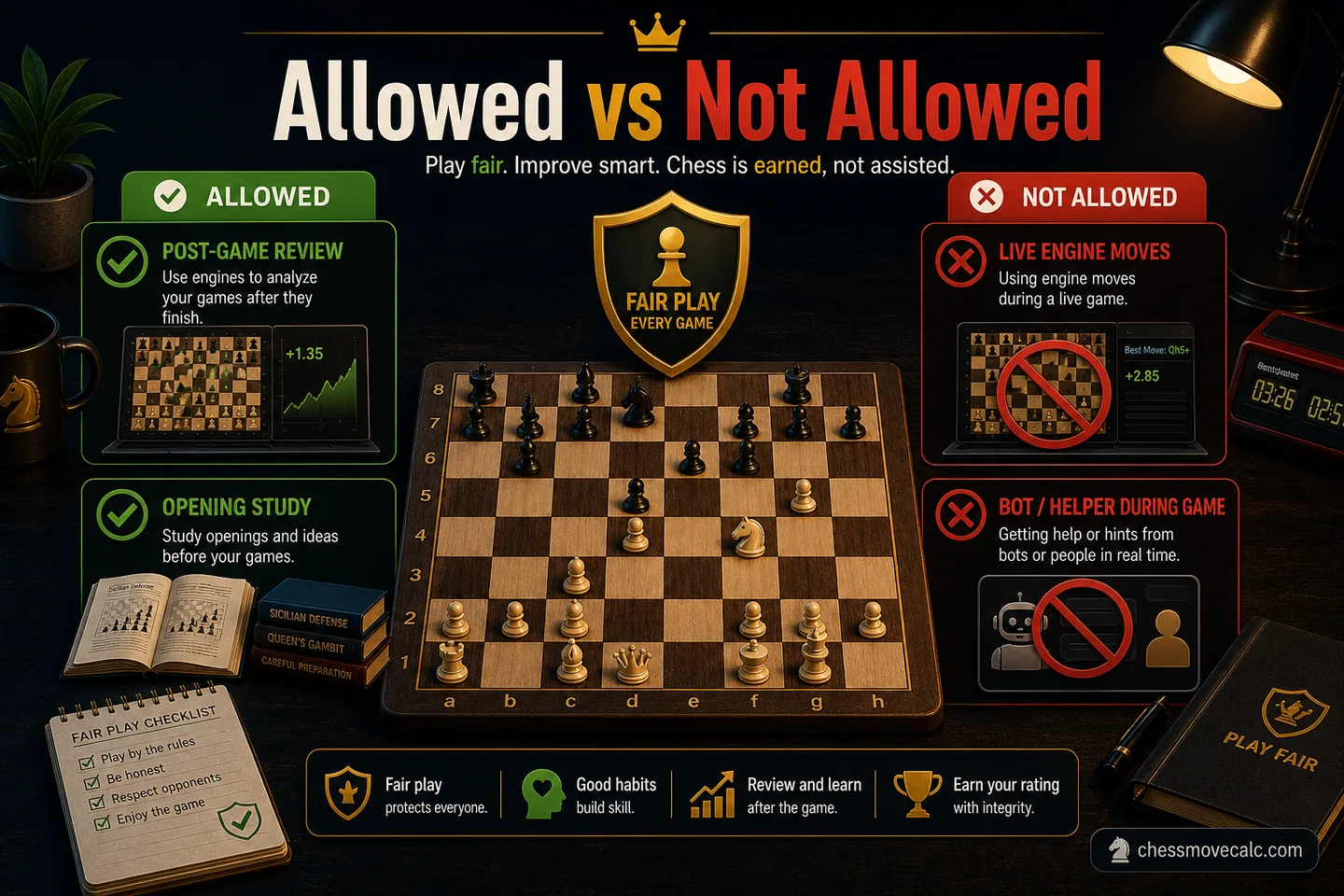
players need a clean allowed-versus-not-allowed map more than they need moral grandstanding.
What is allowed and what is not
The clearest distinction is between training, review, and analysis after the game versus assistance during the game. Post-game engine review, puzzles, lessons, and self-analysis are normal improvement tools. Live consultation with an engine, helper app, or external suggestion source is not normal fair play.
That is where a lot of online discussion becomes either too vague or too reckless. That distinction applies whether the event is casual online play, serious rated play, or official competition. The exact platform wording can vary, but the principle is remarkably consistent.
- Post-game engine review, puzzles, lessons, and self-analysis are normal improvement tools.
- Live consultation with an engine, helper app, or external suggestion source is not normal fair play.
- That distinction applies whether the event is casual online play, serious rated play, or official competition.
- The exact platform wording can vary, but the principle is remarkably consistent.
Best legal habit
Think first, play the game honestly, and review with tools only after the result is finished.
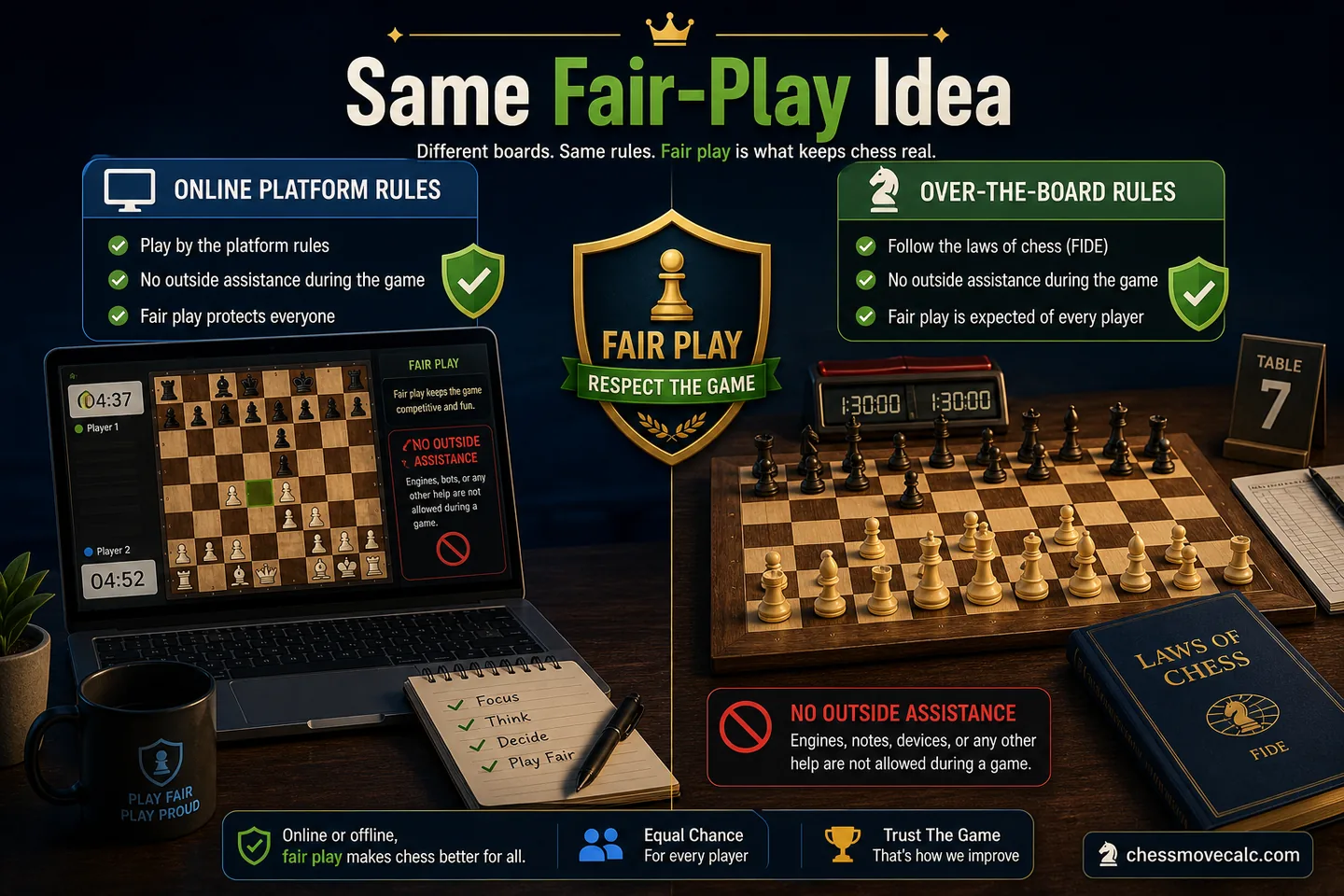
contexts differ in procedure, but the central fair-play idea is the same.
Online platform rules vs over-the-board rules
Outside assistance that changes live moves is prohibited whether the game is on a website or over a physical board. Online platforms define fair play through site rules and detection systems. Over-the-board competition uses tournament regulations, arbiters, and anti-cheating controls.
That is where a lot of online discussion becomes either too vague or too reckless. The enforcement mechanism changes, but the ethical line does not. That is why trying to hide behind context wording usually misses the real issue.
- Online platforms define fair play through site rules and detection systems.
- Over-the-board competition uses tournament regulations, arbiters, and anti-cheating controls.
- The enforcement mechanism changes, but the ethical line does not.
- That is why trying to hide behind context wording usually misses the real issue.
Shared principle
Live move assistance is the problem, not the platform used to deliver the move.
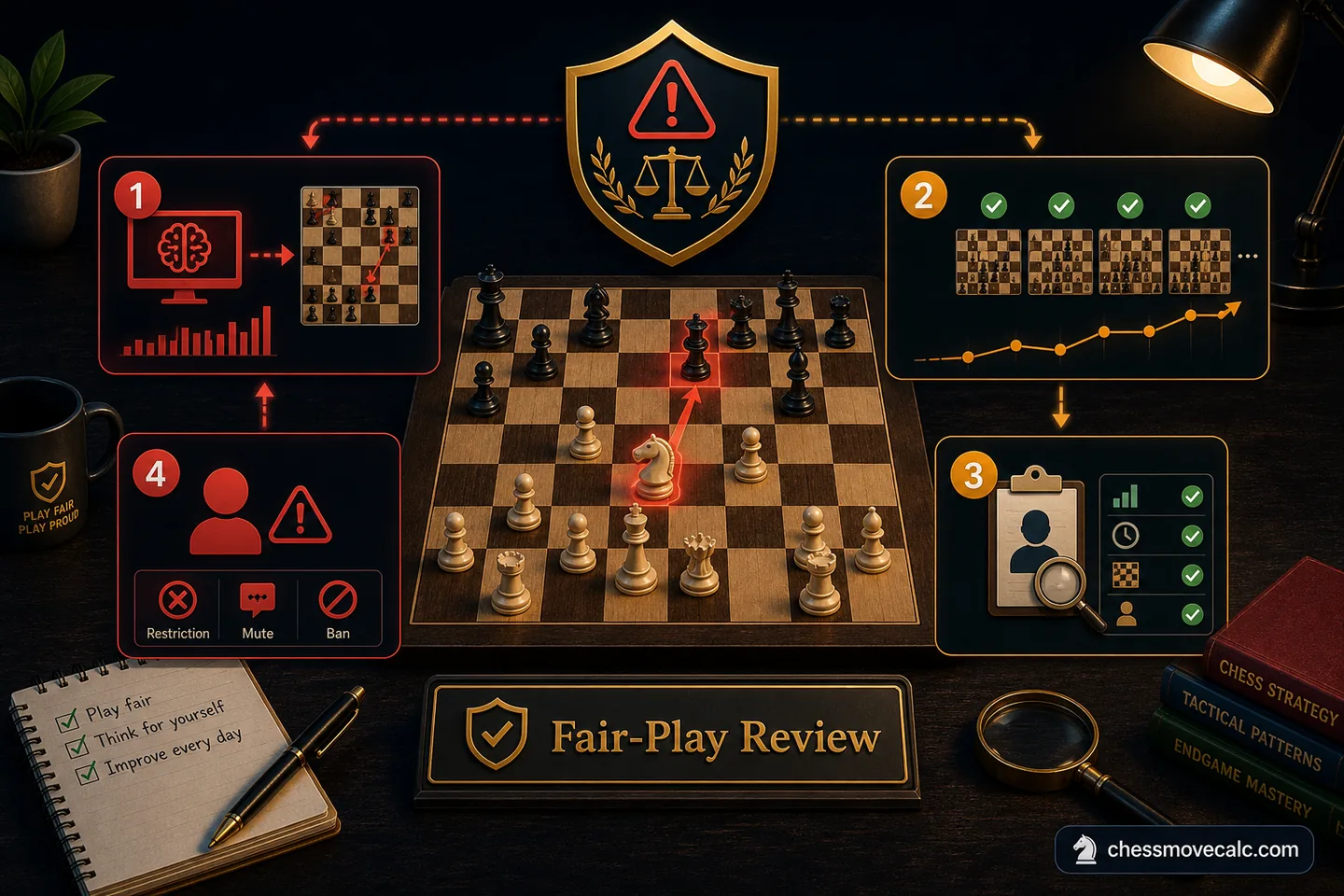
many players try to soften the language by saying they used a helper and not a full engine, but the fairness problem remains.
Why players get banned for “helper” behavior
Partial outside help still changes decision quality, practical outcomes, and rating integrity. Even one critical hint can alter the result of a close game. That distorts ratings, trust, and the learning value of competition.
That is where a lot of online discussion becomes either too vague or too reckless. A player does not need full move-by-move automation to break fair play. A smaller assist is still an unfair assist.
- Even one critical hint can alter the result of a close game.
- That distorts ratings, trust, and the learning value of competition.
- A player does not need full move-by-move automation to break fair play.
- A smaller assist is still an unfair assist.
Do not rationalize it
Calling it small help does not make it fair help.
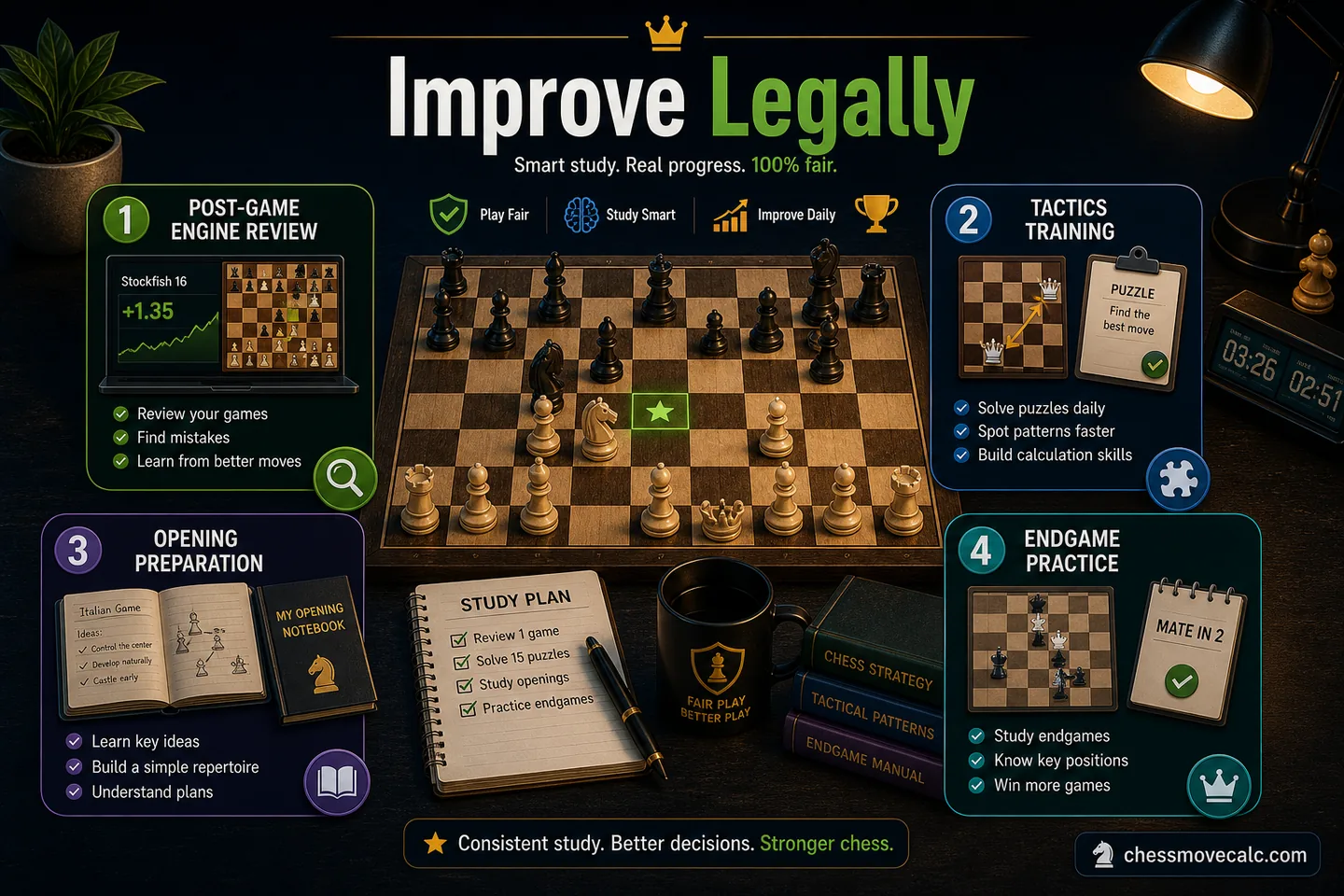
the fastest ethical improvement usually comes from strong review habits, not from corrupting live games.
Better legal ways to improve fast
Players who want to improve quickly already have many powerful legal options available. Post-game engine review teaches more than live dependence ever will. Puzzle training, slower games, and honest game analysis build real transferable skill.
That is where a lot of online discussion becomes either too vague or too reckless. That skill survives when the tool is gone, which is the whole point of improvement. Cheating only creates borrowed strength, not owned strength.
- Post-game engine review teaches more than live dependence ever will.
- Puzzle training, slower games, and honest game analysis build real transferable skill.
- That skill survives when the tool is gone, which is the whole point of improvement.
- Cheating only creates borrowed strength, not owned strength.
Best alternative
Use game review, puzzle training, and post-position analysis after the game instead.
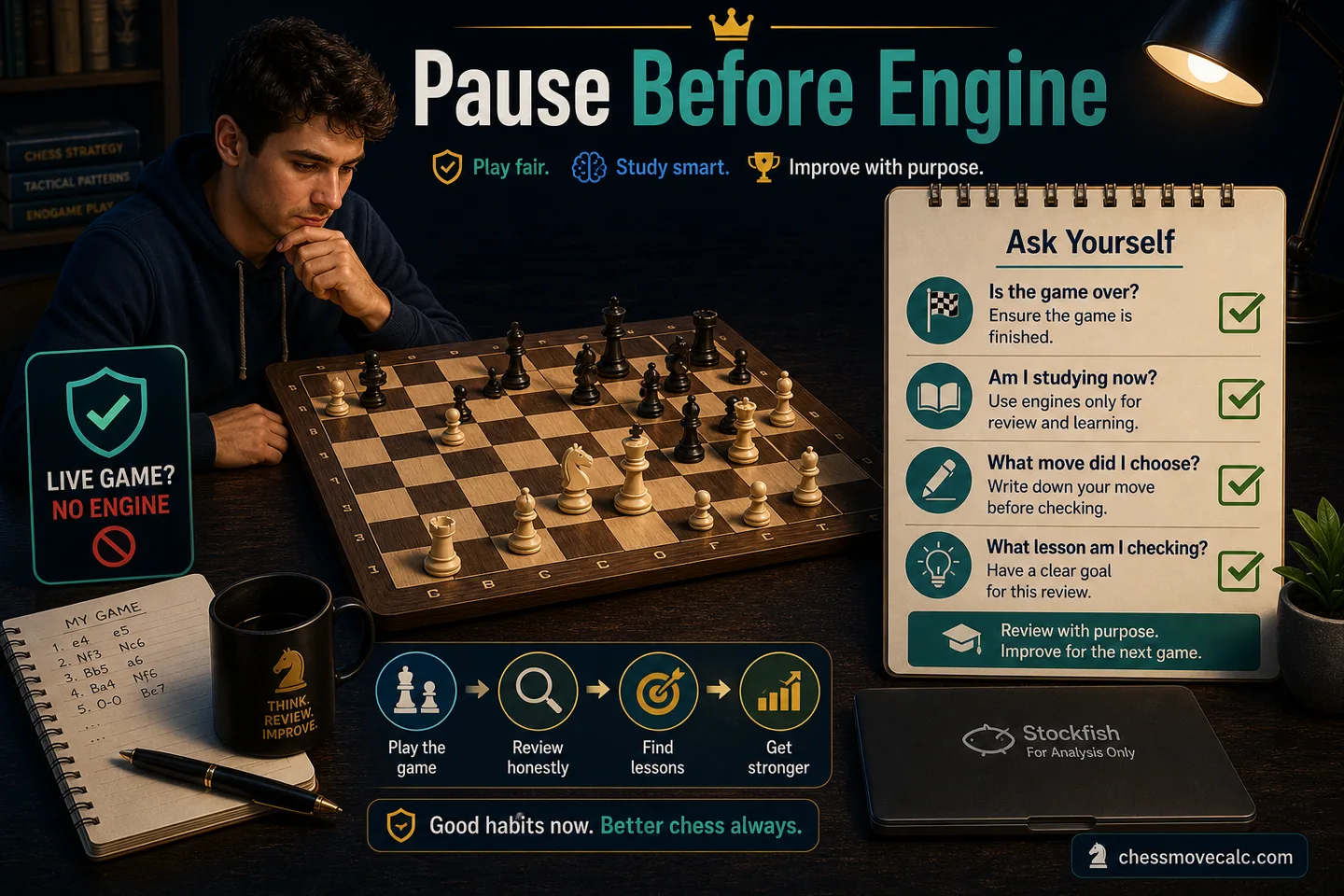
A simple self-check protects both fair play and the long-term value of your study.
Questions honest players should ask before opening an engine
The safest way to use strong tools is to ask the context question before the analysis question. Is the game already over, or am I still making live decisions that matter? Am I reviewing to learn, or am I looking for help that changes the competition itself?
Would I still feel comfortable describing this exact tool use publicly as fair? Could I get the same learning benefit by finishing the game honestly and reviewing afterward?
A stronger habit is to ask what decision this concept should improve the very next time it appears. Those questions make the ethical line much easier to respect in practice. They also keep the engine useful as a teacher instead of corrupting it into a shortcut.
That bridge is often the missing ingredient between reading an article once and truly keeping the lesson when the position becomes real.
- Is the game already over, or am I still making live decisions that matter?
- Am I reviewing to learn, or am I looking for help that changes the competition itself?
- Would I still feel comfortable describing this exact tool use publicly as fair?
- Could I get the same learning benefit by finishing the game honestly and reviewing afterward?
- Those questions make the ethical line much easier to respect in practice.
- They also keep the engine useful as a teacher instead of corrupting it into a shortcut.
Practical takeaway
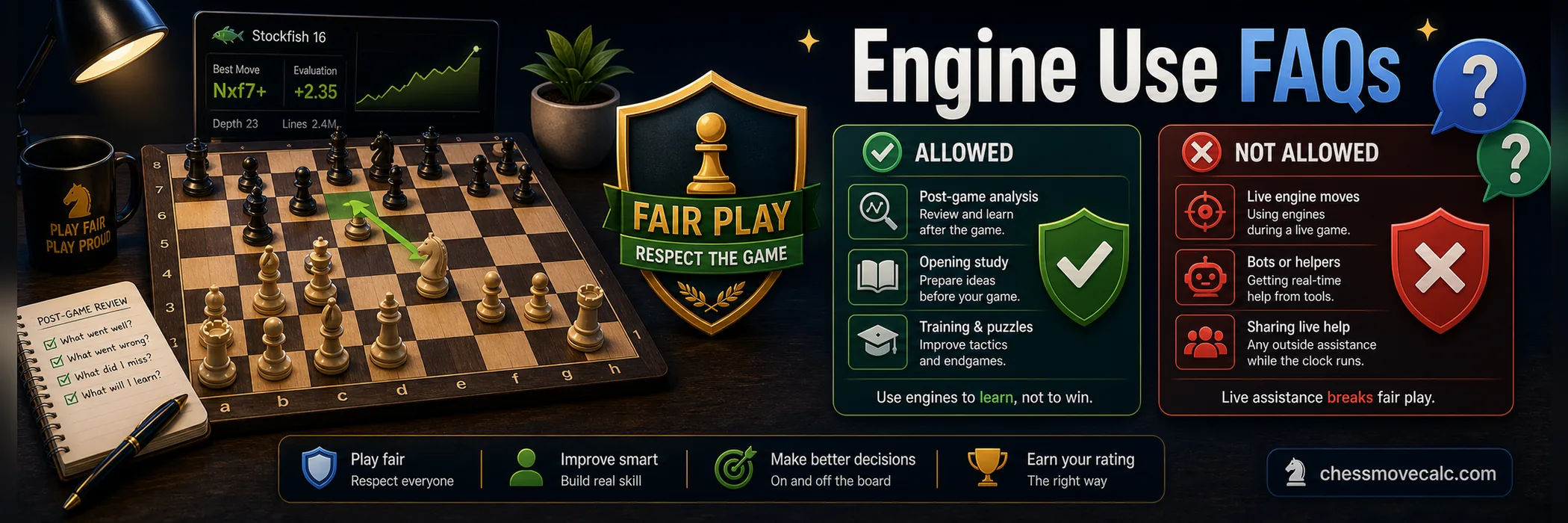
Is Using a Chess Engine During a Game Cheating? FAQs
Is using Stockfish during a live game cheating?
Yes. In normal play, live engine assistance is cheating.
Is post-game engine review allowed?
Yes. Reviewing after the game is one of the best legal ways to improve.
What about using a helper tool for just one move?
If it influences a live move, it still crosses the fair-play line.
Do online and over-the-board rules treat this differently?
The procedures differ, but the core principle against live outside assistance is the same.
Why do sites care about helper tools so much?
Because even partial assistance distorts results, ratings, and trust.
What is the fastest legal way to improve instead?
Play honestly, review afterward, solve puzzles, and study your recurring mistakes.
Use analysis tools the right way
Keep the game honest, then use tools afterward to learn from the position without crossing the fair-play line.