Detection works through patterns and context, not through one magical statistic
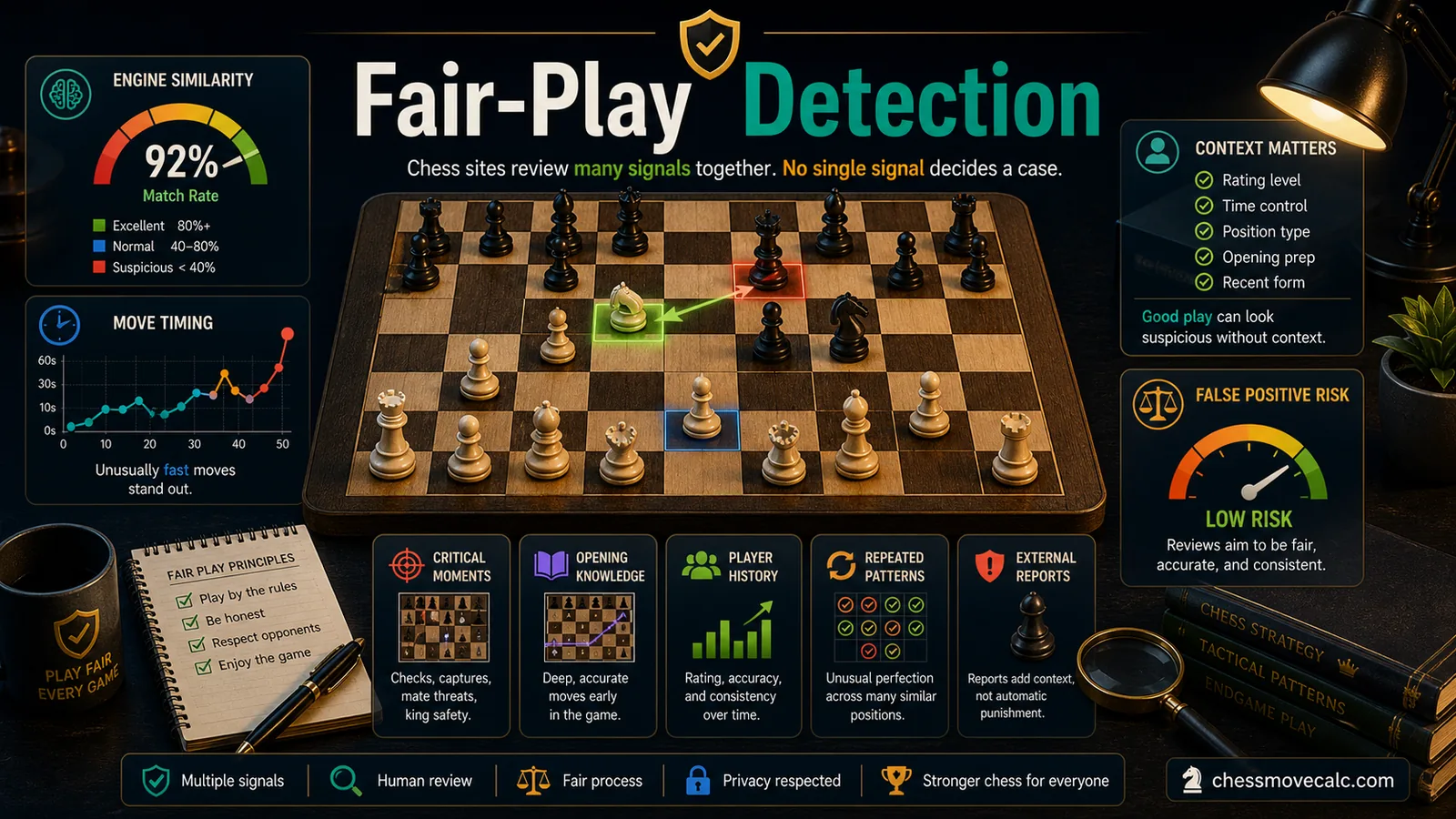
one isolated statistic rarely captures the difference between strong play, lucky tactics, and unfair assistance.
People are often too confident about cheat detection in both directions. Some assume one engine-match number proves everything. Others assume platforms know nothing at all. Both views are too simple.
A responsible explanation needs to avoid two mistakes at once: it should not become a sensational scare page, and it should not become a “how to get away with it” page. The right approach is to explain why platforms look at pattern clusters, timing behavior, and broader context over many games, especially when outside help may have affected live game decisions.
That is what this page does. It complements the fair-play clarification page by shifting from ethics into detection logic while staying firmly non-enabling.
The result should be reassuring to honest players and useless to people hoping for evasion tricks.
That is exactly the balance a fair-play authority page should aim for.
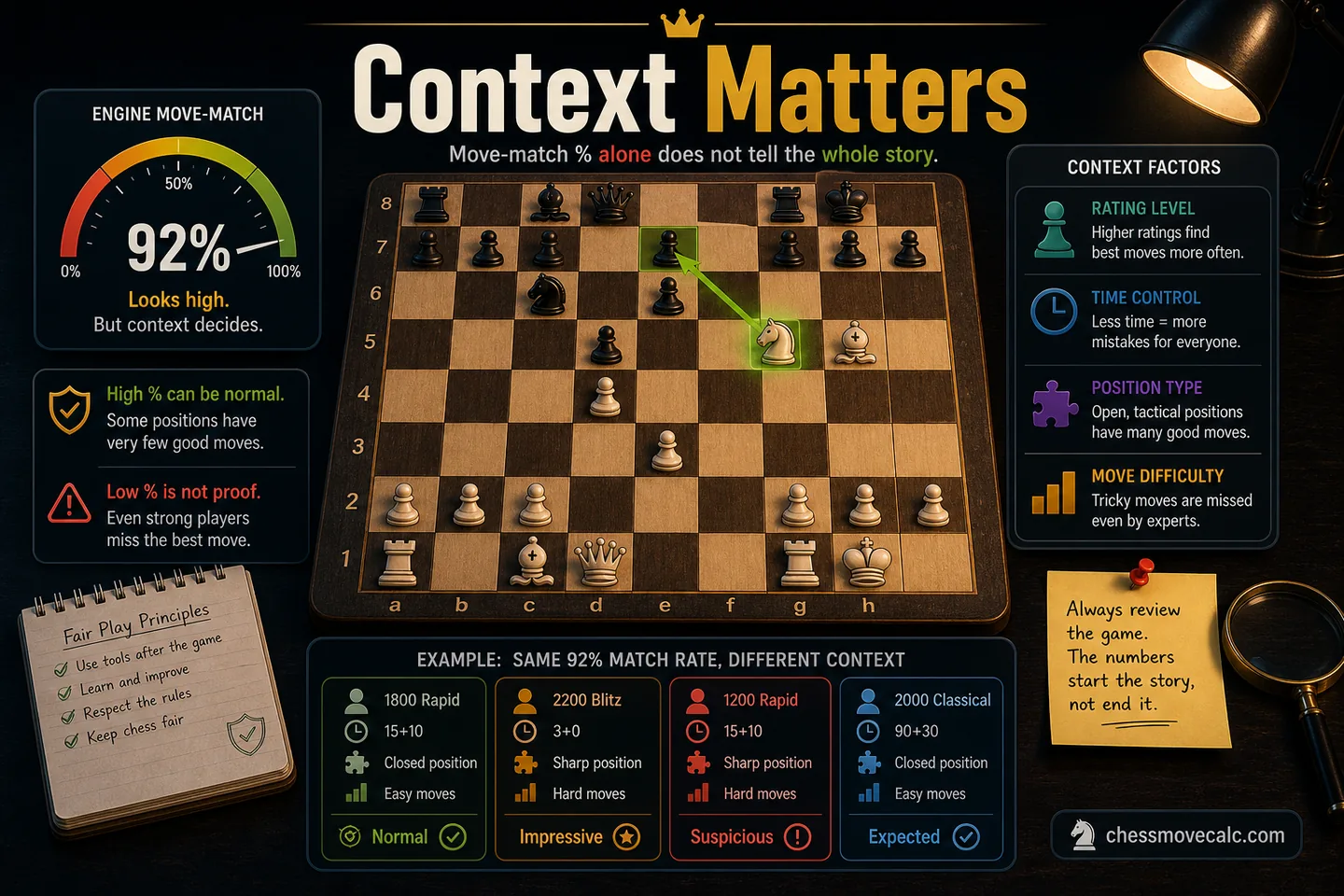
Why move-match percentage alone is not enough
Humans can match strong engine choices in many positions, especially when the move is natural or forced. That is why one high match game is not automatically proof of cheating. The strength of the signal changes with position difficulty, consistency, and wider behavioral context.
That is where a lot of online discussion becomes either too vague or too reckless. Serious review therefore looks beyond a single headline number. This protects both fairness and honest players from shallow conclusions.
The goal here is to explain the topic clearly without making the page harmful or sloppy.
- That is why one high match game is not automatically proof of cheating.
- The strength of the signal changes with position difficulty, consistency, and wider behavioral context.
- Serious review therefore looks beyond a single headline number.
- This protects both fairness and honest players from shallow conclusions.
Healthy expectation
Detection systems are strongest when they combine signals instead of worshipping one statistic.
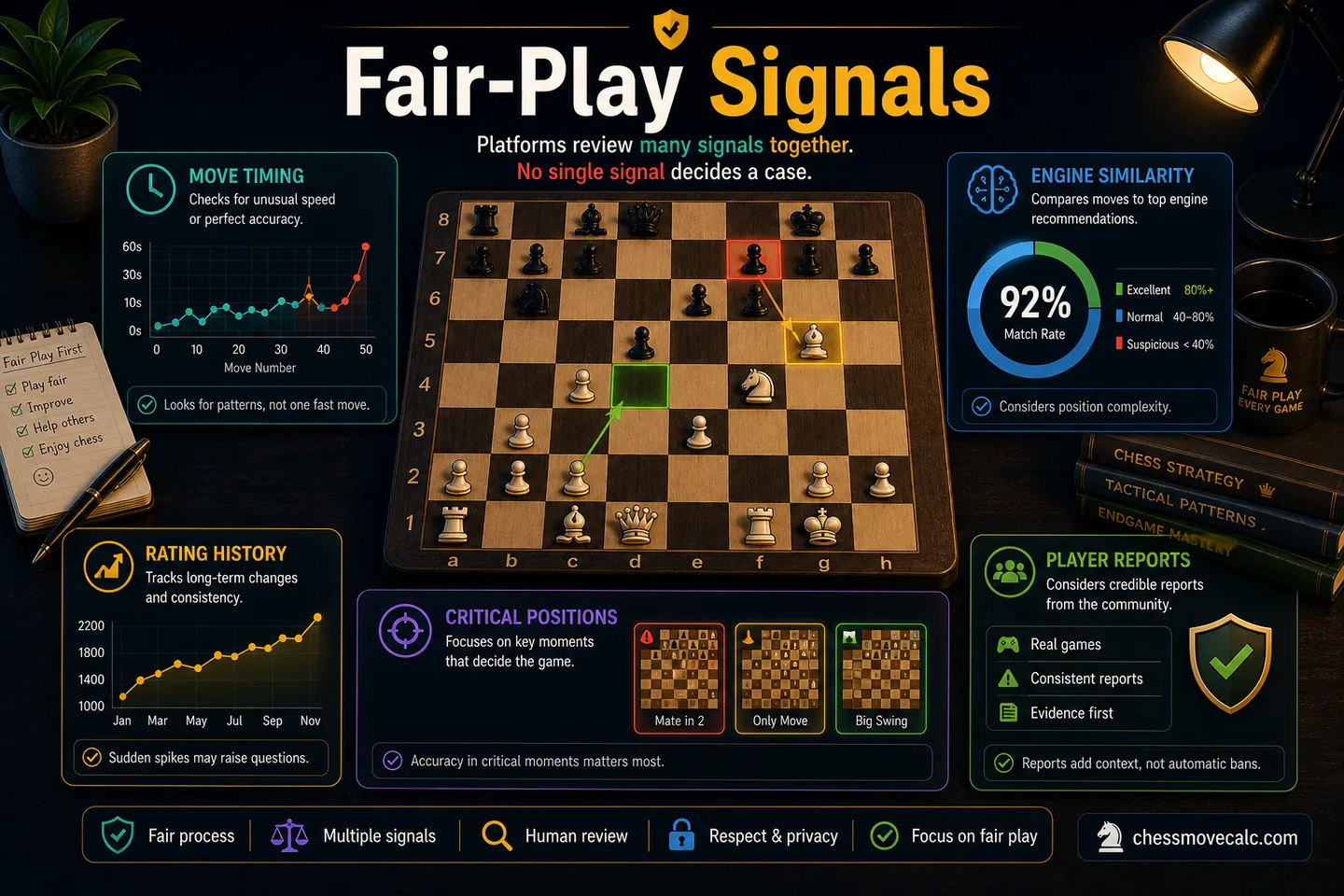
platforms care about patterns because cheating rarely reveals itself cleanly through one metric.
What signals platforms actually review
Review often combines move-quality trends, timing behavior, account signals, and clusters across multiple games. Timing can matter because suspicious help often changes the rhythm of difficult decisions. Consistency across many critical positions matters more than one sharp tactical shot.
That is where a lot of online discussion becomes either too vague or too reckless. Account behavior and other contextual signals can strengthen or weaken the interpretation. The big lesson is that detection is pattern-based, not single-game superstition.
- Timing can matter because suspicious help often changes the rhythm of difficult decisions.
- Consistency across many critical positions matters more than one sharp tactical shot.
- Account behavior and other contextual signals can strengthen or weaken the interpretation.
- The big lesson is that detection is pattern-based, not single-game superstition.
Read the big picture
Strong detection asks how the behavior looks over time, not only how one game looked in isolation.
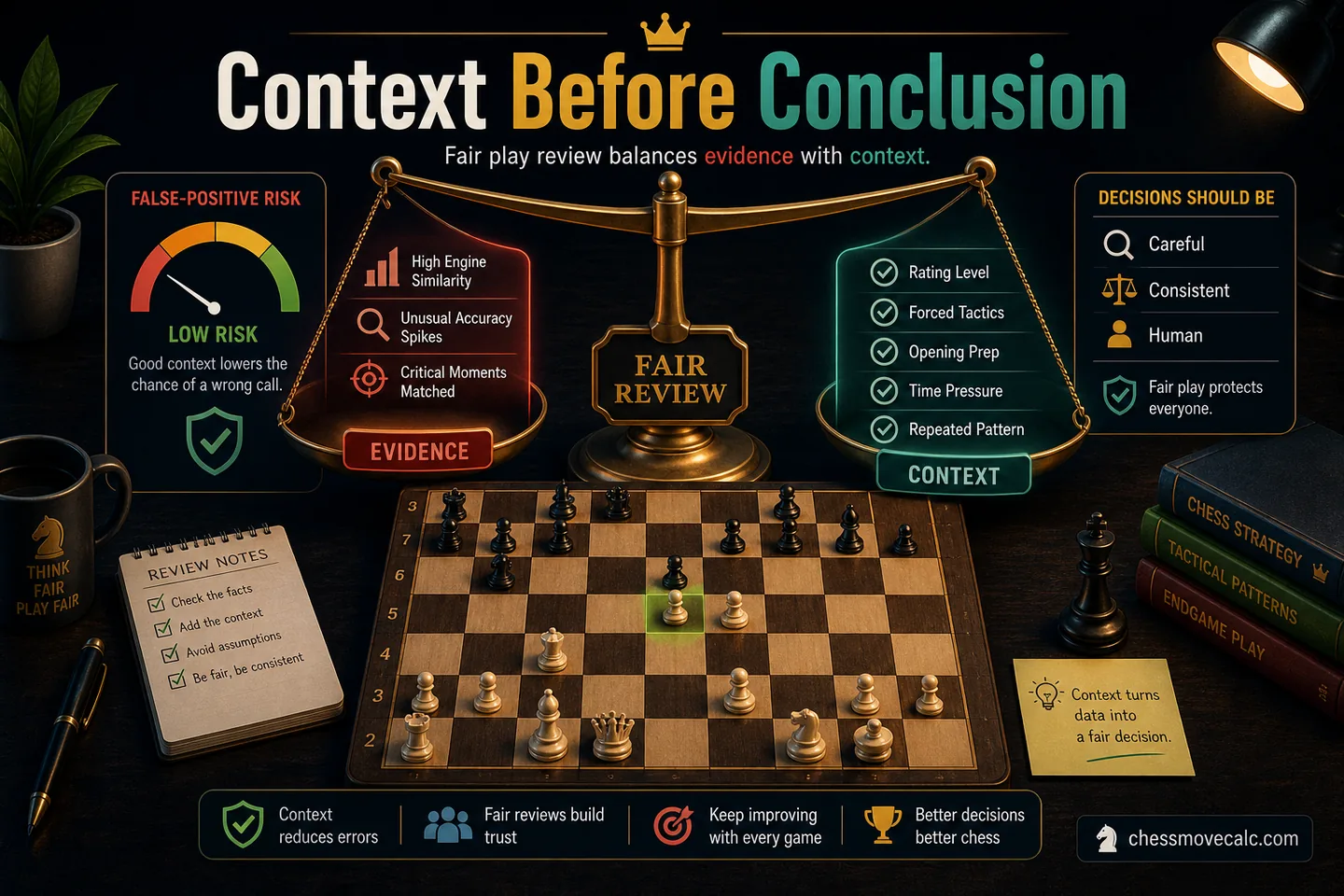
a trustworthy system must care about accuracy in both directions: catching cheating and protecting honest play.
Why context and false-positive risk matter
That is why context, sample size, and careful review matter so much. Honest players can play great games, find tactical streaks, or score surprising upsets. That means suspicious-looking moments still need context before strong conclusions are drawn.
That is where a lot of online discussion becomes either too vague or too reckless. Careful systems reduce false positives by layering signals and reviewing patterns over time. This is one reason one-number internet accusations are usually less reliable than they sound.
- Honest players can play great games, find tactical streaks, or score surprising upsets.
- That means suspicious-looking moments still need context before strong conclusions are drawn.
- Careful systems reduce false positives by layering signals and reviewing patterns over time.
- This is one reason one-number internet accusations are usually less reliable than they sound.
Context matters
Any explanation that pretends cheat detection is instant and trivial is usually oversimplifying the process.
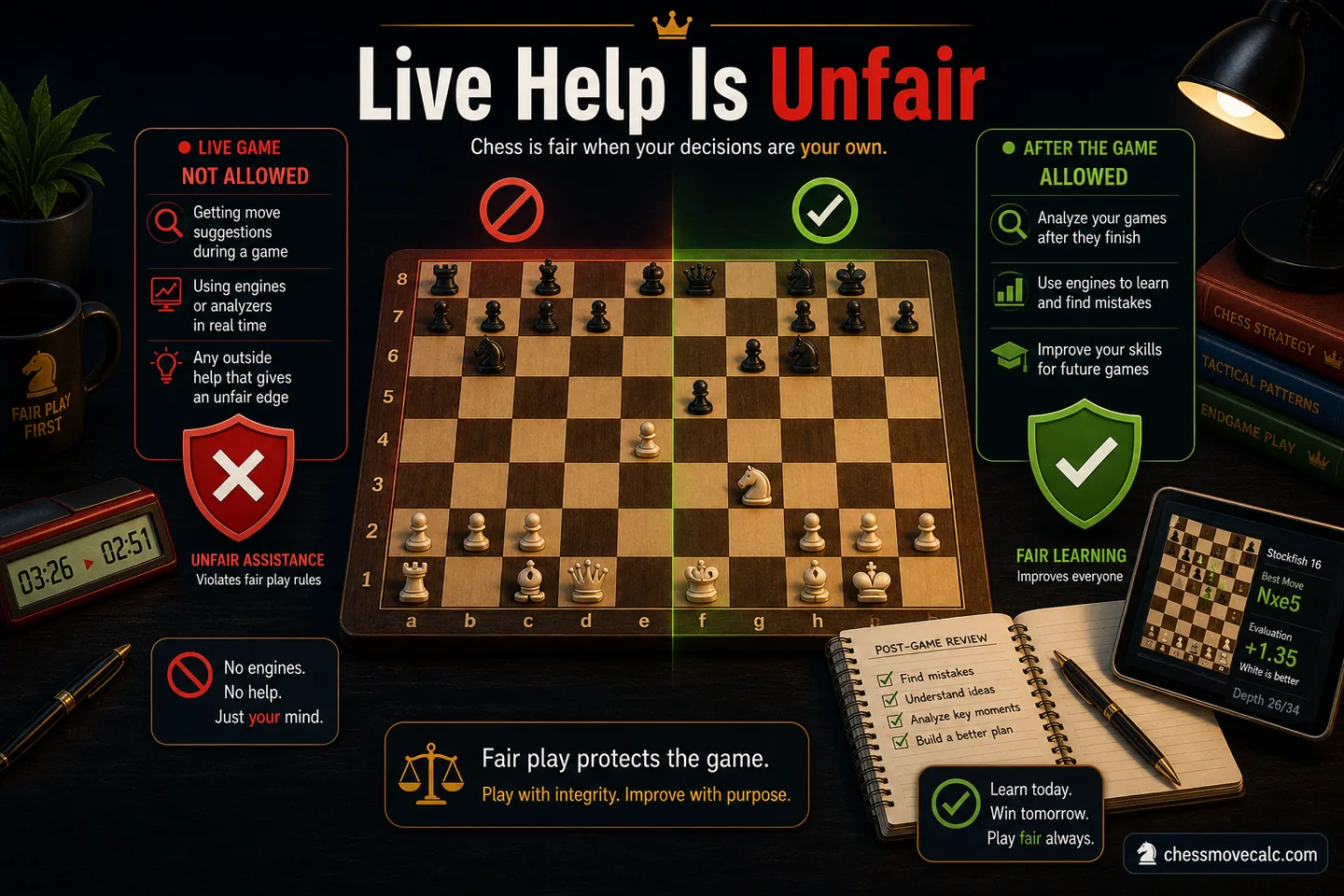
detection discussion should still return to the fairness principle, not only to the technology.
Why helper tools still count as unfair assistance
Partial help still changes move choice, which means it still distorts competition even if the tool is less obvious than a full engine window. A hint at the critical moment can matter more than many average moves. That is why platforms care about subtle assistance as well as obvious analysis use.
That is where a lot of online discussion becomes either too vague or too reckless. The goal is honest play, not merely avoiding the most blatant version of cheating. Fair play is about the decision process, not about whether the tool looked discreet.
- A hint at the critical moment can matter more than many average moves.
- That is why platforms care about subtle assistance as well as obvious analysis use.
- The goal is honest play, not merely avoiding the most blatant version of cheating.
- Fair play is about the decision process, not about whether the tool looked discreet.
Ethics and detection meet here
The same behavior can be both unfair in principle and suspicious in pattern-based review.

the best advice for honest players is calm and simple, not paranoid.
What honest players should do if they are worried
Play normally, review legally, avoid second-screen habits, and use official support channels if a platform process requires it. Do not let fear of detection make you play unnaturally. Keep your study tools in the right post-game context and your live play clean.
That is where a lot of online discussion becomes either too vague or too reckless. If you have account questions, handle them through normal platform channels instead of internet panic. Honest habits are usually the strongest protection because they keep your behavior consistent and legitimate.
- Do not let fear of detection make you play unnaturally.
- Keep your study tools in the right post-game context and your live play clean.
- If you have account questions, handle them through normal platform channels instead of internet panic.
- Honest habits are usually the strongest protection because they keep your behavior consistent and legitimate.
Simple rule
Play the game yourself, review afterward, and let fair-play systems do their job without feeding anxiety.
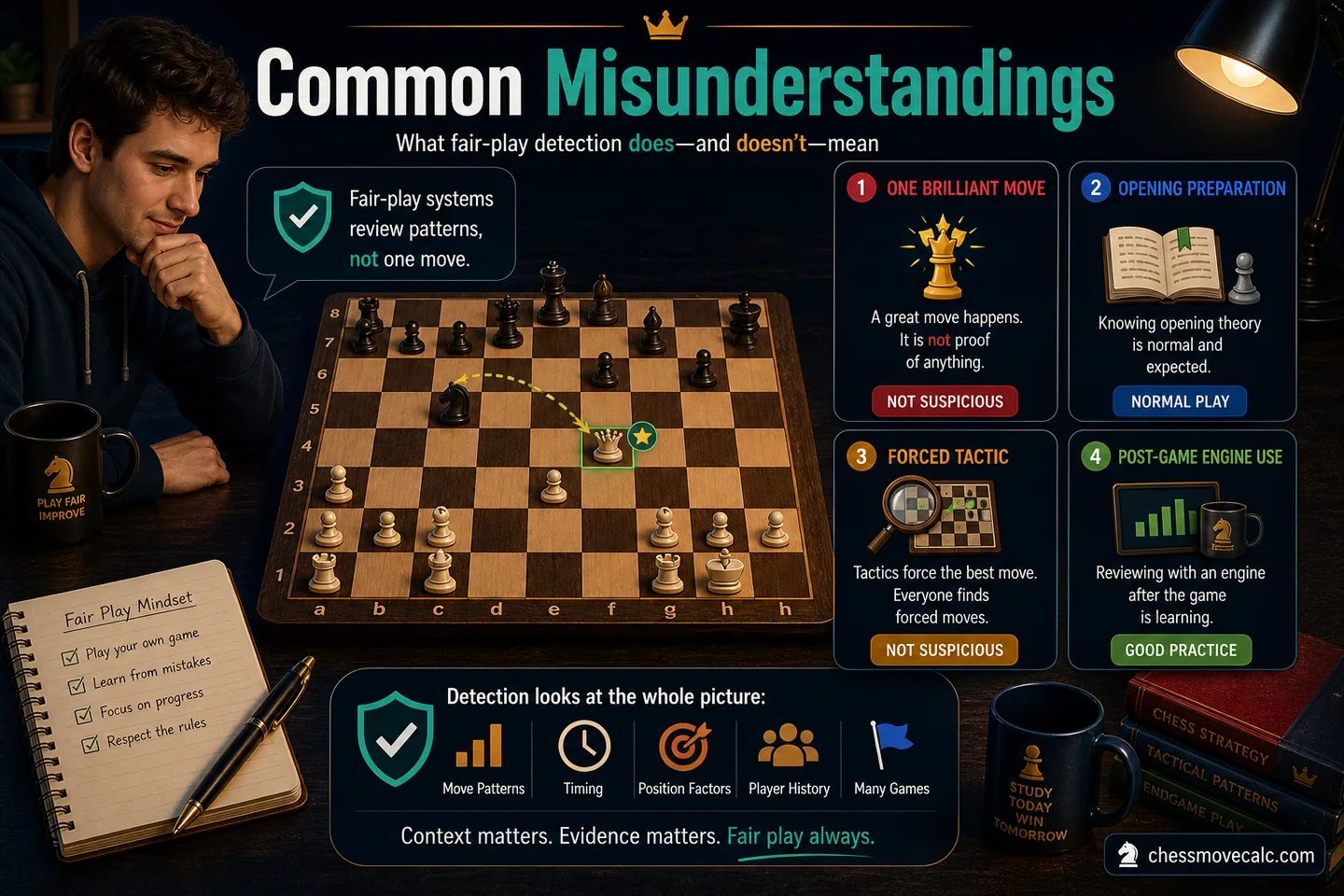
Calm expectations help honest players interpret detection topics more responsibly.
What honest players often misunderstand about fair-play review
Good fair-play writing should reassure honest players without pretending detection is trivial or infallible. One brilliant game does not usually define how a full account will be interpreted. Pattern-based review is more nuanced than internet accusations often make it sound.
Honest players do themselves no favors by becoming paranoid about every strong move they find. Clean habits and legal study context are usually the most important things to control.
A stronger habit is to ask what decision this concept should improve the very next time it appears. A balanced understanding is healthier than either blind trust or constant fear. That balance is part of being a mature competitor too.
That bridge is often the missing ingredient between reading an article once and truly keeping the lesson when the position becomes real.
- One brilliant game does not usually define how a full account will be interpreted.
- Pattern-based review is more nuanced than internet accusations often make it sound.
- Honest players do themselves no favors by becoming paranoid about every strong move they find.
- Clean habits and legal study context are usually the most important things to control.
- A balanced understanding is healthier than either blind trust or constant fear.
- That balance is part of being a mature competitor too.
Practical takeaway
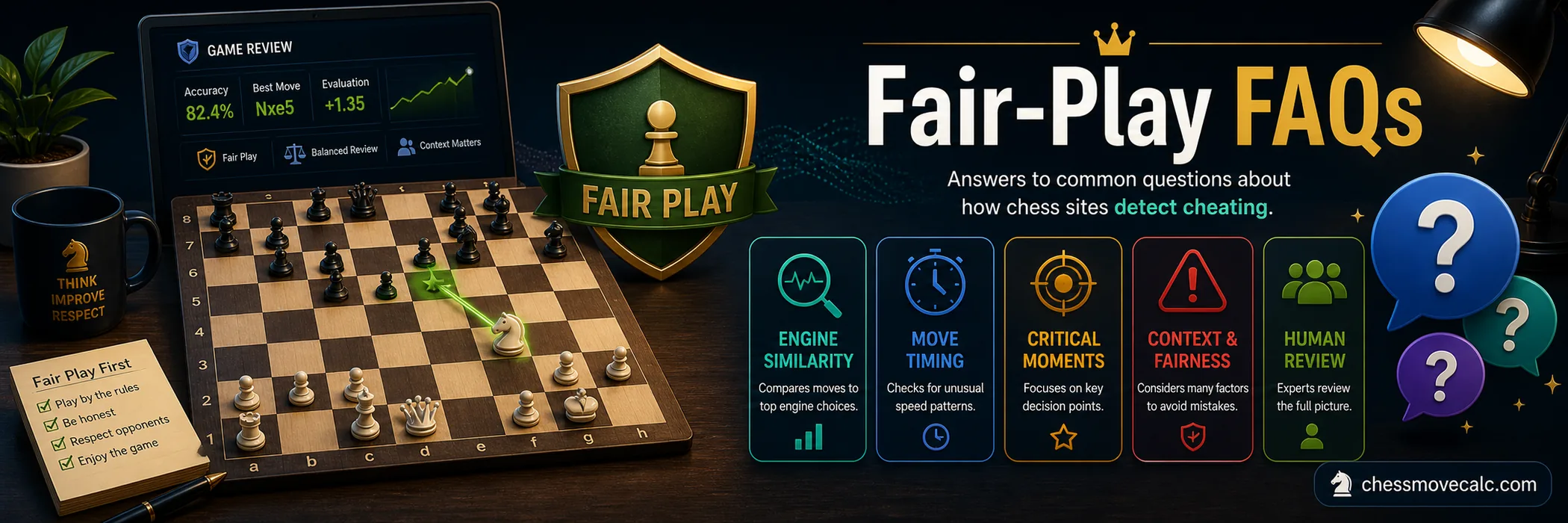
How Chess Sites Detect Cheating FAQs
Do chess sites only look at engine match percentage?
No. Serious review typically uses multiple signals and broader context.
Can a strong player be falsely flagged?
Platforms try to reduce that risk by reviewing patterns and context instead of relying on one stat.
Do timing patterns matter in cheat detection?
Yes. Timing can be one of several useful behavioral signals.
Why do helper tools still count?
Because even partial outside assistance changes live decisions and competitive fairness.
What should an honest player do if worried?
Play normally, review legally, avoid suspicious habits, and use official support if needed.
Why avoid detailed evasion talk?
Because responsible fair-play content should explain detection without helping people cheat better.
Keep your training clean and your review legal
Use tools after the game to improve, not during the game to distort the result.