The useful question is not how to bypass the filter. It is why the filter made that choice and what legitimate options remain.
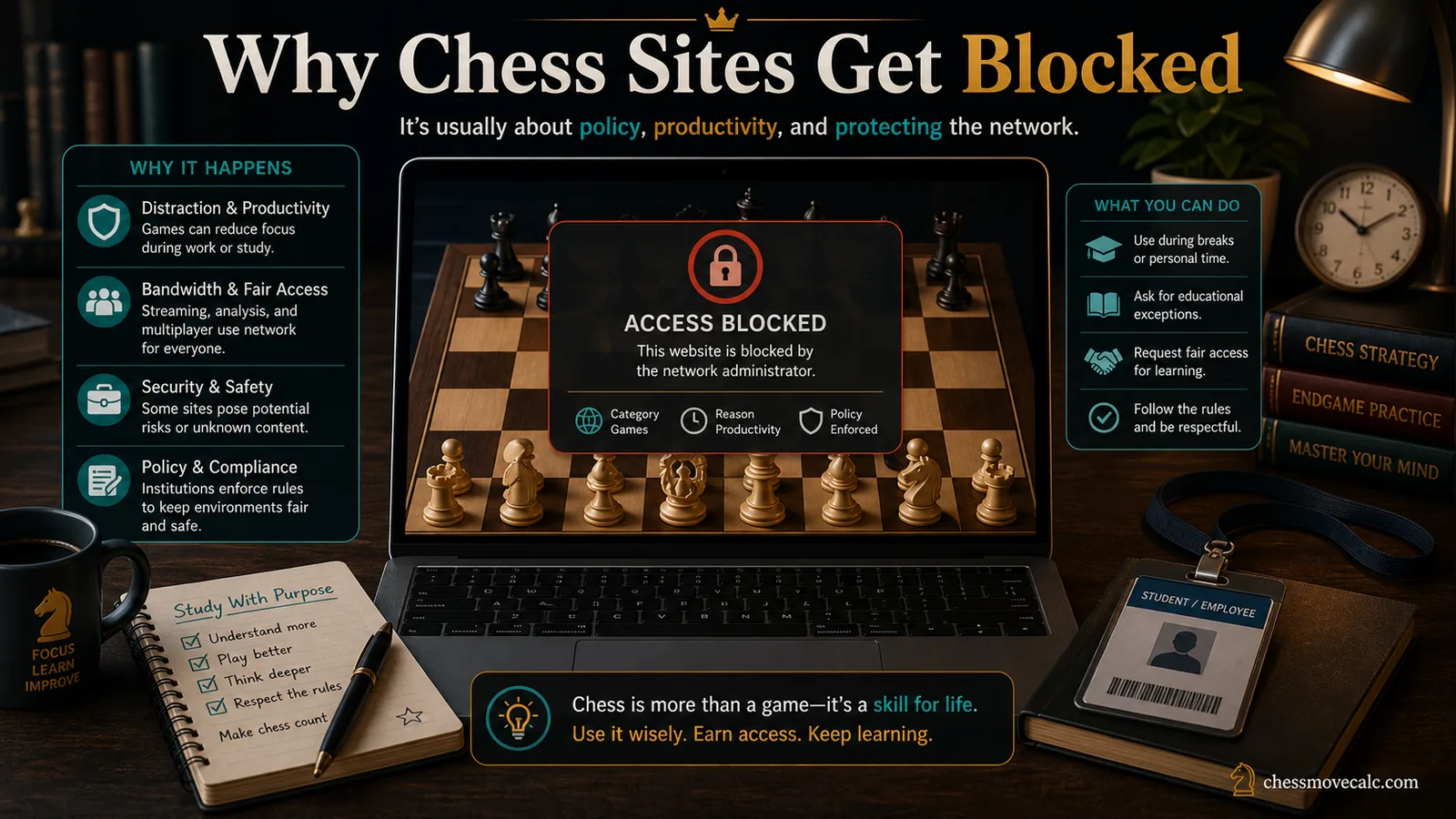
filters often classify by category and risk profile rather than by the individual user’s educational intent.
A blocked chess website does not necessarily have a technical fault. Schools and workplaces may restrict gaming categories, particular domains, or services that use substantial bandwidth. Check the explanation shown on the block page and the network’s acceptable-use policy before troubleshooting the browser.
This page is designed to fill that gap. It explains why chess pages get filtered, why some pages are allowed while others are not, and how students, parents, coaches, and employees can ask for access in policy-safe ways.
It intentionally avoids bypass tactics. That would be bad guidance and a weak long-term SEO position anyway. A better authority page supports responsible access and useful alternatives within the rules.
That framing also helps ChessMoveCalc act like an educational resource instead of like a generic “unblocked games” page.
In other words, this article is about context, classification, and legitimate access options.
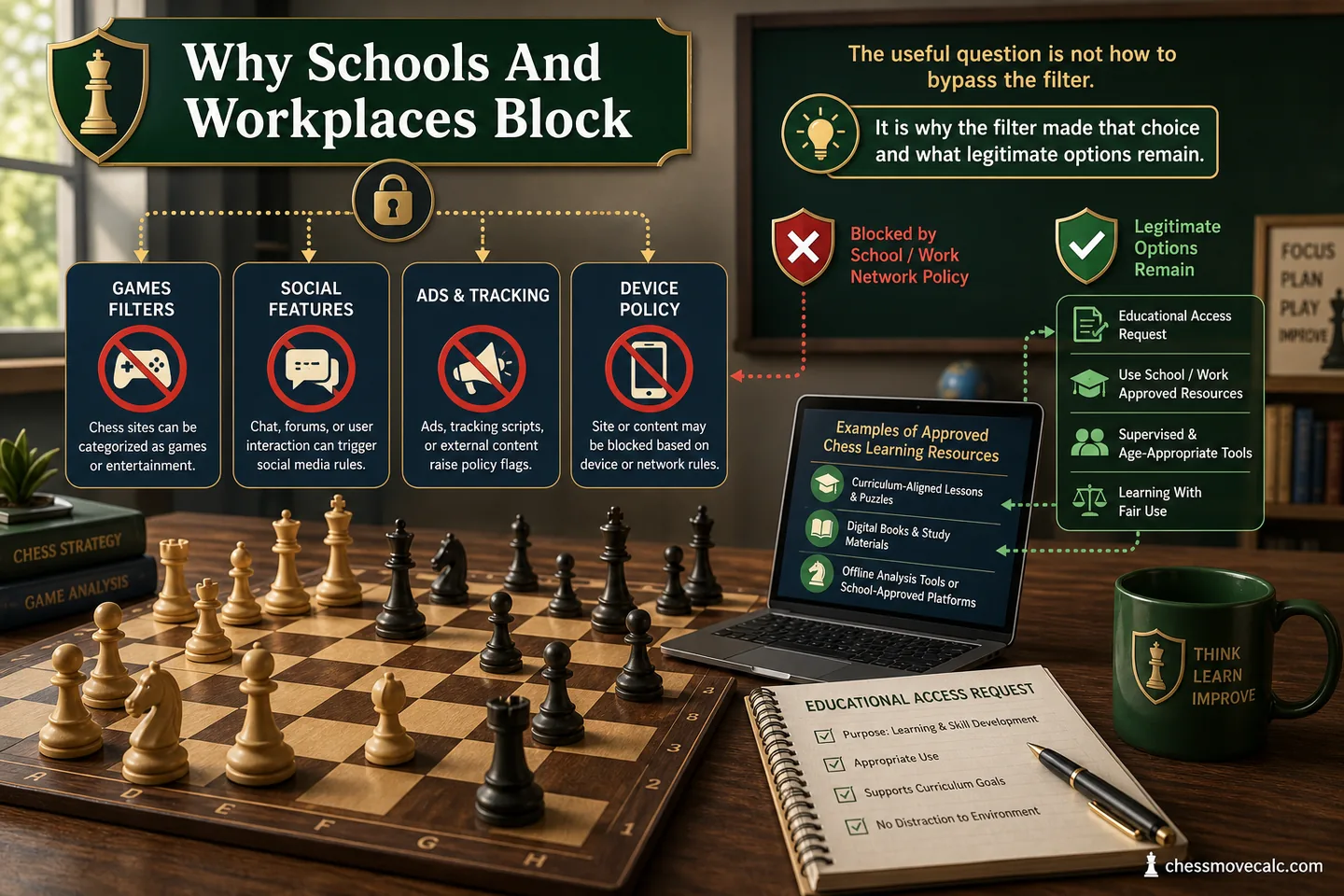
Why schools and workplaces block chess sites
A chess site can still look like a game platform to a network filter even if a student wants it for learning. Gaming categories are commonly restricted during work or school hours. Social features, accounts, ads, and live play can trigger stricter policies.
That is where a lot of online discussion becomes either too vague or too reckless. Institutional filters optimize for scalable rules, not for reading individual intent perfectly. That is why a useful learning site can still be caught by a broad block.
The goal here is to explain the topic clearly without making the page harmful or sloppy.
- Gaming categories are commonly restricted during work or school hours.
- Social features, accounts, ads, and live play can trigger stricter policies.
- Institutional filters optimize for scalable rules, not for reading individual intent perfectly.
- That is why a useful learning site can still be caught by a broad block.
Think like the filter
The filter usually sees category and risk signals first, not your personal reason for visiting.
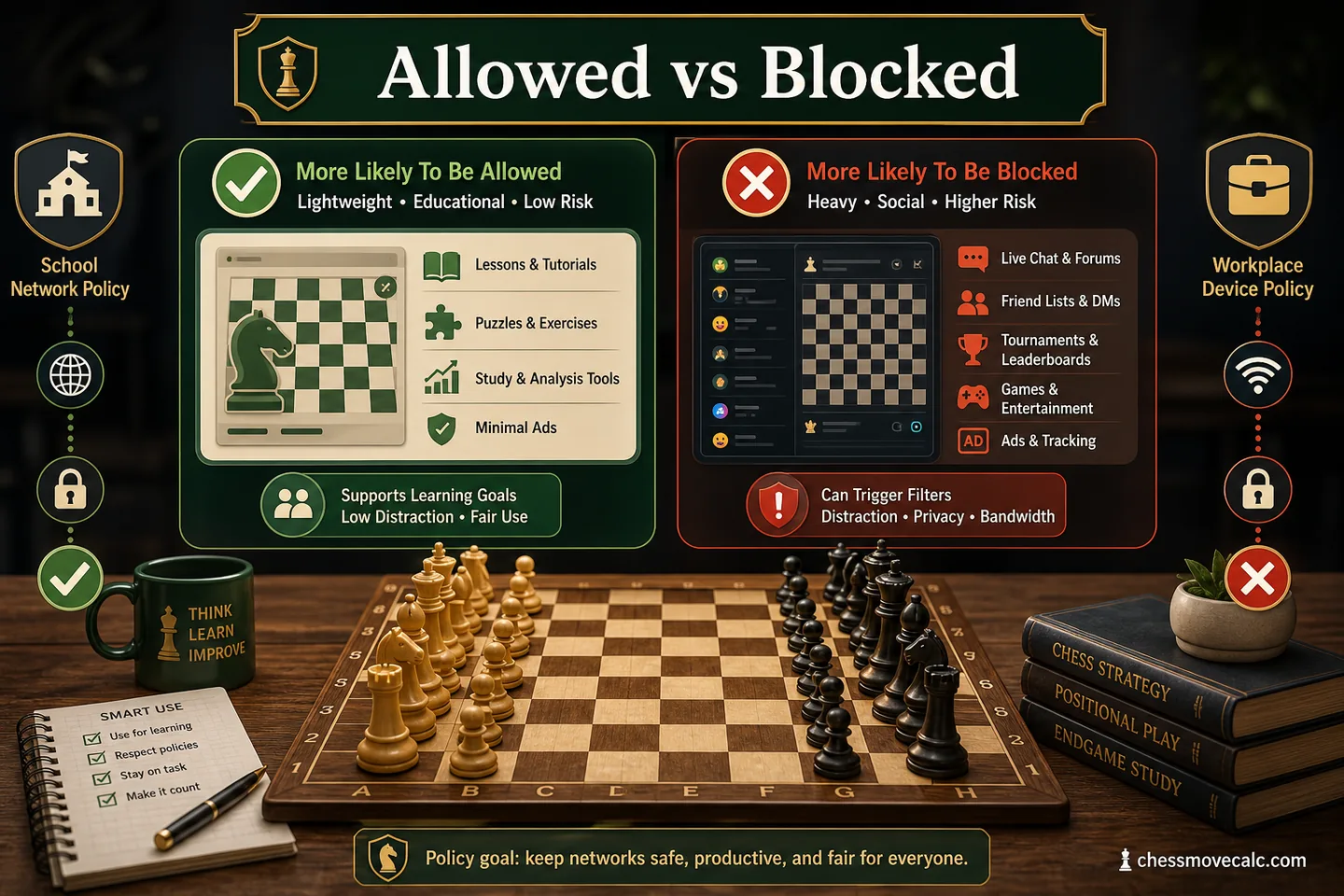
not all chess URLs look the same to the filtering system or to the policy team behind it.
Why some chess pages are allowed while others are blocked
One page may look like a simple lesson while another looks like a real-time platform with chat, accounts, and distractions. A static article can be easier to allow than a live multiplayer page. Tool pages may also be judged differently depending on how interactive they are.
That is where a lot of online discussion becomes either too vague or too reckless. That is why users sometimes see one chess page work and another one fail on the same network. The difference is usually policy and classification, not randomness.
- A static article can be easier to allow than a live multiplayer page.
- Tool pages may also be judged differently depending on how interactive they are.
- That is why users sometimes see one chess page work and another one fail on the same network.
- The difference is usually policy and classification, not randomness.
Useful perspective
A blocked homepage does not automatically mean every educational page on the same topic will be treated identically.
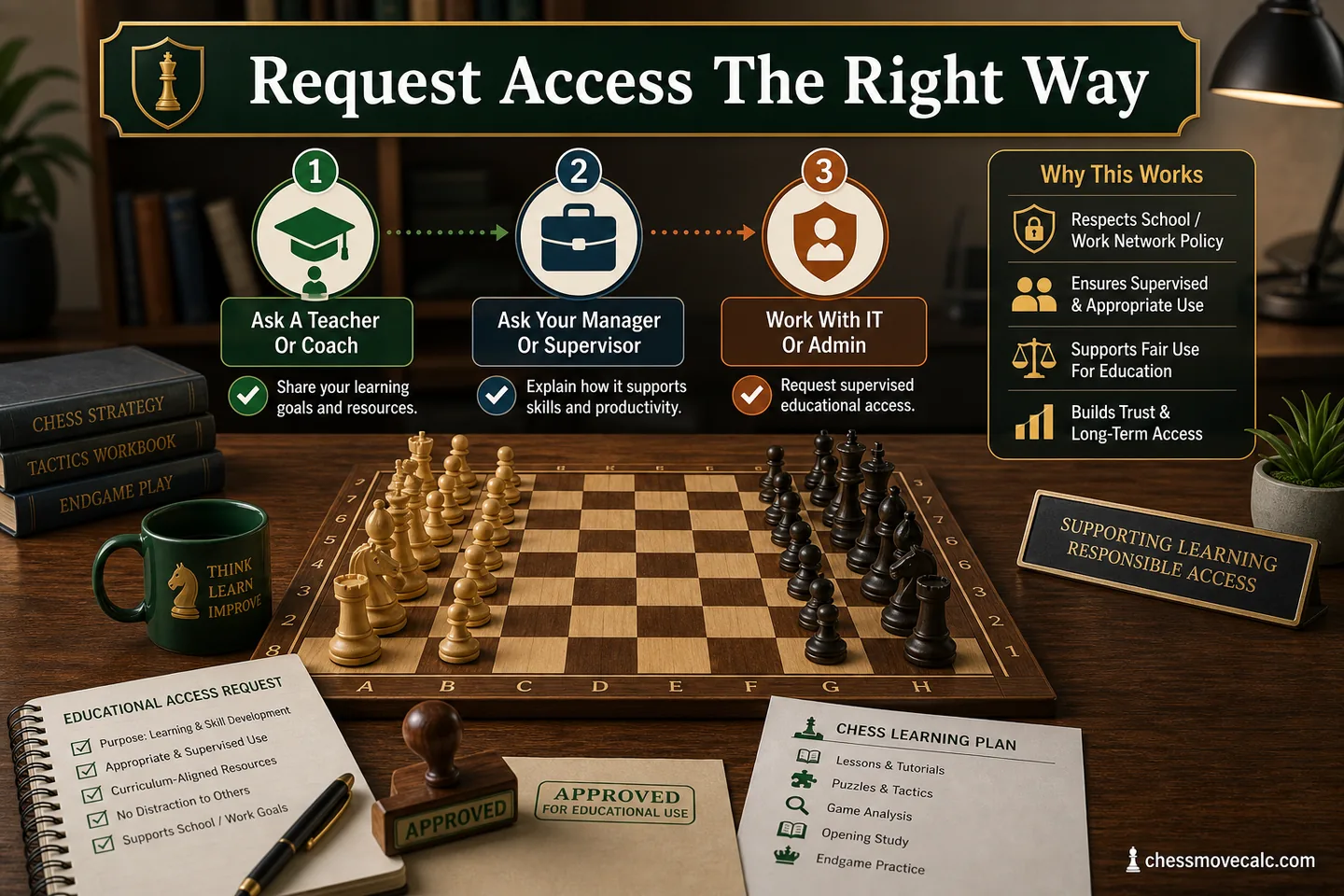
a policy-safe request is often more effective than frustration because it gives decision-makers a clear educational reason to work with.
Better ways to request access for chess learning
Respectful requests work best when they explain the learning goal, the limited use case, and the supervision context. Ask a teacher, coach, or admin rather than trying to force the issue alone. Explain whether the need is for a lesson, club, analysis session, or supervised practice.
That is where a lot of online discussion becomes either too vague or too reckless. Suggest a narrow approved use case instead of asking for unrestricted gaming access. A clear educational frame gives the request a much better chance of being considered.
- Ask a teacher, coach, or admin rather than trying to force the issue alone.
- Explain whether the need is for a lesson, club, analysis session, or supervised practice.
- Suggest a narrow approved use case instead of asking for unrestricted gaming access.
- A clear educational frame gives the request a much better chance of being considered.
Best tone
Ask for supervised educational access, not for a blanket exception to every rule.
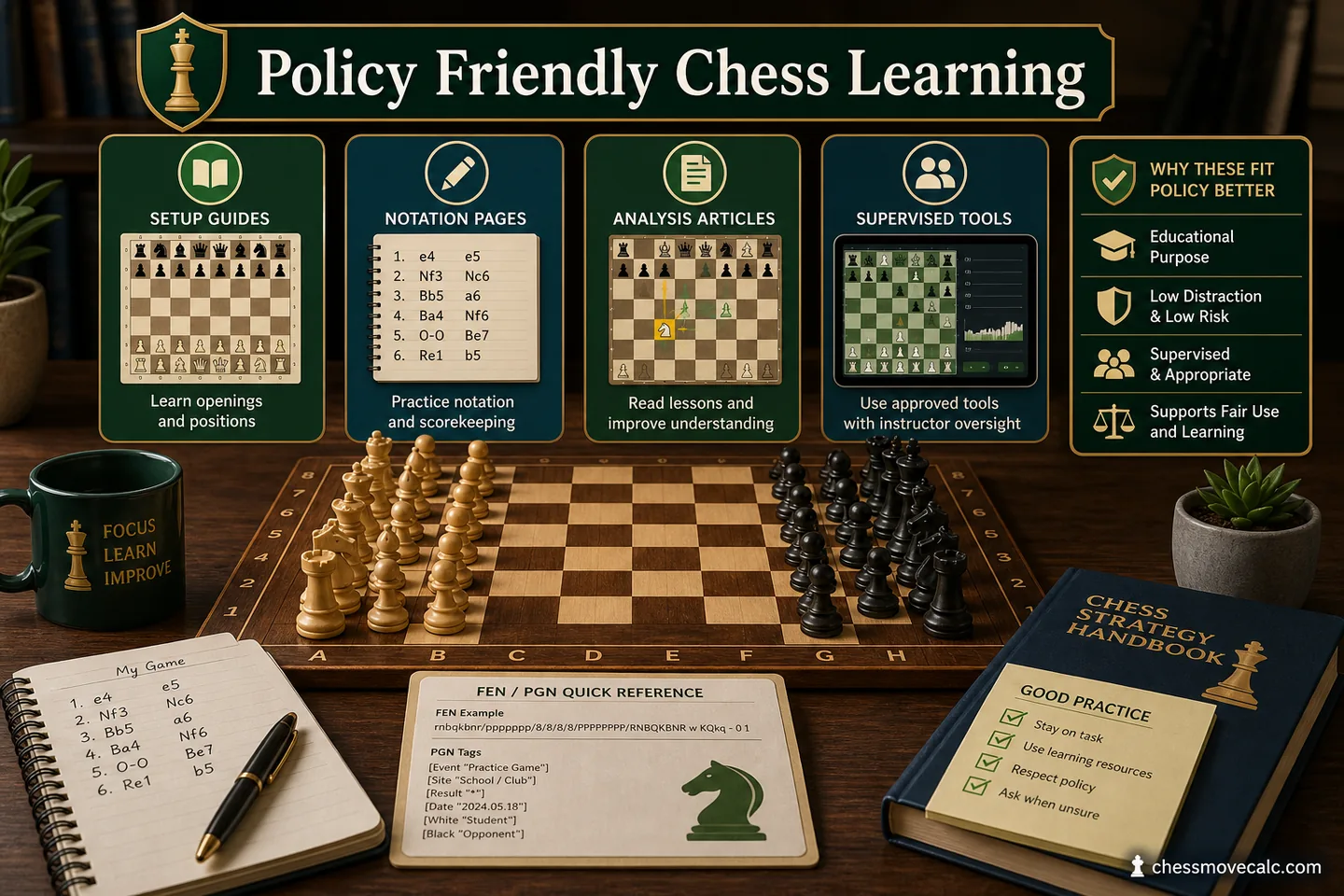
responsible access also means having good alternatives when a full platform is not appropriate in that environment.
Educational alternatives that fit policy better
Many learning goals can still be served through articles, notation work, puzzle review, and coach-led study. Board setup guides and notation lessons are often more policy-friendly than live gaming pages. Analysis articles and supervised position tools can also fit educational use cases better.
That is where a lot of online discussion becomes either too vague or too reckless. This matters because a blocked entertainment platform does not mean chess learning must stop completely. Strong educational alternatives lower the pressure to treat every access problem as a bypass problem.
- Board setup guides and notation lessons are often more policy-friendly than live gaming pages.
- Analysis articles and supervised position tools can also fit educational use cases better.
- This matters because a blocked entertainment platform does not mean chess learning must stop completely.
- Strong educational alternatives lower the pressure to treat every access problem as a bypass problem.
Useful shift
Move from “how do I get around this?” to “which chess resources fit the policy and still help me learn?”
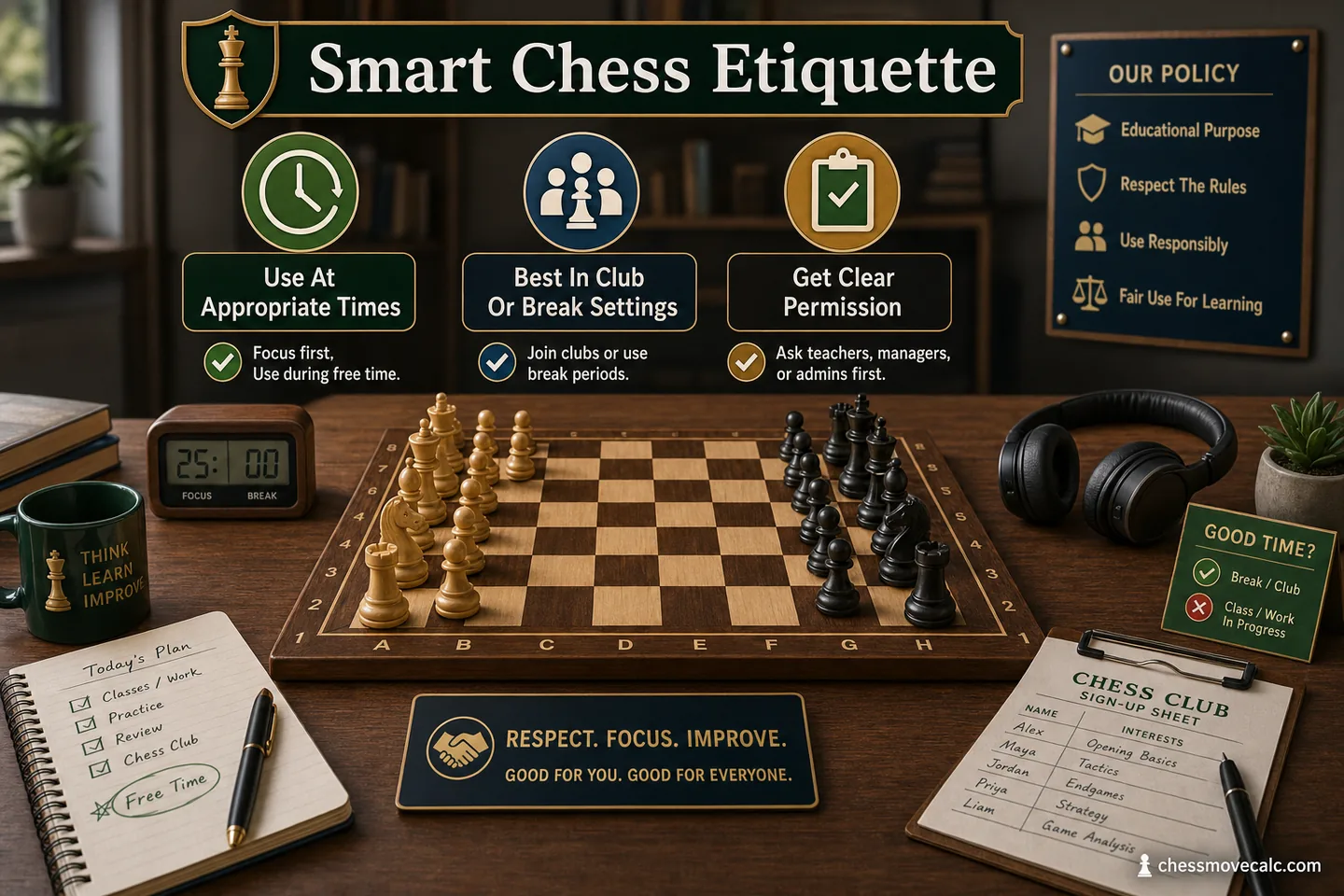
even when access is allowed, the way a resource is used still matters.
Smart etiquette for students and employees
Timing, setting, and purpose all affect whether chess use feels reasonable or distracting in shared environments. Free time, club sessions, or supervised instruction are very different contexts from ignoring assigned work. Respecting the boundary makes future access requests easier, not harder.
That is where a lot of online discussion becomes either too vague or too reckless. Good etiquette also helps chess look educational rather than disruptive. That is good for users, admins, and the reputation of the activity itself.
- Free time, club sessions, or supervised instruction are very different contexts from ignoring assigned work.
- Respecting the boundary makes future access requests easier, not harder.
- Good etiquette also helps chess look educational rather than disruptive.
- That is good for users, admins, and the reputation of the activity itself.
Long-term mindset
Use allowed access in a way that makes people more comfortable granting it again, not less.
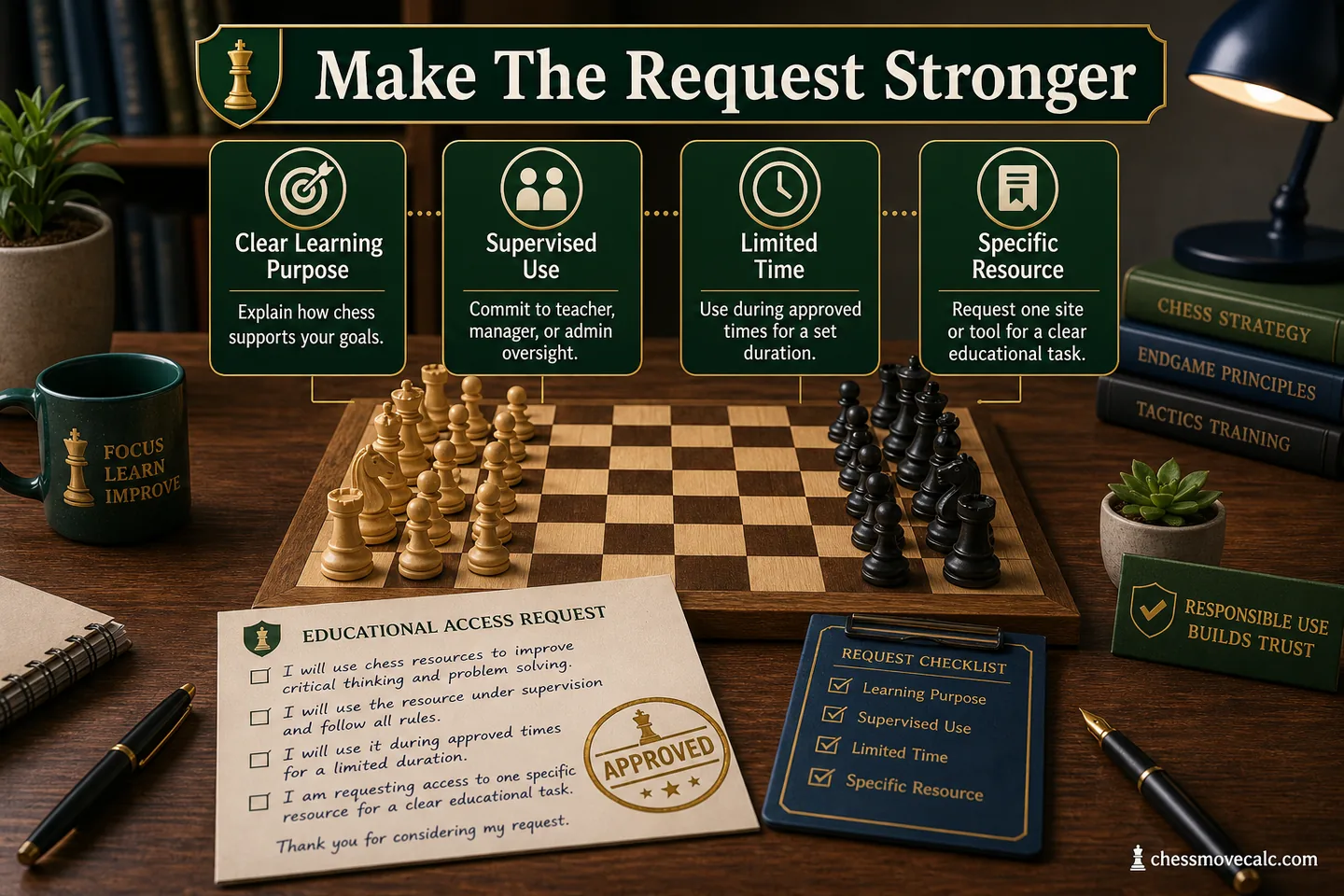
Specific, respectful requests usually work better than vague frustration.
How to make an educational access request stronger
Access requests become more credible when they focus on educational use, supervision, and narrow scope. Explain the specific learning goal instead of only saying the site is about chess. Name the class, club, coach, or study context if one exists.
Ask for limited approved use rather than unrestricted gaming access. Offer policy-friendly alternatives if full access is not appropriate.
A stronger habit is to ask what decision this concept should improve the very next time it appears. This approach respects the decision-maker and gives them a reason to help. It is far more constructive than treating every filter like a puzzle to beat.
That bridge is often the missing ingredient between reading an article once and truly keeping the lesson when the position becomes real.
- Explain the specific learning goal instead of only saying the site is about chess.
- Name the class, club, coach, or study context if one exists.
- Ask for limited approved use rather than unrestricted gaming access.
- Offer policy-friendly alternatives if full access is not appropriate.
- This approach respects the decision-maker and gives them a reason to help.
- It is far more constructive than treating every filter like a puzzle to beat.
Practical takeaway
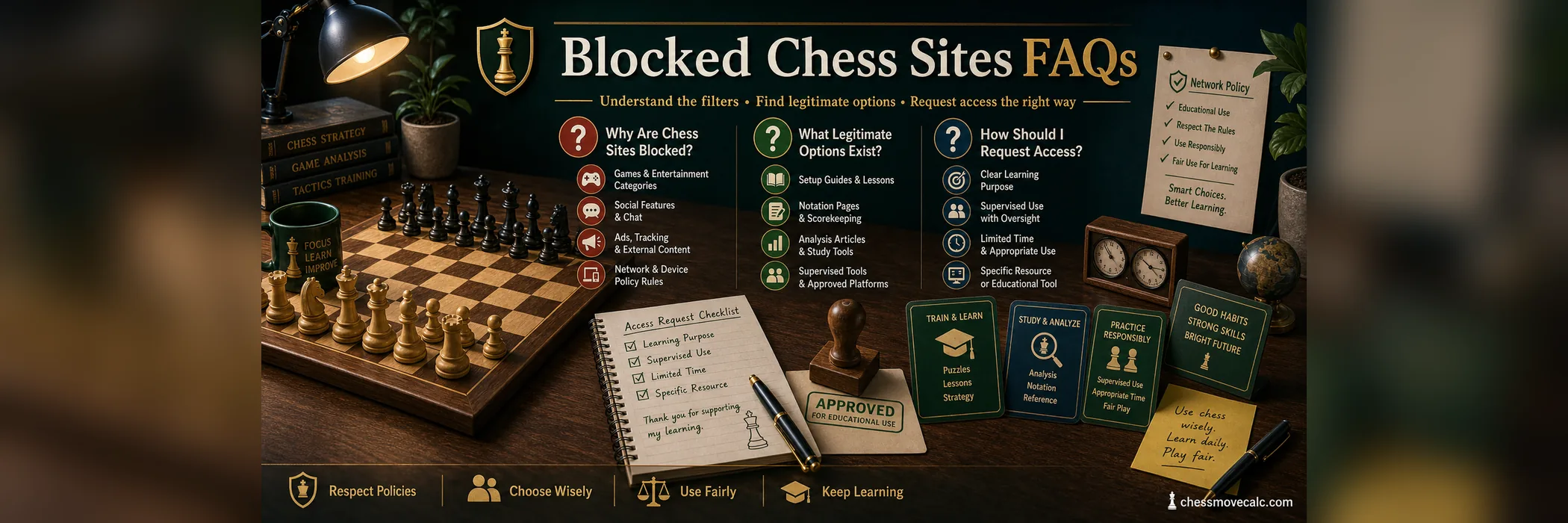
Why Chess Websites Get Blocked at School and Work FAQs
Why is Chess.com blocked at my school?
Many school filters classify it as a gaming platform and may also react to social or live-play features.
Why do some chess pages work while others do not?
Different pages can fall into different categories based on interactivity, social features, and policy settings.
Can I ask for chess access for educational reasons?
Yes. A respectful request tied to a clear learning goal is often the best policy-safe option.
Are school Chromebook filters different from workplace filters?
They can be, but both usually rely on category and risk-based filtering logic.
What is the safest way to use chess resources within policy?
Use approved educational pages, ask for access honestly, and respect the limits that are set.
Why avoid bypass advice?
Because policy-safe learning guidance is more responsible and more sustainable than circumvention tips.
Use chess resources in ways that fit the environment
Choose the pages and study modes that match the rules of the school or workplace instead of treating every filter like a challenge.