Better puzzle results usually come from better process, not from trying to be cleverer on command
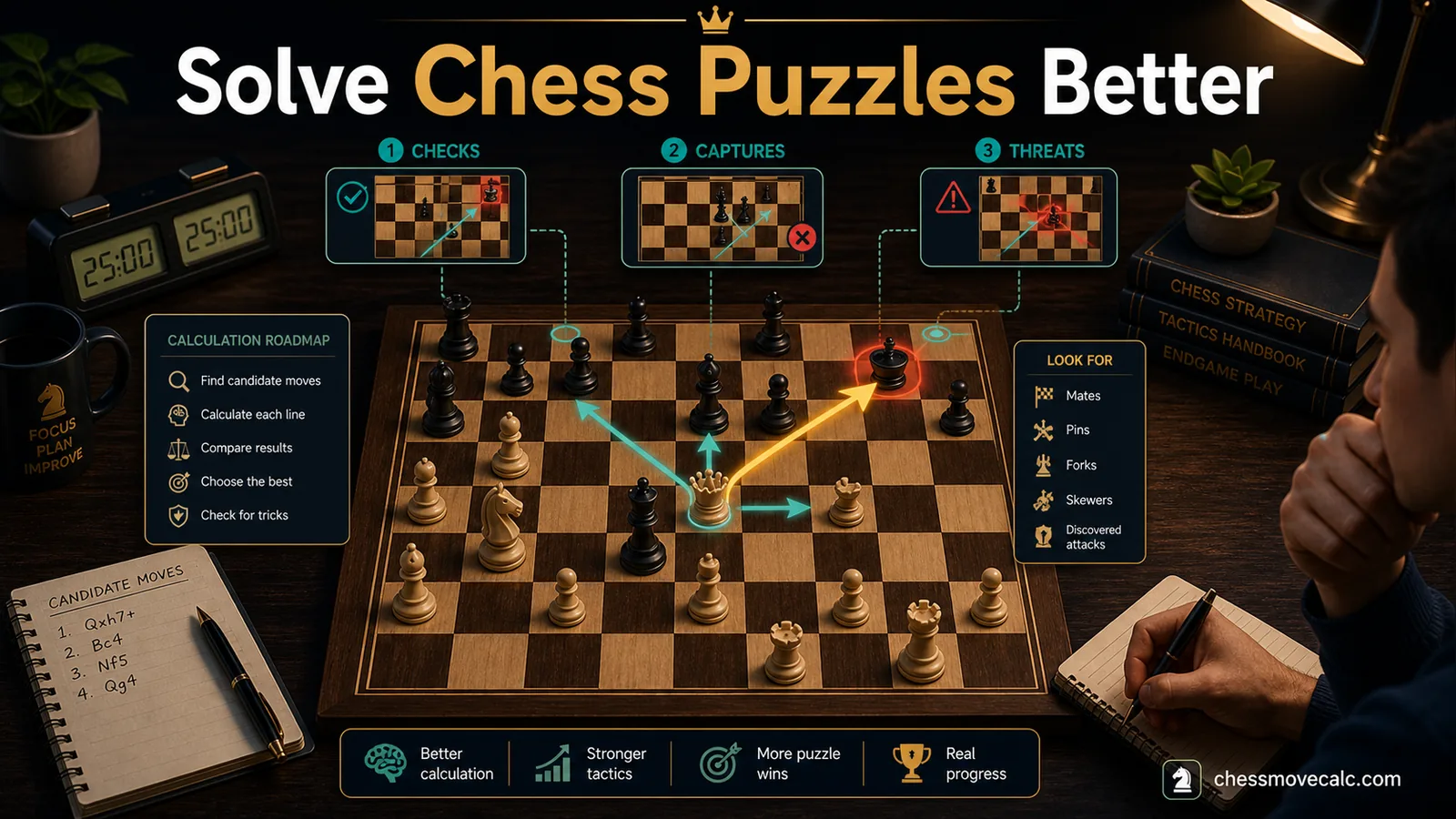
forcing moves work well because they immediately narrow the search and reveal tactical tension.
Players often say they find the first move in puzzles but miss the full line. That is a process problem more than a talent problem. It usually means the search started too wide, the motif was not identified, or the follow-up verification was too shallow.
This page is built to fix that with a repeatable solving loop. It complements best-move calculation and mating-pattern study, but it owns the puzzle-training angle specifically.
A good puzzle method should tell you what to scan first, how to shrink the candidate list, how to recognize the underlying tactic, and how to review the miss afterward. That is where generic listicles often stay too shallow.
Once the method is repeatable, puzzle solving becomes less emotional. You make fewer random guesses and you get more educational value even from the puzzles you miss.
That is what turns puzzles into training instead of into daily coin flips.
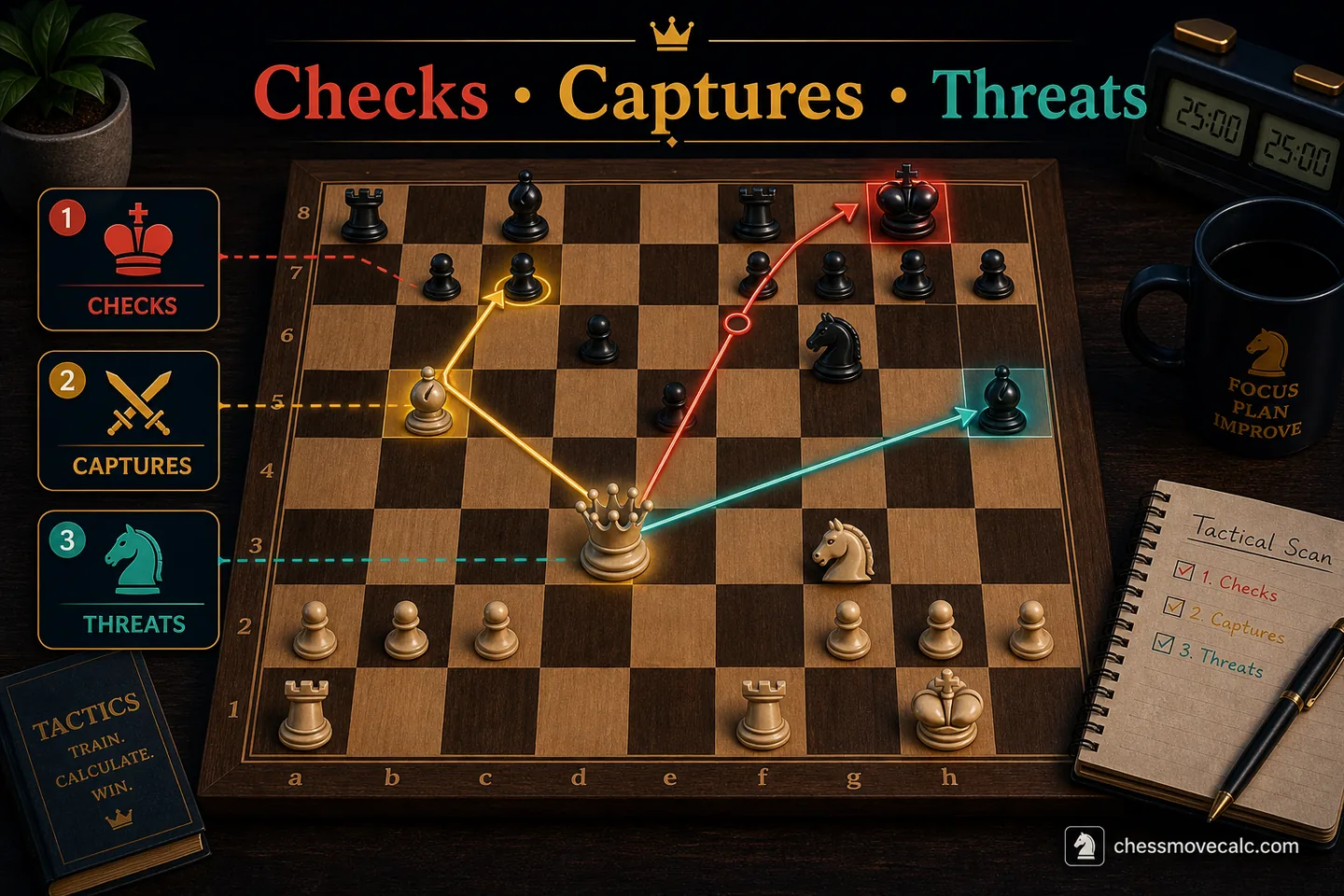
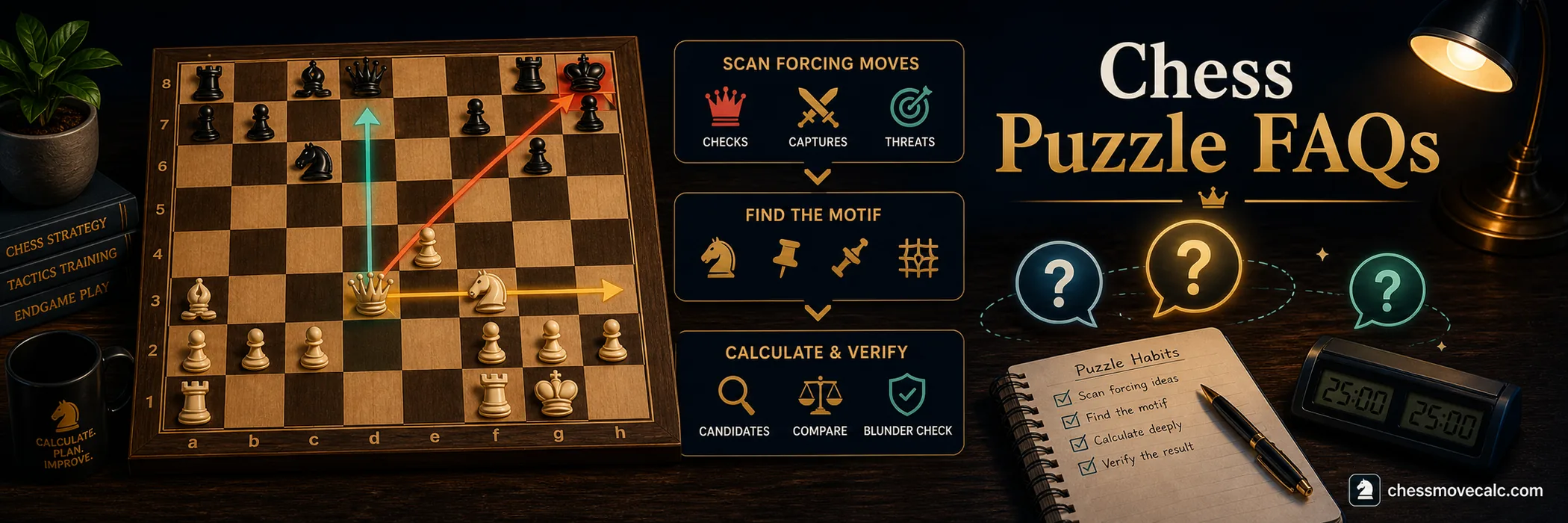
Start with checks, captures, and threats
In most puzzles, checks, captures, and threats are the fastest way to locate the real candidates. Checks demand immediate response and often uncover mate or material tactics. Captures can expose overloaded defenders and open lines.
Threats matter because many puzzles hinge on the next forced idea rather than on immediate gain. Starting here prevents the search from wandering into quiet moves too early.
- Checks demand immediate response and often uncover mate or material tactics.
- Captures can expose overloaded defenders and open lines.
- Threats matter because many puzzles hinge on the next forced idea rather than on immediate gain.
- Starting here prevents the search from wandering into quiet moves too early.
Default scan order
If you do not know where to begin, begin with the forcing moves before anything else.
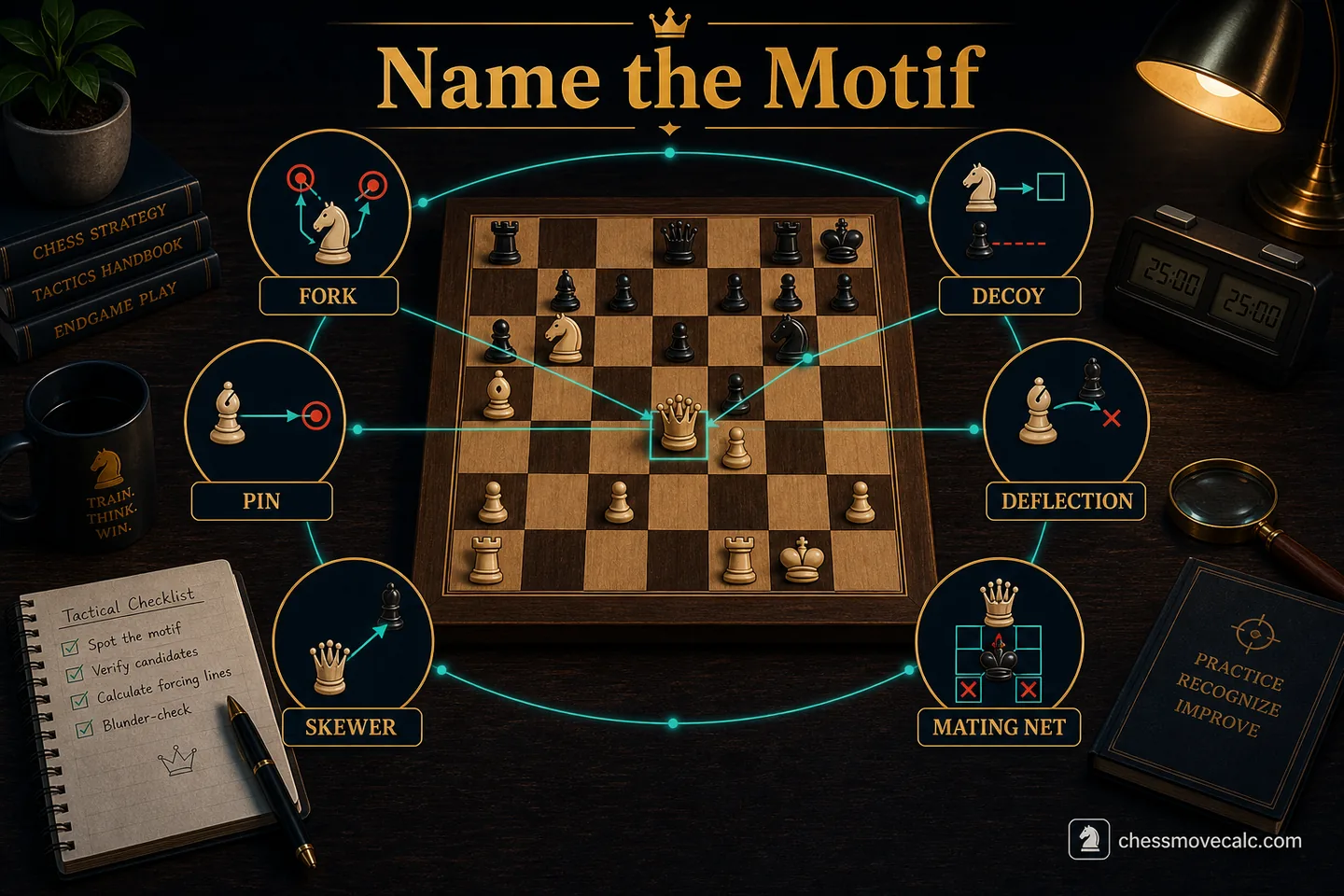
motif recognition gives the calculation a shape so it becomes easier to predict the right continuation.
Find the tactical motif before calculating deeply
Once you know the puzzle smells like a fork, pin, skewer, decoy, or mating net, many weak ideas disappear quickly. The motif is not a replacement for calculation, but it is a strong filter for calculation. It helps you choose which candidate line deserves your time first.
This also explains why repeated thematic puzzles make players faster over time. Familiar patterns reduce search waste.
- The motif is not a replacement for calculation, but it is a strong filter for calculation.
- It helps you choose which candidate line deserves your time first.
- This also explains why repeated thematic puzzles make players faster over time.
- Familiar patterns reduce search waste.
Best mental shortcut
Ask what tactical idea the position is trying to express before you calculate long branches.
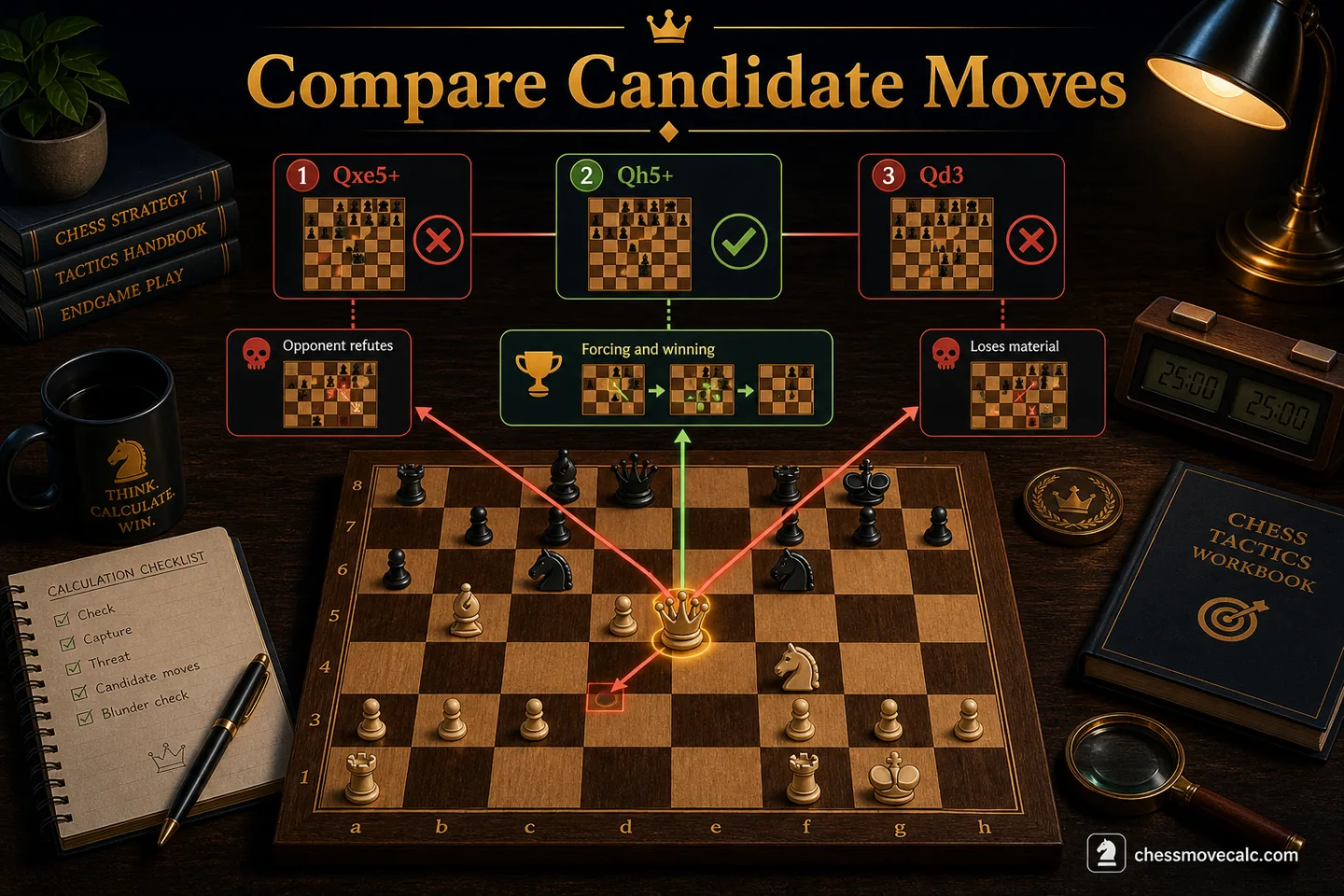
good puzzle solving is not about considering every legal move equally.
Build candidate moves and eliminate weak ideas
It is about generating a short candidate list and then cutting the weak branches efficiently. A forcing move that fails tactically is still useful because it narrows the tree. Weak candidates often fail because they miss a defense, lose the initiative, or do not fit the motif.
Eliminating them consciously trains tactical discipline. That is much stronger than guessing one move and hoping it works.
- A forcing move that fails tactically is still useful because it narrows the tree.
- Weak candidates often fail because they miss a defense, lose the initiative, or do not fit the motif.
- Eliminating them consciously trains tactical discipline.
- That is much stronger than guessing one move and hoping it works.
Healthy mindset
A rejected candidate is not wasted effort if it teaches you why the line does not work.
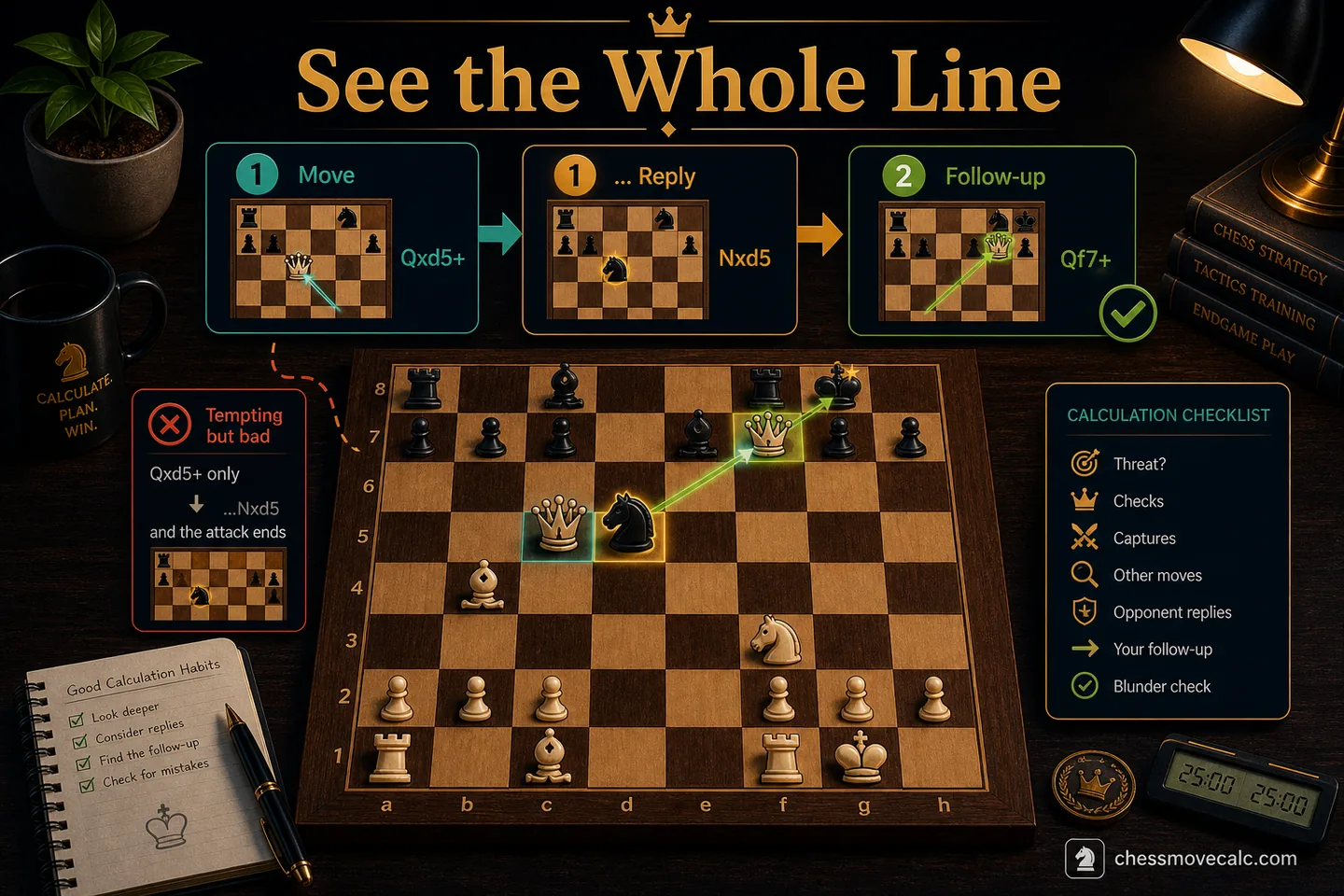
many puzzle misses happen because the first move is found but the defender’s best reply was never respected.
Calculate the whole line, not just the first move
A tactical idea is only correct if the line still works after the opponent’s strongest defense. That means you must keep calculating until the tactic actually cashes out. Stopping too early often creates the illusion of understanding without the proof.
The best solvers stay skeptical until the whole forcing line makes sense. This habit transfers directly into real-game calculation quality.
- That means you must keep calculating until the tactic actually cashes out.
- Stopping too early often creates the illusion of understanding without the proof.
- The best solvers stay skeptical until the whole forcing line makes sense.
- This habit transfers directly into real-game calculation quality.
First move is not proof
If the line fails after the best defense, the first move was only a tempting idea, not the solution.
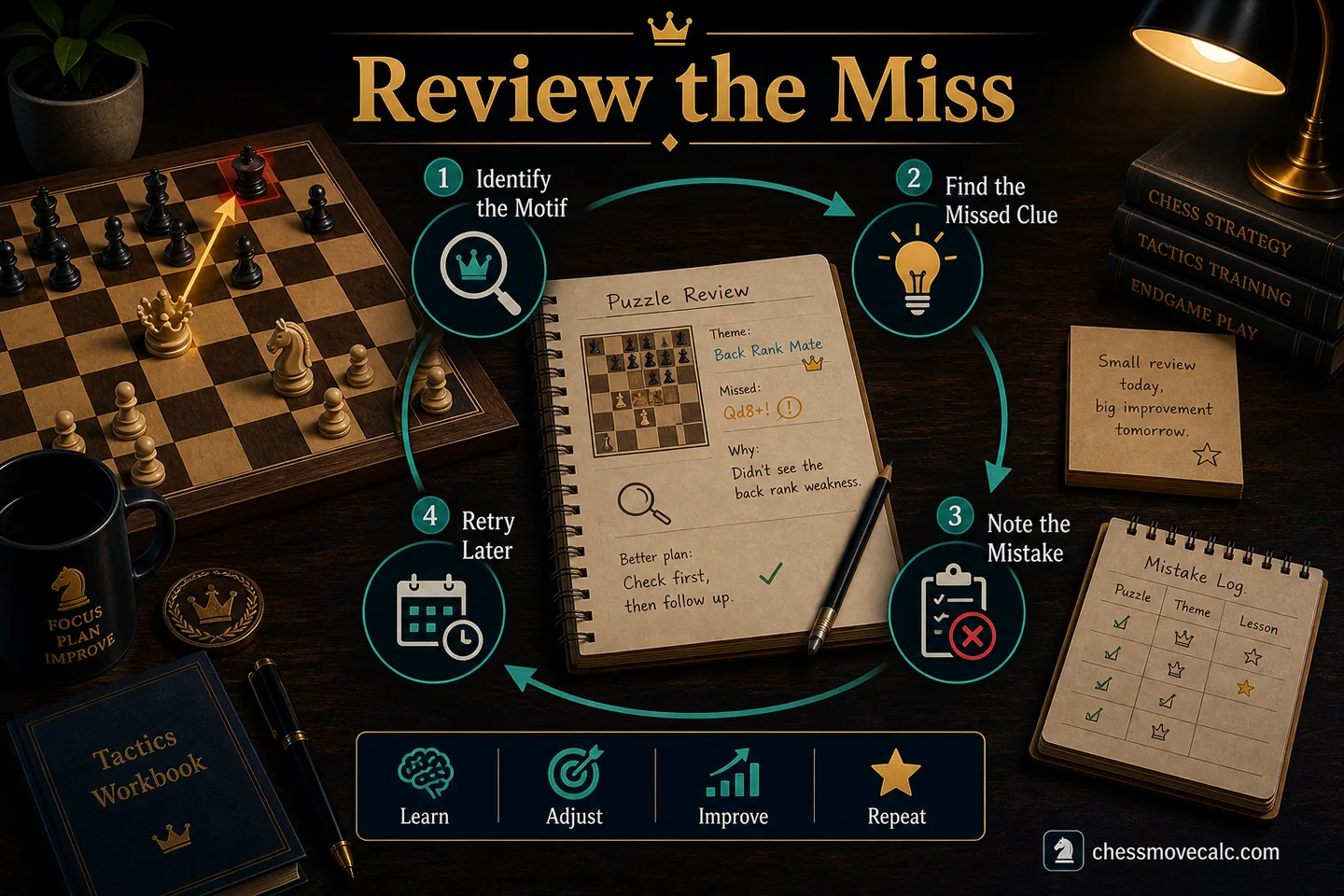
review is where most of the long-term improvement happens because misses reveal exactly what your tactical blind spots look like.
How to review puzzles you get wrong
A missed puzzle is only wasted if you move on without identifying what clue or motif you failed to see. Label the motif after you miss the puzzle. Identify whether the miss came from bad candidate selection, shallow calculation, or pattern blindness.
Then revisit the position later to see whether the pattern now appears faster. That turns errors into a tactical map of what to train next.
- Label the motif after you miss the puzzle.
- Identify whether the miss came from bad candidate selection, shallow calculation, or pattern blindness.
- Then revisit the position later to see whether the pattern now appears faster.
- That turns errors into a tactical map of what to train next.
Review with labels
Naming the motif after the miss makes the lesson easier to store and retrieve later.
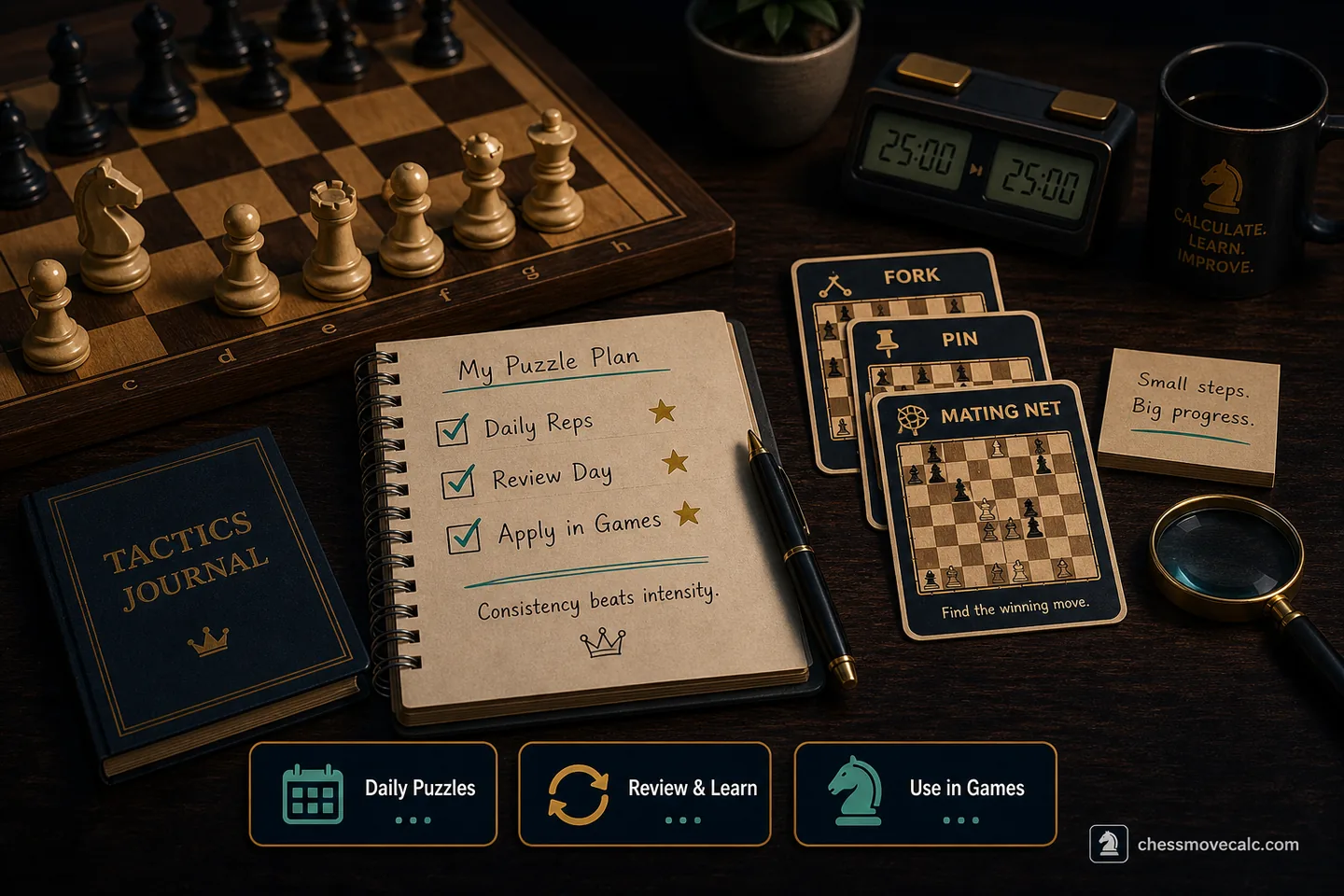
training improves fastest when puzzle work is consistent, themed, and connected back to games.
Best weekly routine for puzzle improvement
A good routine balances fresh solving, review, and enough repetition for motifs to stick. Short daily puzzle sessions usually outperform occasional binge solving. A review day helps convert misses into themes instead of frustration.
Mixing motif review with practical games makes the tactical ideas more usable. The routine matters because consistency builds recognition speed.
- Short daily puzzle sessions usually outperform occasional binge solving.
- A review day helps convert misses into themes instead of frustration.
- Mixing motif review with practical games makes the tactical ideas more usable.
- The routine matters because consistency builds recognition speed.
Better than random volume
A smaller routine with review usually beats a huge volume of unexamined puzzle attempts.
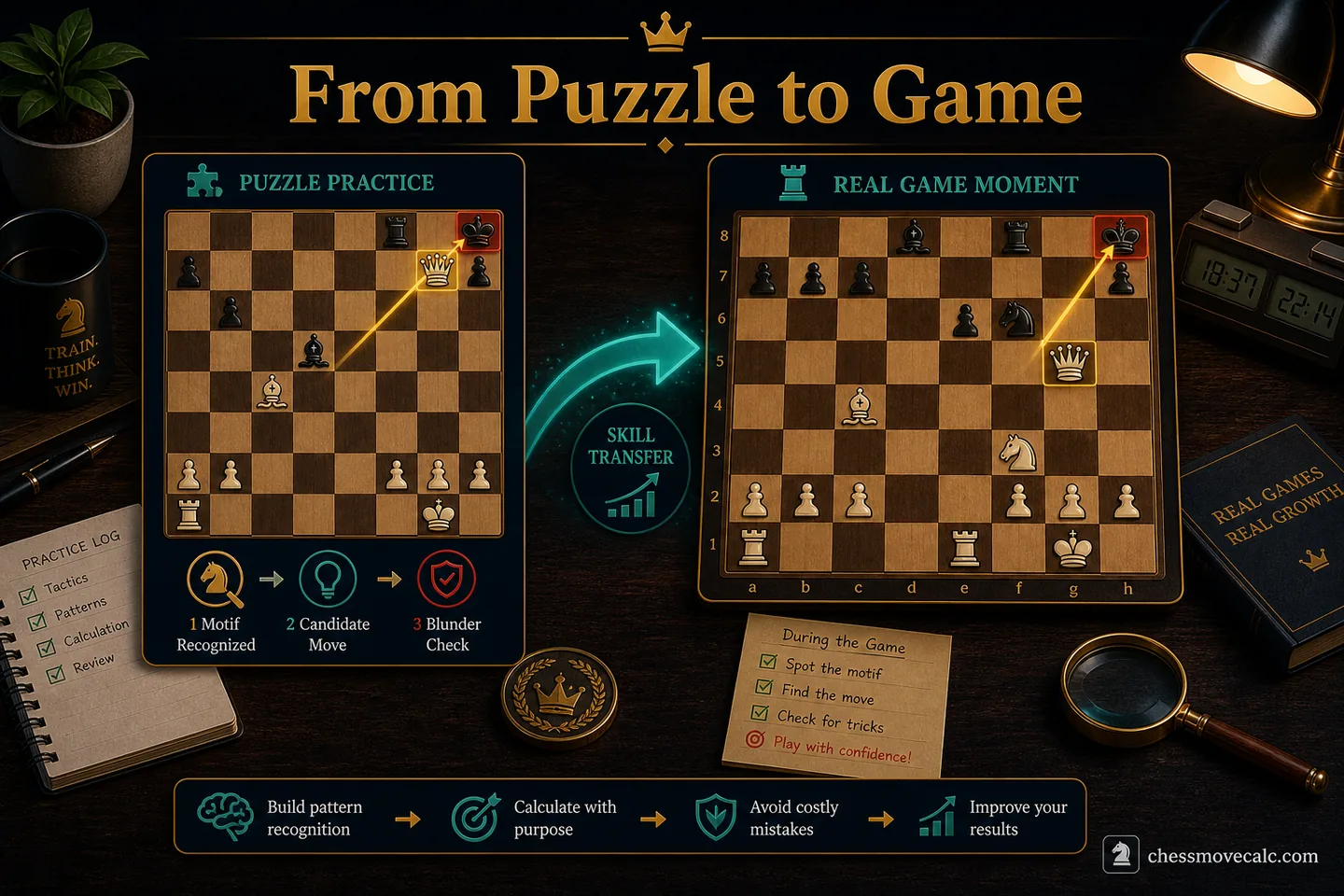
Puzzle progress matters more when the lesson survives the training page and appears in real positions.
How to turn puzzle results into real-game tactical improvement
Many players solve puzzles daily without building enough bridge back to practical play. Review the motif and the missed clue after the puzzle instead of only checking the answer. Look for the same forcing-move logic in your own recent games.
Save one or two missed ideas as themes to revisit later in the week. Use the solver only after you have done the human work first.
A stronger habit is to ask what decision this concept should improve the very next time it appears. The transfer step is what turns puzzle volume into actual tactical strength. Without it, puzzle success can stay isolated from game performance.
That bridge is often the missing ingredient between reading an article once and truly keeping the lesson when the position becomes real.
- Review the motif and the missed clue after the puzzle instead of only checking the answer.
- Look for the same forcing-move logic in your own recent games.
- Save one or two missed ideas as themes to revisit later in the week.
- Use the solver only after you have done the human work first.
- The transfer step is what turns puzzle volume into actual tactical strength.
- Without it, puzzle success can stay isolated from game performance.
Practical takeaway
How to Solve Chess Puzzles Better FAQs
What should I look at first in a chess puzzle?
Start with checks, captures, and threats because they reveal the forcing candidates fastest.
How do I find the tactical motif faster?
Train motifs in groups and ask what pattern the position is trying to express before calculating too broadly.
Should I use an engine after missing a puzzle?
Yes, but only after you first identify what clue or line you missed on your own.
How many puzzles should I solve each day?
A manageable daily amount with review is usually better than occasional puzzle marathons.
Why do I find the first move but miss the full line?
Usually because you stopped calculating before checking the opponent’s best defense.
Do puzzles help real games?
Yes, especially when you connect the motifs and review habits back to practical play.
Review a puzzle position with the solver after you finish
Use the solver to compare your line with the engine only after you have done the human part of the work first.