Verify the pattern on a real board
In this position White can play Re8#. The key is not just the rook’s checking move: Black’s own pawns prevent the king from escaping to the seventh rank. That is the back-rank pattern.
When recognizing any mating pattern, check three defenses: capture the checking piece, block the line if possible, or move the king. It is checkmate only when all three fail.
Load this exact position:
6k1/5ppp/8/8/8/8/5PPP/4R1K1 w - - 0 1A smaller set of patterns taught clearly beats a huge list you barely remember
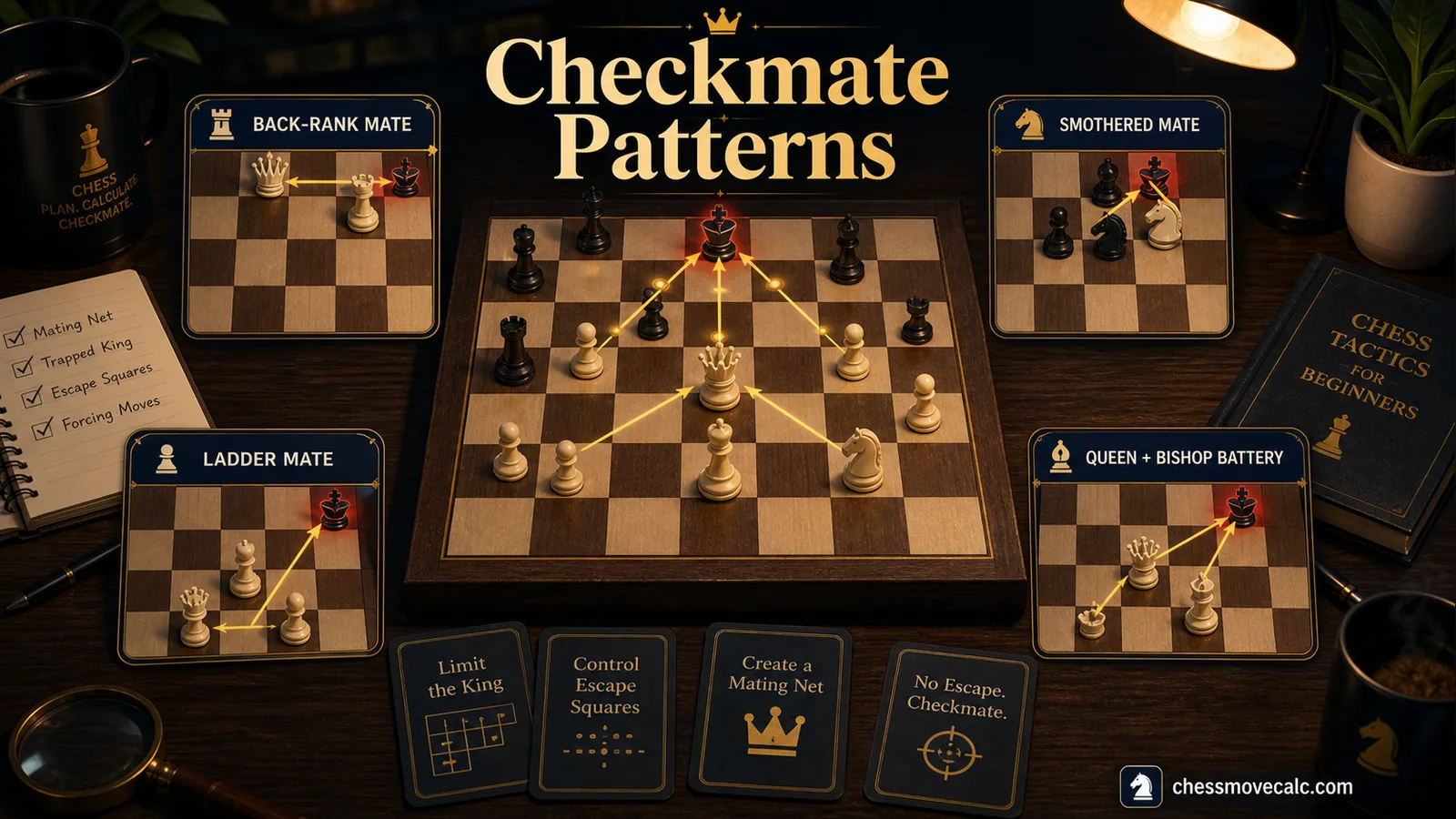
this is one of the most practical mating patterns because it appears constantly in real games.
Many checkmate-pattern pages overwhelm beginners by listing everything at once. That usually creates shallow recognition: you have seen the pattern names, but you still do not spot the clues fast enough when the position appears in a game or puzzle.
This page takes the opposite approach. It focuses on fewer patterns, teaches what makes them work, and points out the warning signs that appear before the final move. That makes the patterns easier to use over the board instead of only easier to admire after the fact.
It also pairs naturally with puzzle-solving habits and with move-calculation discipline, because mating nets are easier to find when your calculation process already starts with forcing moves.
Once these shapes become familiar, you will notice that many tactical puzzles feel less random. The pieces begin to cooperate in ways that look recognizable instead of mysterious.
That is the real goal of checkmate-pattern study: faster recognition, calmer calculation, and more practical conversion when the king is exposed.
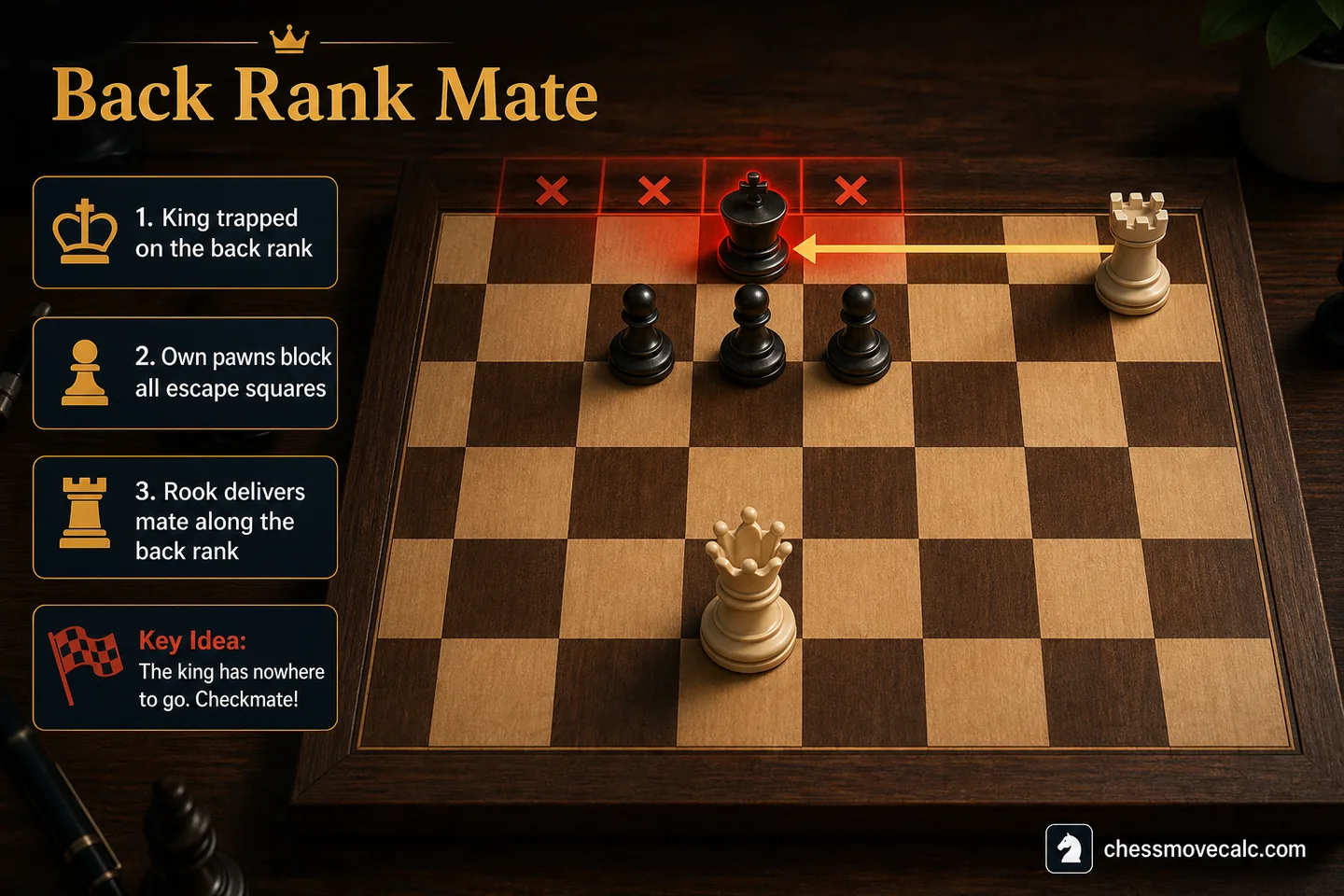
Back rank mate
The king has no escape squares on the back rank and a rook or queen crashes in along the file or rank. Blocked pawns often trap the king and create the classic mating cage. Heavy pieces love open files and back-rank weakness.
Once the escape squares disappear, the final move often becomes surprisingly simple. That is why back-rank awareness saves both attackers and defenders time.
- Blocked pawns often trap the king and create the classic mating cage.
- Heavy pieces love open files and back-rank weakness.
- Once the escape squares disappear, the final move often becomes surprisingly simple.
- That is why back-rank awareness saves both attackers and defenders time.
First warning sign
A boxed-in king plus a rook or queen on an open line should immediately raise back-rank alarms.
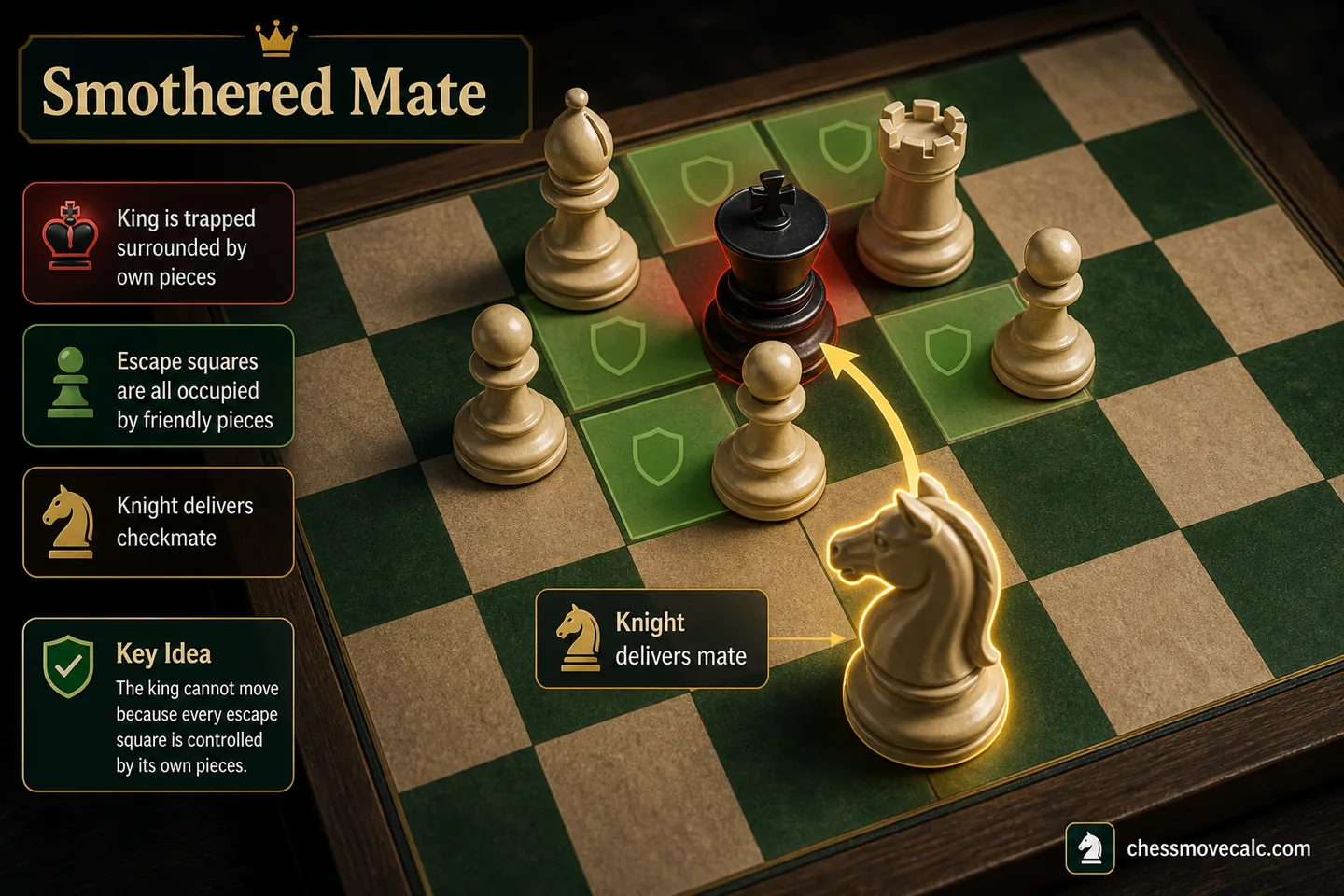
smothered mate teaches a crucial tactical lesson: friendly pieces can trap the king as effectively as enemy pieces.
Smothered mate
The knight delivers mate because the king’s own army blocks every escape square. Knights are especially dangerous in cramped king positions. This pattern often appears after forcing checks that herd the king into a crowded corner.
The mating move looks magical only if the escape squares were never counted carefully. Once you focus on the trapped king rather than the knight jump, the pattern becomes easier to predict.
- Knights are especially dangerous in cramped king positions.
- This pattern often appears after forcing checks that herd the king into a crowded corner.
- The mating move looks magical only if the escape squares were never counted carefully.
- Once you focus on the trapped king rather than the knight jump, the pattern becomes easier to predict.
Core cue
A crowded king plus a forcing knight check often signals smothered-mate danger.
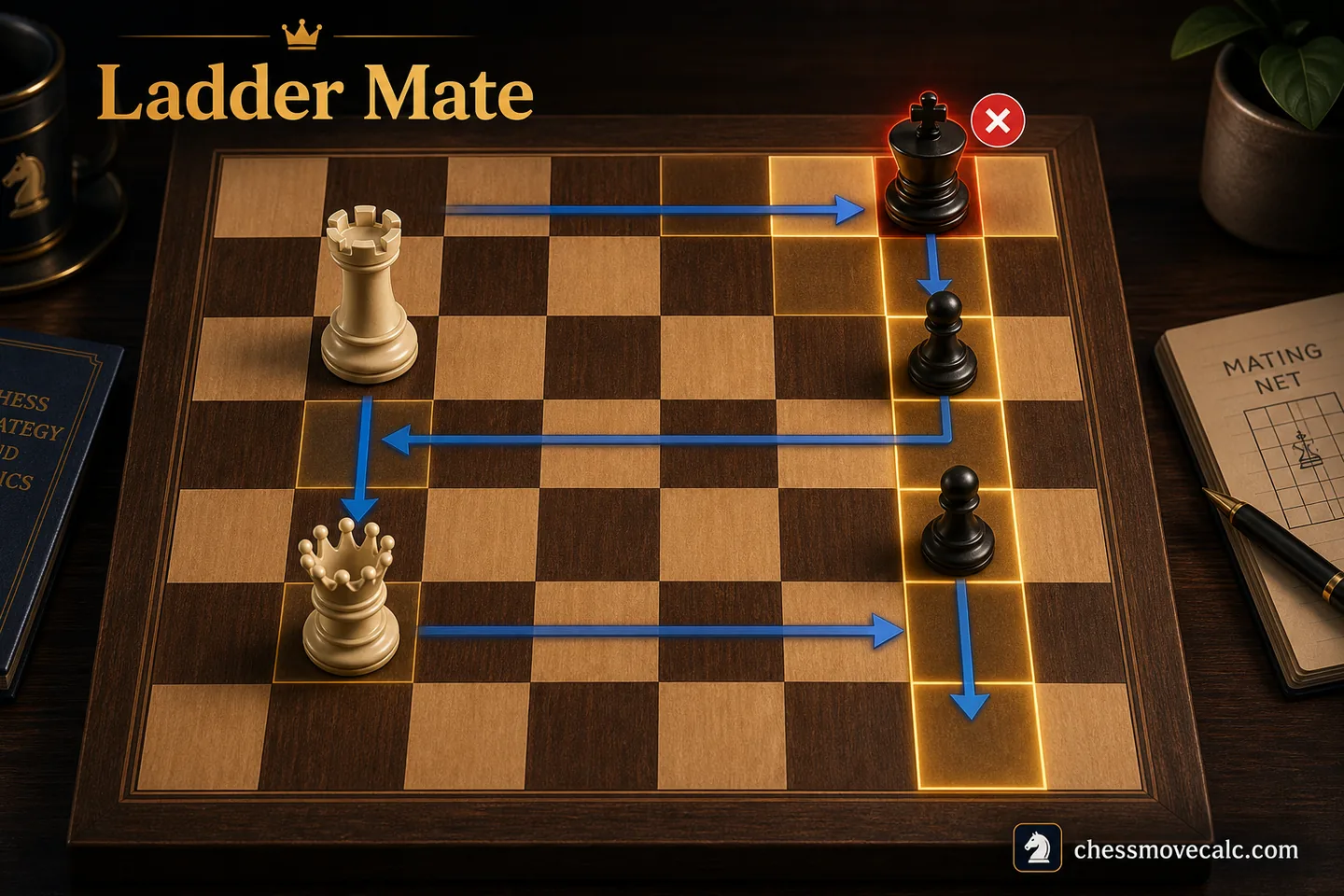
ladder mate is structurally simple, which makes it perfect for teaching coordination.
Ladder mate
Ladder mate matters because two heavy pieces take turns cutting off ranks or files until the king runs out of room. The pattern highlights teamwork more than surprise. It also teaches beginners how to convert an overwhelming material edge cleanly.
Because the idea is systematic, it shows up in real endgame technique as well as in beginner mating drills. Once you understand the rhythm, ladder mate feels reliable instead of mechanical.
- The pattern highlights teamwork more than surprise.
- It also teaches beginners how to convert an overwhelming material edge cleanly.
- Because the idea is systematic, it shows up in real endgame technique as well as in beginner mating drills.
- Once you understand the rhythm, ladder mate feels reliable instead of mechanical.
Why it matters
Ladder mate is one of the easiest ways to turn a material advantage into a forced finish.
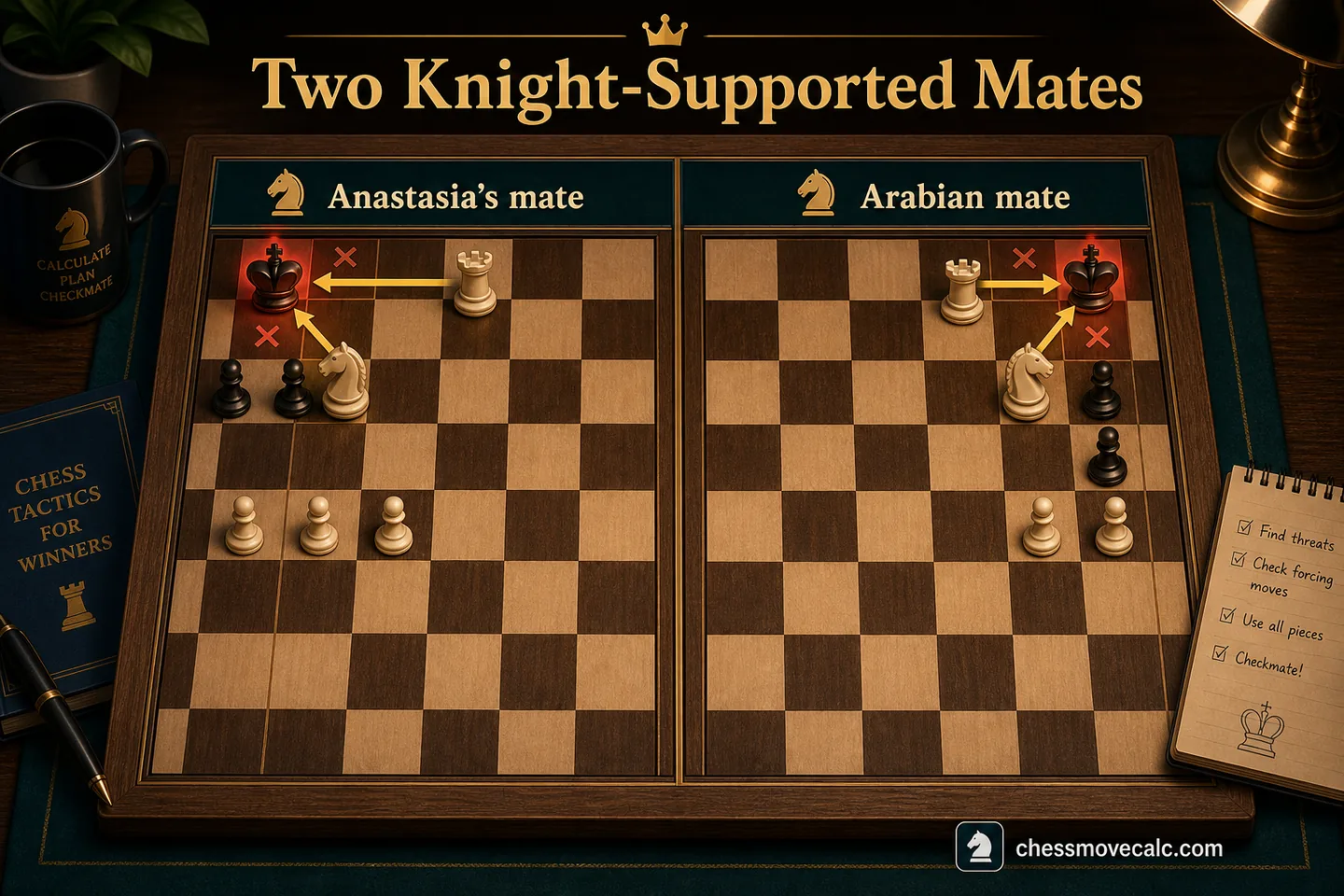
these named patterns matter because they teach how different piece combinations trap the king in distinct ways.
Anastasia’s mate and Arabian mate
The exact piece mix changes, but the core idea is the same: control the exits and coordinate the final check precisely. Named patterns help because they package a complex geometry into a memorable label. They also train your eye to notice when knight support and rook or bishop control are converging around the king.
Beginners do not need to memorize every named mate immediately. They do benefit from seeing how different attacking teams produce similar no-escape results.
- Named patterns help because they package a complex geometry into a memorable label.
- They also train your eye to notice when knight support and rook or bishop control are converging around the king.
- Beginners do not need to memorize every named mate immediately.
- They do benefit from seeing how different attacking teams produce similar no-escape results.
Use labels wisely
Pattern names are useful memory hooks, but the board geometry matters more than the label itself.
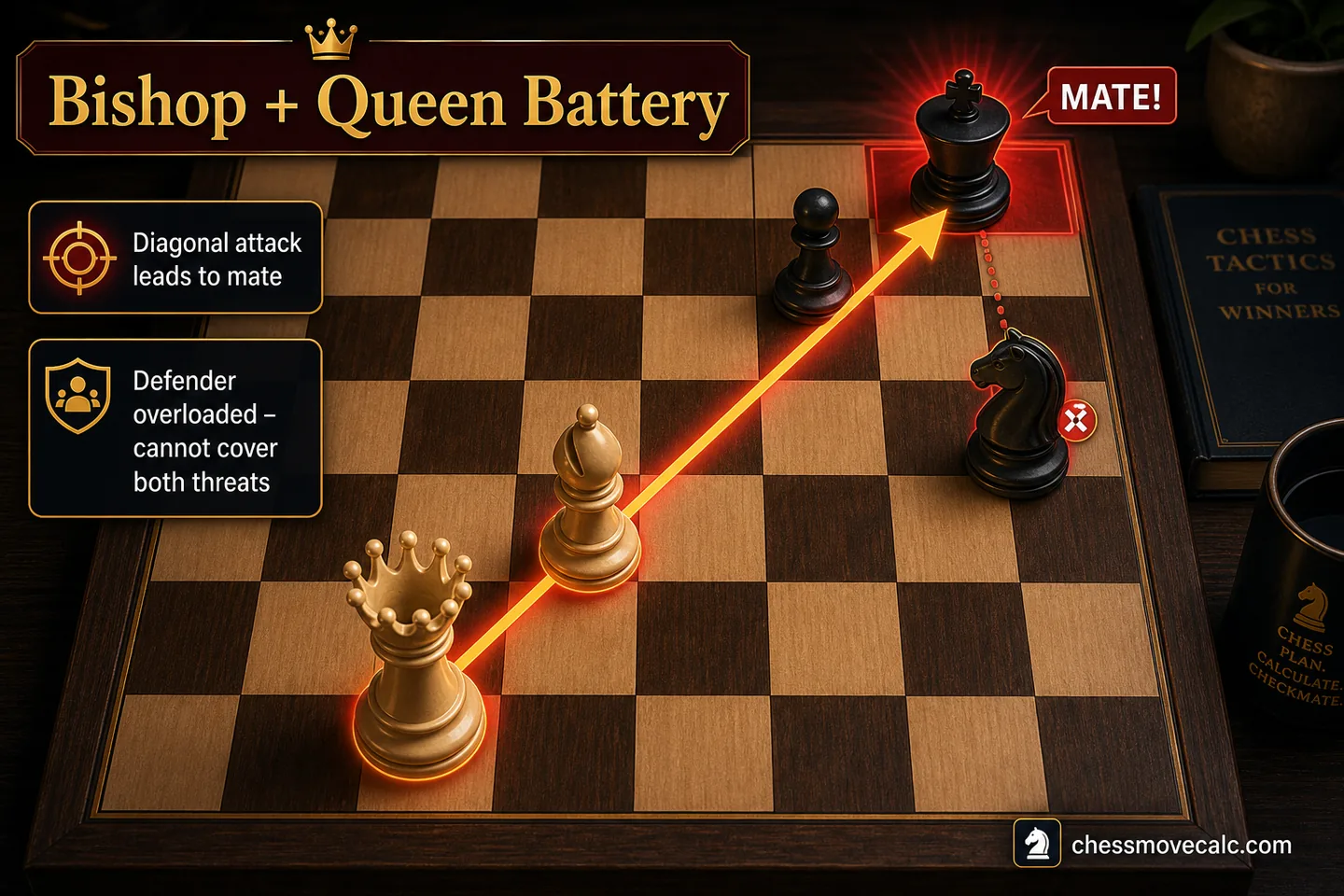
battery mates are important because they teach how diagonals create pressure before the final move arrives.
Bishop-and-queen battery mates
The queen and bishop often aim together at the king’s shelter until one forcing move removes the last defense. A long diagonal can make a king feel safe until the final attacker joins. The queen often supplies the final check while the bishop handles the escape squares.
This pattern also teaches why weakened dark or light squares can become fatal. When the battery is visible, defensive urgency should rise immediately.
- A long diagonal can make a king feel safe until the final attacker joins.
- The queen often supplies the final check while the bishop handles the escape squares.
- This pattern also teaches why weakened dark or light squares can become fatal.
- When the battery is visible, defensive urgency should rise immediately.
Danger signal
A queen and bishop aiming together at the same shelter squares is rarely harmless.
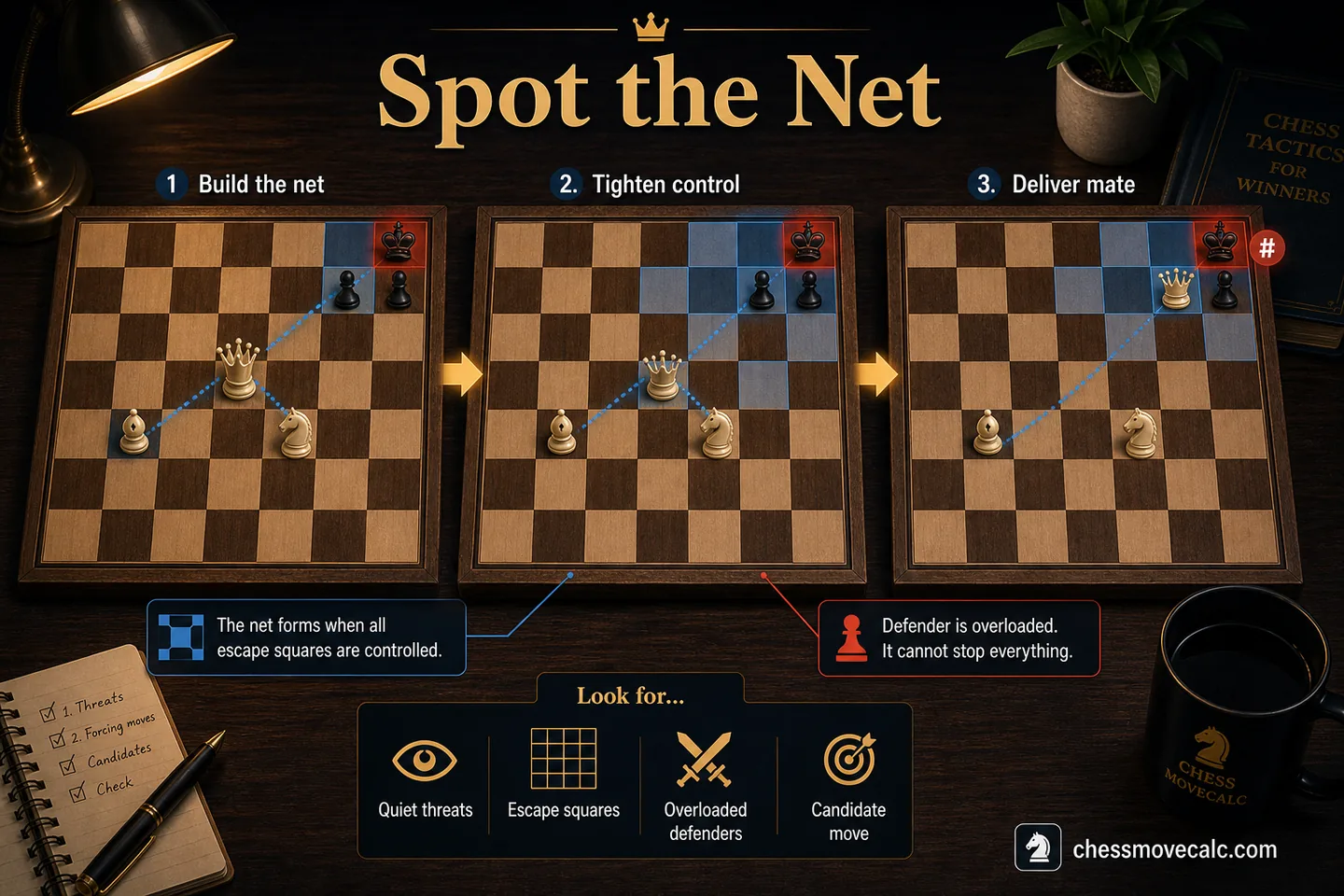
pattern study is most useful when it sharpens recognition before the final move appears.
How to spot mating nets before they happen
You want to notice the warning signs early enough to attack or defend instead of only understanding the mate afterward. Count escape squares before you count fancy variations. Watch for overloaded defenders and trapped kings with no luft.
Check whether your forcing move removes the last safe square rather than simply giving check. This habit connects pattern memory directly to better move calculation.
- Count escape squares before you count fancy variations.
- Watch for overloaded defenders and trapped kings with no luft.
- Check whether your forcing move removes the last safe square rather than simply giving check.
- This habit connects pattern memory directly to better move calculation.
Best question
Before analyzing long lines, ask which escape squares the king still has.
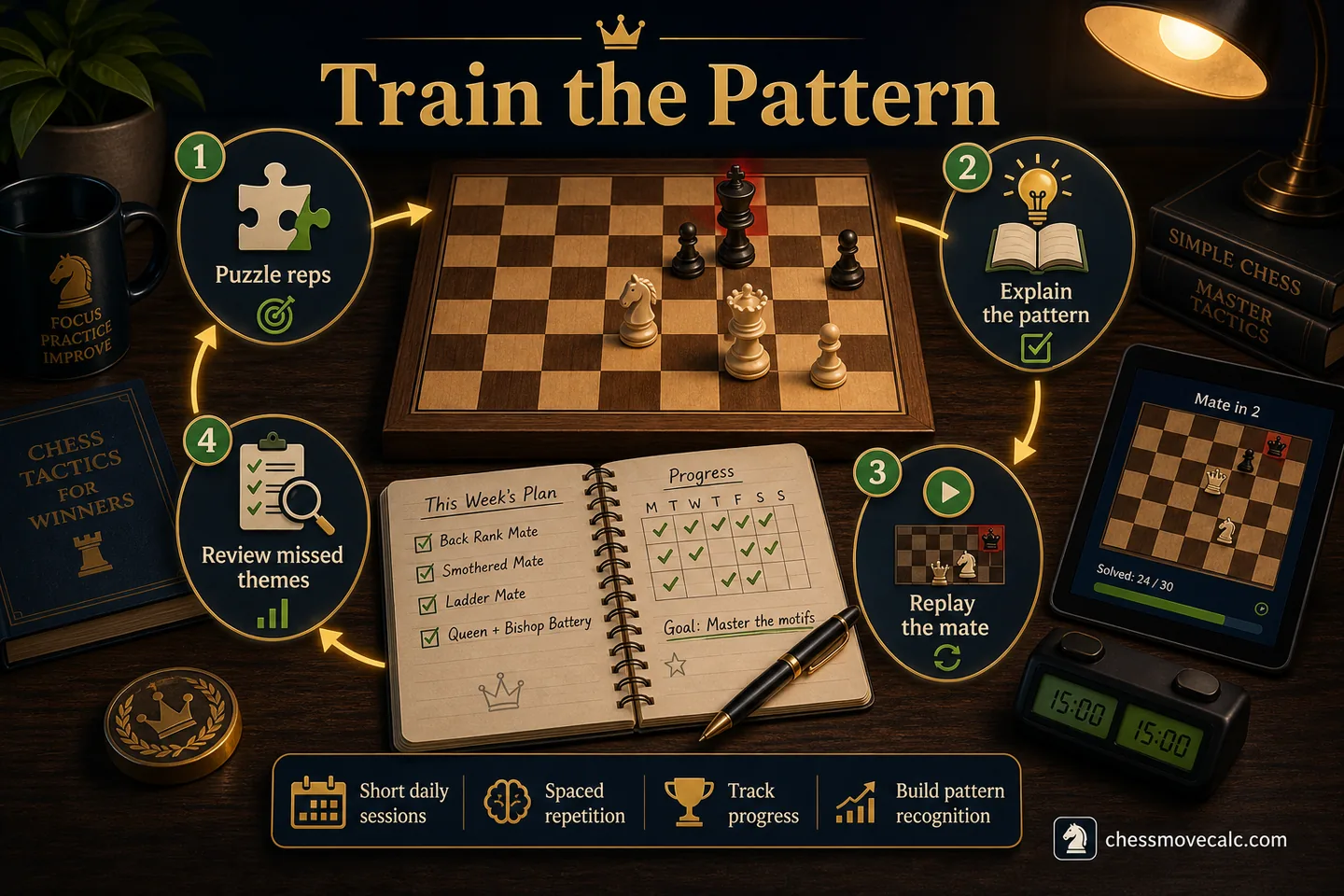
pattern study works best when you revisit the same motifs enough times for recognition speed to grow.
How to train checkmate patterns efficiently
A few repeated motifs trained well will outperform a giant pattern list skimmed once. Use short puzzle sets grouped by motif instead of random endless solving. Review missed mates and label the pattern before moving on.
Mix flash recognition with full-line calculation so the pattern becomes usable, not decorative. Then test the ideas in games or move-finding exercises to make them practical.
- Use short puzzle sets grouped by motif instead of random endless solving.
- Review missed mates and label the pattern before moving on.
- Mix flash recognition with full-line calculation so the pattern becomes usable, not decorative.
- Then test the ideas in games or move-finding exercises to make them practical.
Best pairing
Use this page with the puzzle guide so recognition and calculation improve together.
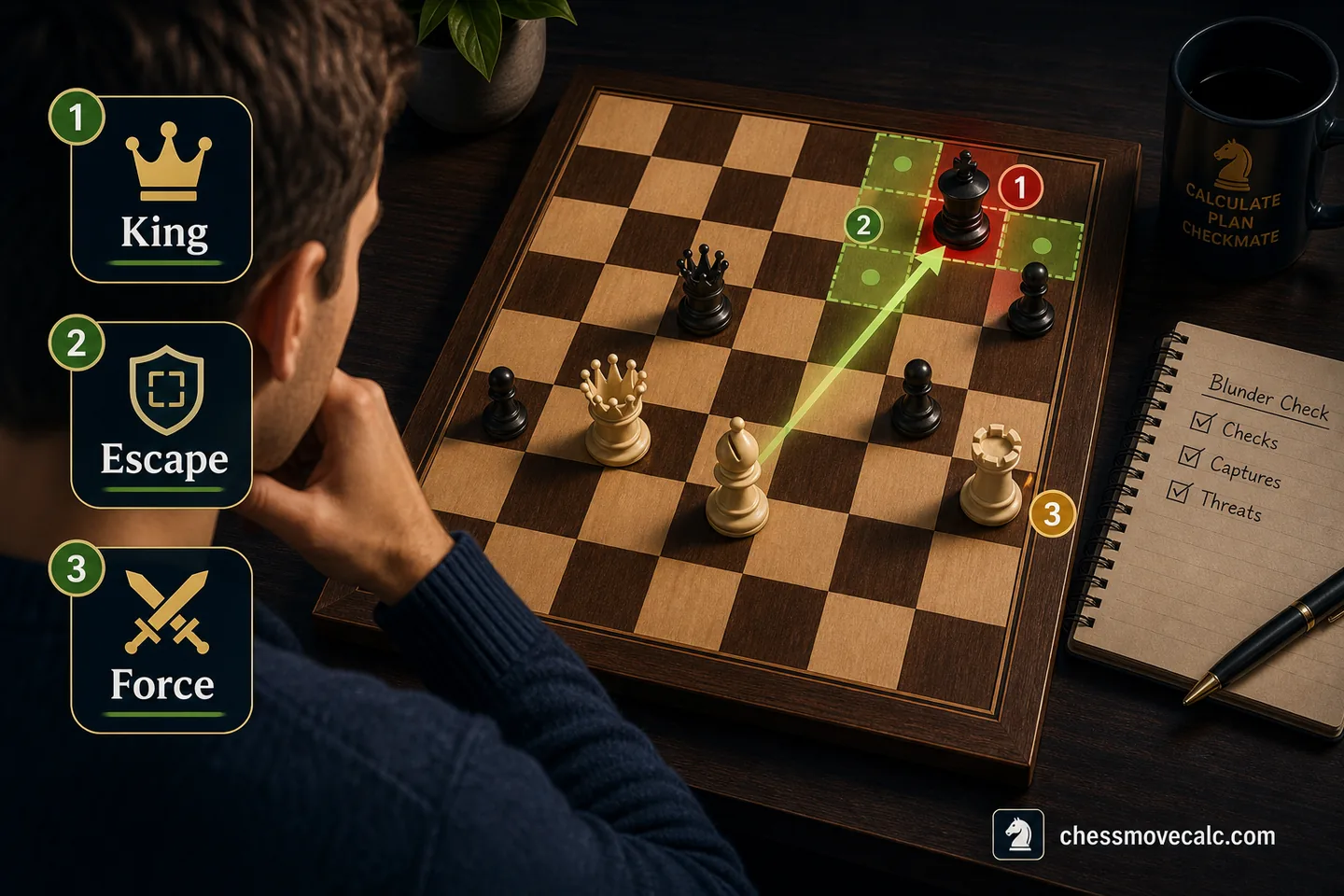
Mating patterns become practical when you look for the same warning clues every time.
A simple recognition routine for spotting mating patterns faster
A simple recognition routine for spotting mating patterns faster matters because pattern memory works best when it is paired with a repeatable scan for escape squares, defenders, and attacking lanes. Count the king’s escape squares before admiring the final move. Check which friendly pieces are trapping the king as effectively as the attacking pieces; if the position is locked down but not actually checking, review the domination stalemate pattern before you assume it is mate.
Notice whether one defender is overloaded or one key line is about to open. Use the pattern label only after you understand why the geometry works.
A stronger habit is to ask what decision this concept should improve the very next time it appears. That order builds usable recognition instead of shallow name memorization. The result is faster tactical spotting in both puzzles and games.
That bridge is often the missing ingredient between reading an article once and truly keeping the lesson when the position becomes real.
- Count the king’s escape squares before admiring the final move.
- Check which friendly pieces are trapping the king as effectively as the attacking pieces.
- Notice whether one defender is overloaded or one key line is about to open.
- Use the pattern label only after you understand why the geometry works.
- That order builds usable recognition instead of shallow name memorization.
- The result is faster tactical spotting in both puzzles and games.
Practical takeaway
Common Checkmate Patterns Every Beginner Should Know FAQs
What is the most common checkmate pattern for beginners?
Back rank mate is one of the most common and practical patterns for beginners to learn first.
How many checkmate patterns should I learn first?
Start with a small set of practical patterns and learn them deeply instead of collecting too many at once.
Are checkmate patterns more important than openings for beginners?
For many beginners, practical tactical pattern recognition helps more quickly than memorizing opening details.
How do I practice recognizing mating nets?
Use grouped puzzles, review the missed motif, and ask which escape squares disappeared.
Should I study checkmate patterns with puzzles or games?
Both. Puzzles sharpen recognition and games show how the patterns arise naturally.
Why do I still miss mates I already know?
Usually because the pattern name is familiar but the warning signs are not yet automatic under time pressure.
Practice mating patterns on real positions
Use the solver and play pages to test whether these patterns are becoming visible before the board forces the answer.