The word good only helps if you define the context first
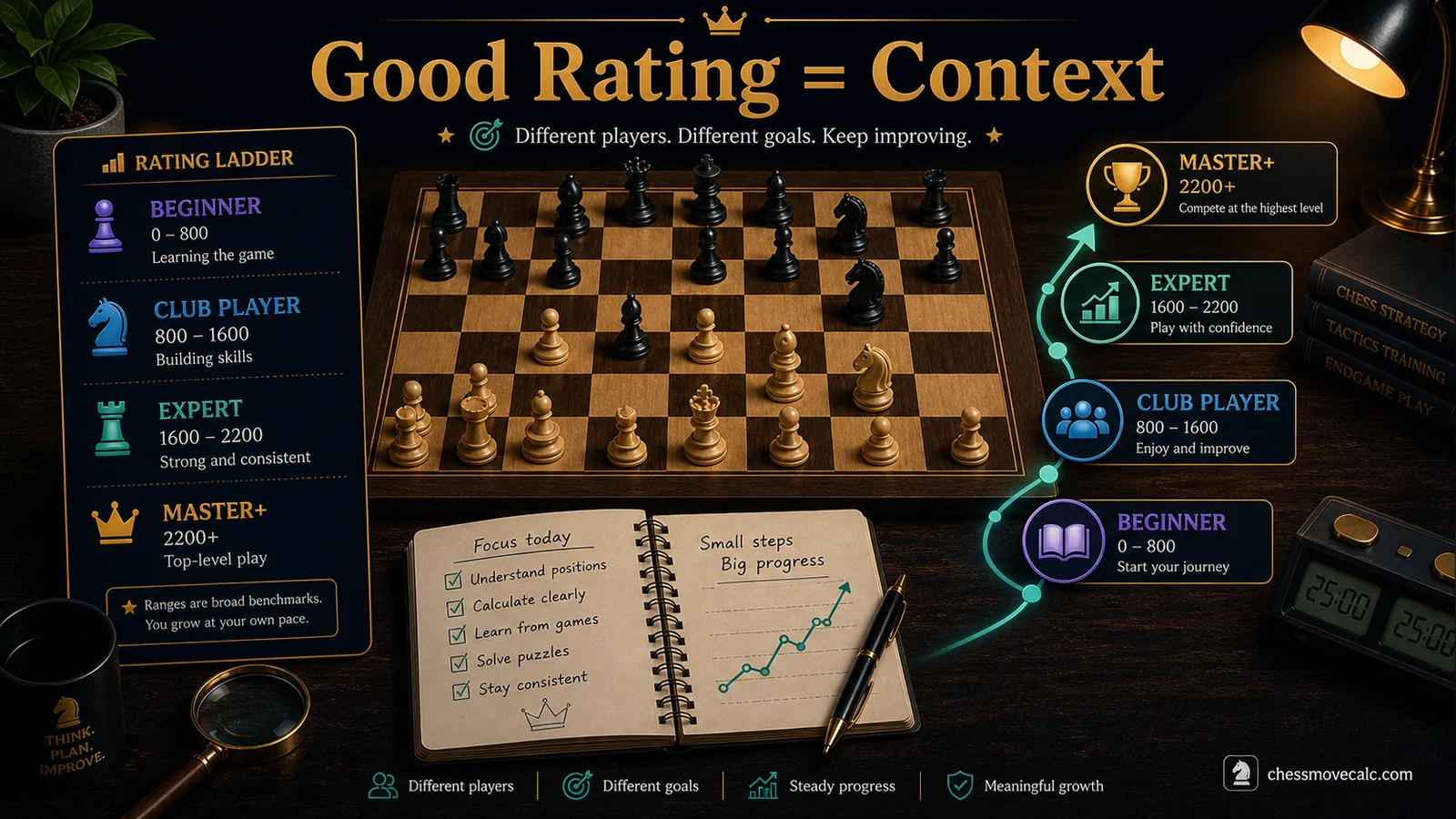
rating levels are most useful when they are presented as broad bands with practical meaning.
A good chess rating depends on what you are comparing. Start with players on the same platform and at the same time control, then consider how many rated games you have played. A stable rating and fewer repeated mistakes are more useful progress signals than comparing one online number with an unrelated tournament rating.
This page owns that reassurance-and-benchmark intent. It is different from the platform comparison page, which explains why numbers differ, and different from the Elo explainer, which teaches what ratings mean. Here the question is narrower: what counts as good in practical terms?
The honest answer is that good always depends on the environment. A rating that is solid for a new adult improver may be ordinary for a long-time club player. A rapid rating may tell a different story than a blitz rating. A FIDE number should not be judged the same way as an online number.
That does not mean the question is hopeless. It just means the best answer uses ranges, milestones, and realistic development context instead of macho one-number claims.
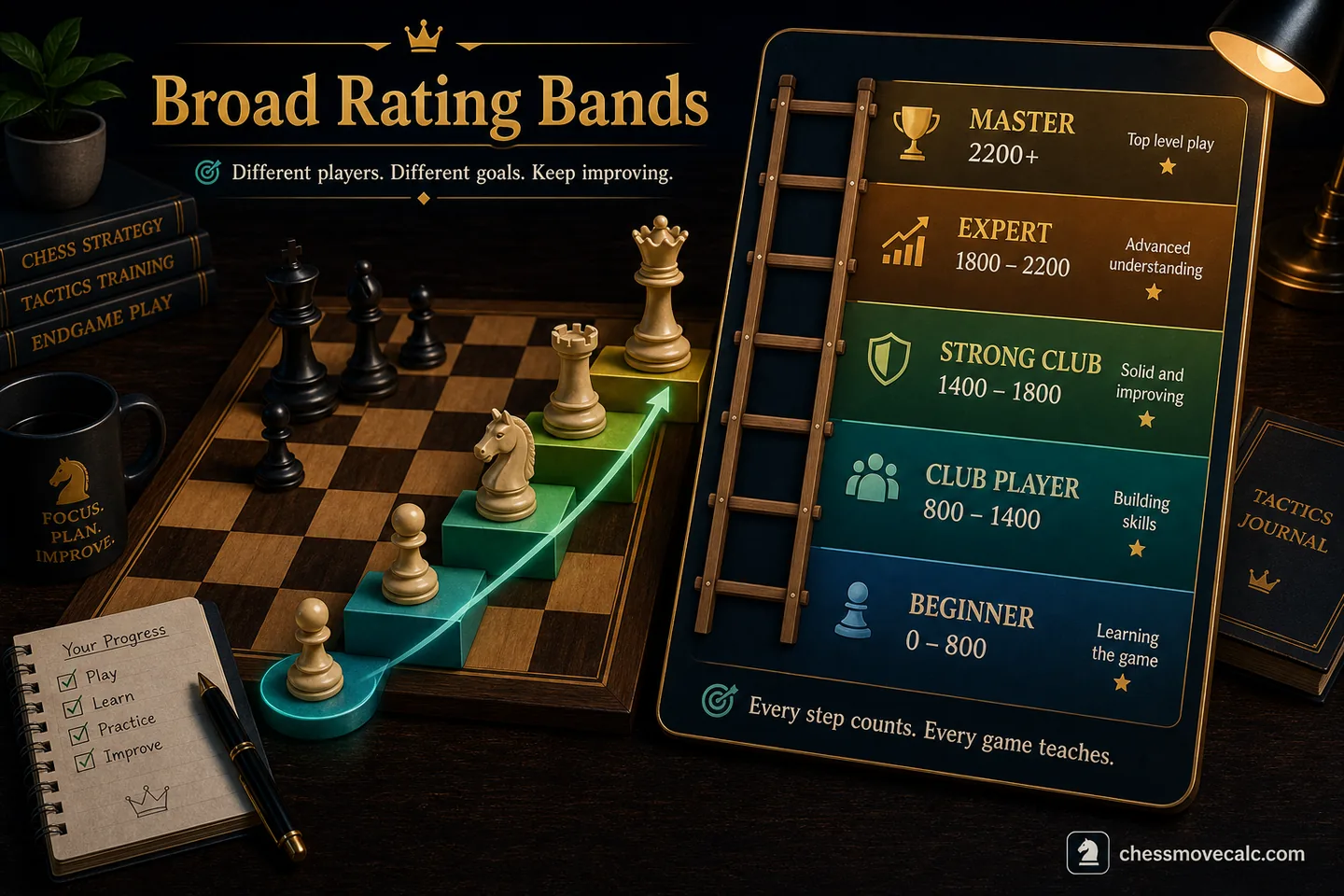
Beginner, club, strong club, expert, and master ranges
The point of a milestone range is not to trap you in a label but to show where you roughly stand in the landscape. Beginner and early improver ranges are about building core habits and tactical reliability. Club and strong-club ranges usually reflect stronger consistency, pattern recognition, and practical decision quality.
That is also where many players misread their own results. Expert and master bands reflect deeper positional understanding, calculation, and disciplined execution. Broad bands teach direction better than ultra-precise labels ever could.
A practical way to use this section is to translate the idea into decisions you can actually make during study and rating review, instead of treating the number as a mysterious label.
- Beginner and early improver ranges are about building core habits and tactical reliability.
- Club and strong-club ranges usually reflect stronger consistency, pattern recognition, and practical decision quality.
- Expert and master bands reflect deeper positional understanding, calculation, and disciplined execution.
- Broad bands teach direction better than ultra-precise labels ever could.
Read the range correctly
A milestone range is a map, not a verdict. It helps you understand the terrain, not your final ceiling.
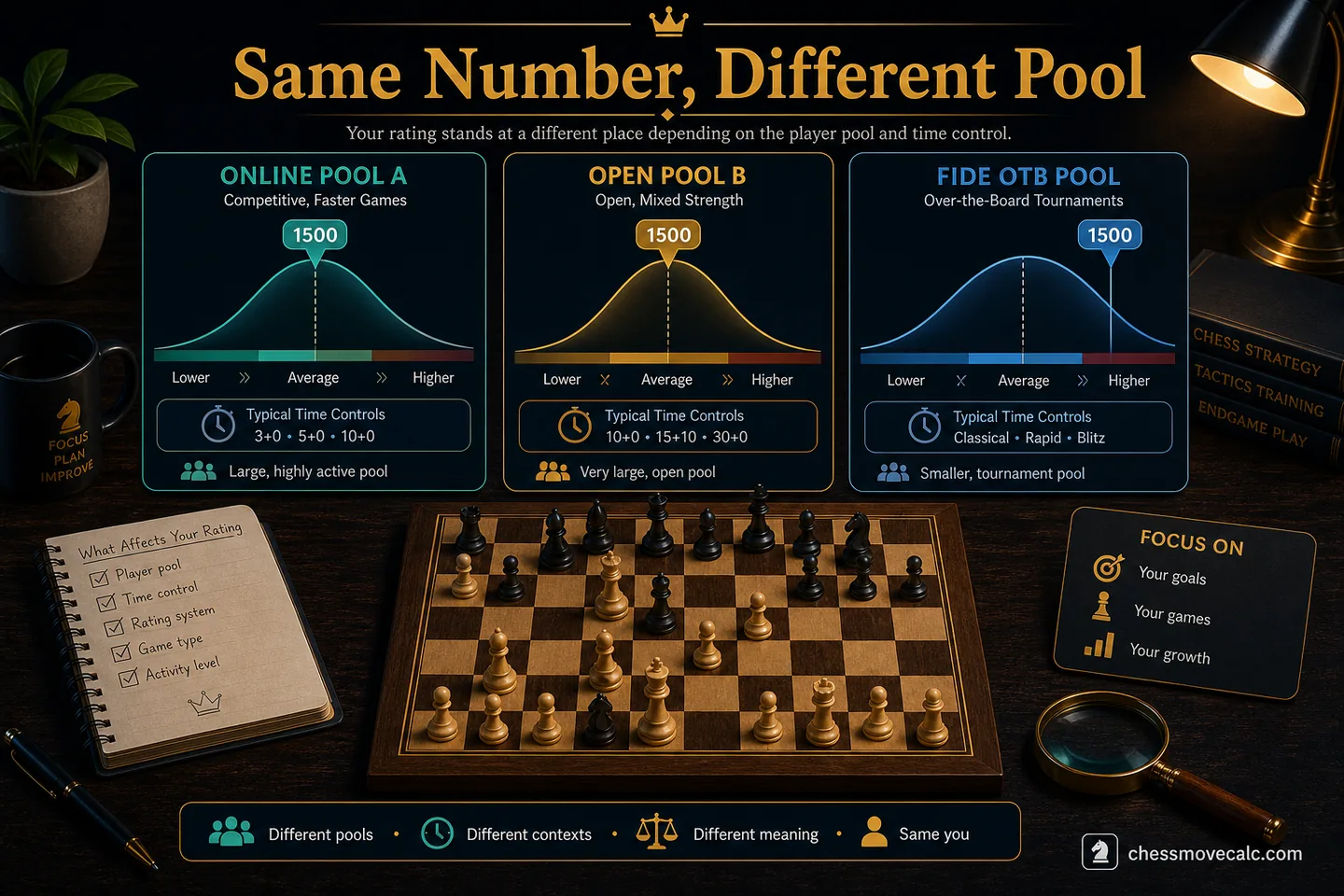
platform context changes what a number feels like in practice.
Why the same rating feels different on each platform
The player pool, update style, and time-control culture behind the number all matter. A 1200 on one platform does not automatically imply the same strength story on another. Online pools often contain different habits and different levels of activity from official over-the-board pools.
That is also where many players misread their own results. That is why good benchmarks need platform labels attached to them. Without context, the same number can create the wrong expectation very quickly.
- A 1200 on one platform does not automatically imply the same strength story on another.
- Online pools often contain different habits and different levels of activity from official over-the-board pools.
- That is why good benchmarks need platform labels attached to them.
- Without context, the same number can create the wrong expectation very quickly.
Always name the pool
When you call a rating good or average, say which platform and which time control you mean.

realistic goals are more motivating than dramatic ones because they connect rating to habits you can actually build.
Good rating goals for your first year of improvement
A good first-year plan focuses on steady skill growth, not only on chasing one emotional number. Early rating growth usually comes from tactics, blunder reduction, and game review discipline. Sustainable gains tend to beat short hot streaks followed by frustration.
That is also where many players misread their own results. Milestones help when they are paired with study habits and honest review. A useful goal should make your training clearer, not just make your ego louder.
- Early rating growth usually comes from tactics, blunder reduction, and game review discipline.
- Sustainable gains tend to beat short hot streaks followed by frustration.
- Milestones help when they are paired with study habits and honest review.
- A useful goal should make your training clearer, not just make your ego louder.
Healthy framing
Set the next milestone high enough to motivate you but close enough to shape your weekly work.
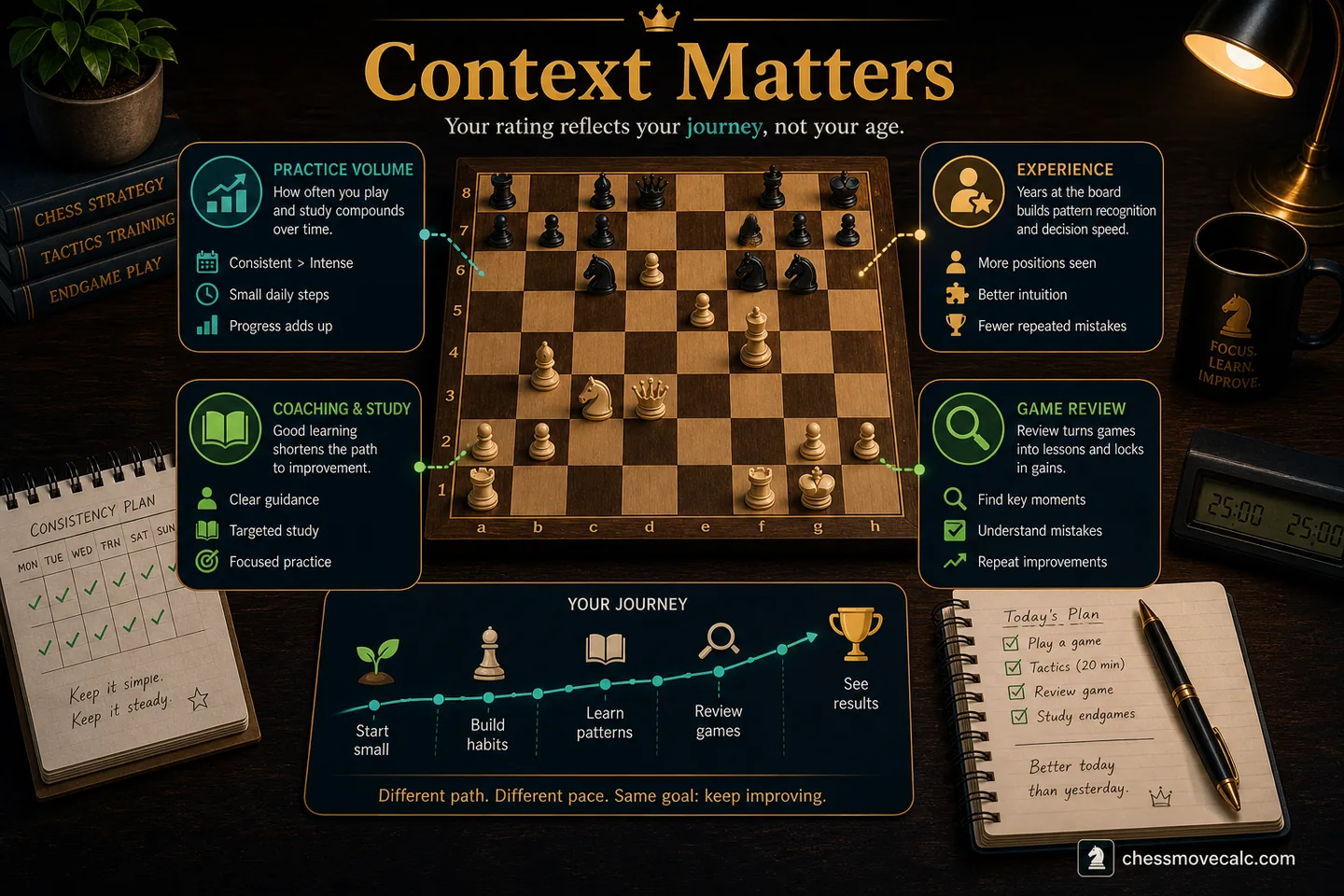
rating benchmarks feel different because people arrive at chess with different backgrounds, time budgets, and learning speeds.
Rating by age, experience, and volume of play
Experience and volume matter because a rating is still the result of played games, not just theoretical knowledge. A player with years of casual experience may score differently from a newer but more structured improver. Adults, juniors, part-time club players, and tournament grinders often progress on different timelines.
That is also where many players misread their own results. That means comparing yourself only by age or only by one milestone can be misleading. A fair benchmark respects both your environment and your actual study volume.
- A player with years of casual experience may score differently from a newer but more structured improver.
- Adults, juniors, part-time club players, and tournament grinders often progress on different timelines.
- That means comparing yourself only by age or only by one milestone can be misleading.
- A fair benchmark respects both your environment and your actual study volume.
Use honest comparisons
The fairest benchmark is usually other players with similar context, not the loudest players on the internet.
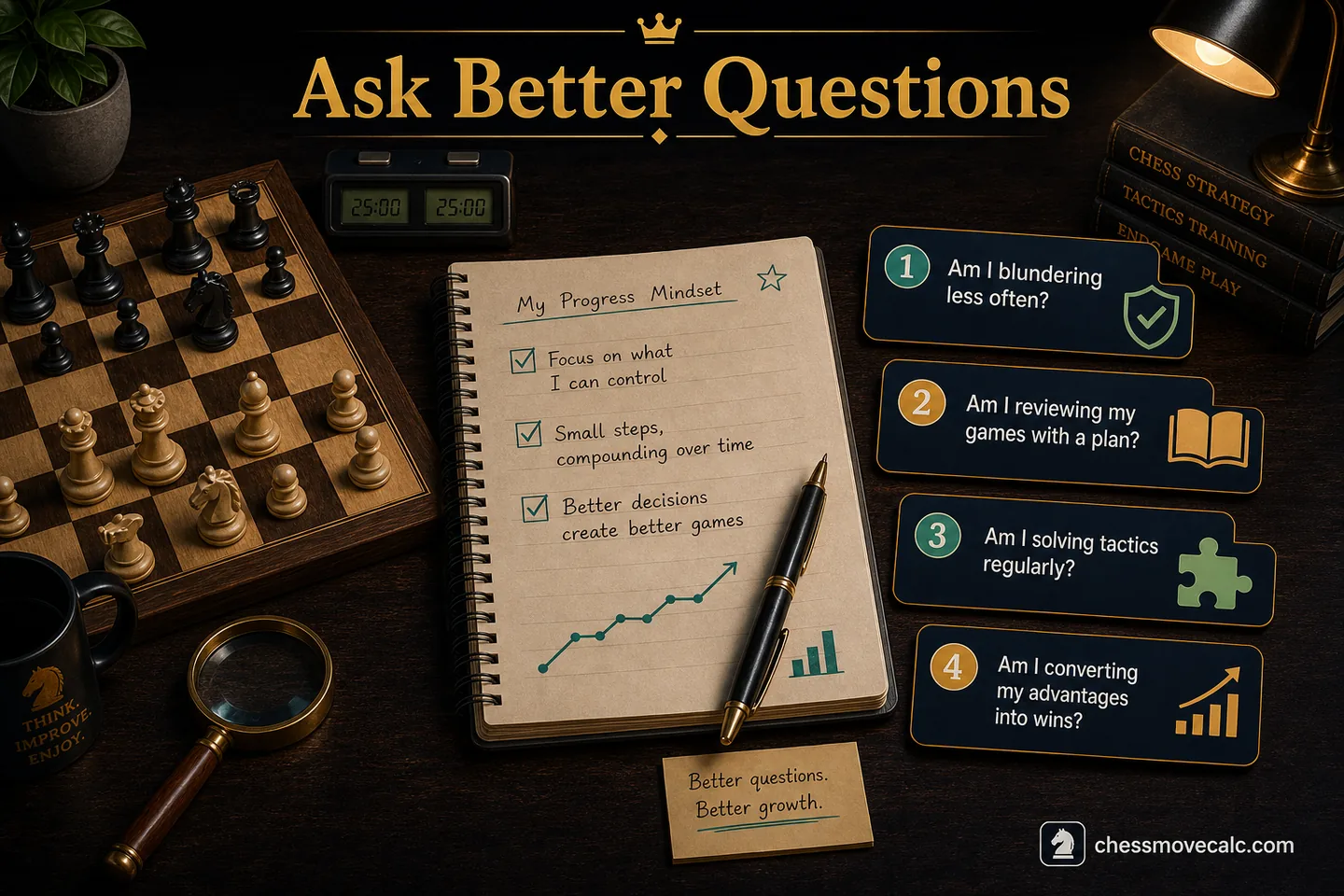
the most useful improvement questions go beyond whether your number sounds impressive.
Better questions than “is my rating good?”
Rating matters, but training quality matters more because that is the part you can actively control. Ask whether your blunder rate is falling and whether your review habits are improving. Ask whether your tactical misses are becoming rarer and your conversion technique is getting calmer.
That is also where many players misread their own results. Ask whether your recent rating is stable or inflated by a tiny hot streak. Those questions lead to better training decisions than chasing a flattering label alone.
- Ask whether your blunder rate is falling and whether your review habits are improving.
- Ask whether your tactical misses are becoming rarer and your conversion technique is getting calmer.
- Ask whether your recent rating is stable or inflated by a tiny hot streak.
- Those questions lead to better training decisions than chasing a flattering label alone.
Upgrade the question
Swap “is it good?” for “what does it say about my next training step?”
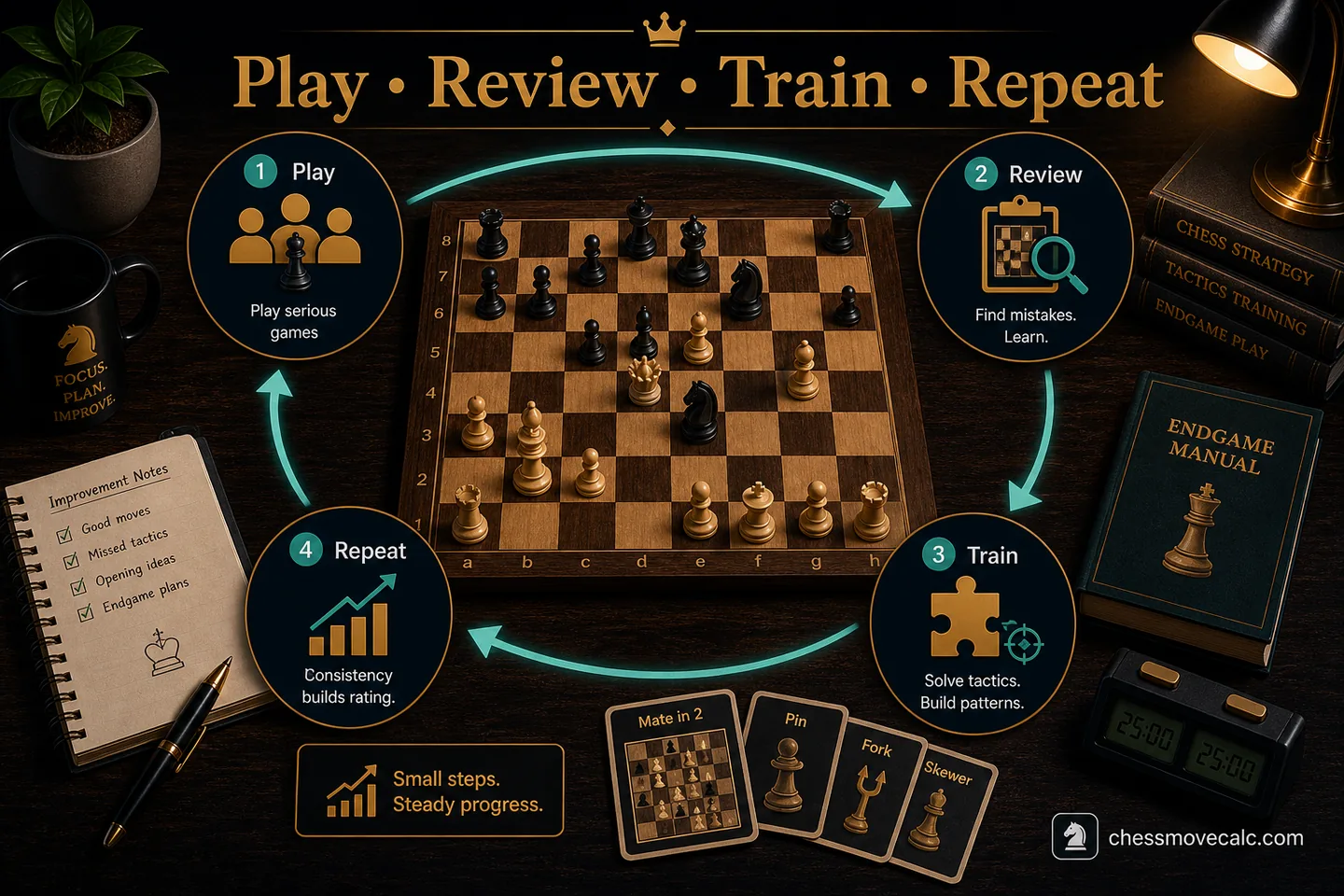
steady rating growth usually comes from boring consistency more than dramatic secrets.
How to raise your rating steadily
How to raise your rating steadily matters because the strongest gains come from playing, reviewing, and drilling the same core weaknesses long enough for them to improve. A weekly cycle of play, review, tactics, and endgame study is more powerful than random content bingeing. Using post-game review makes each game feed the next one.
That is also where many players misread their own results. Short tactical reps and cleaner opening understanding help ratings rise without making study feel chaotic. The aim is not to force the number up overnight. The aim is to become the kind of player who earns the next band naturally.
- A weekly cycle of play, review, tactics, and endgame study is more powerful than random content bingeing.
- Using post-game review makes each game feed the next one.
- Short tactical reps and cleaner opening understanding help ratings rise without making study feel chaotic.
- The aim is not to force the number up overnight. The aim is to become the kind of player who earns the next band naturally.
Best next step
Use the Elo calculator for rough expectations, then build strength with review and puzzle work.
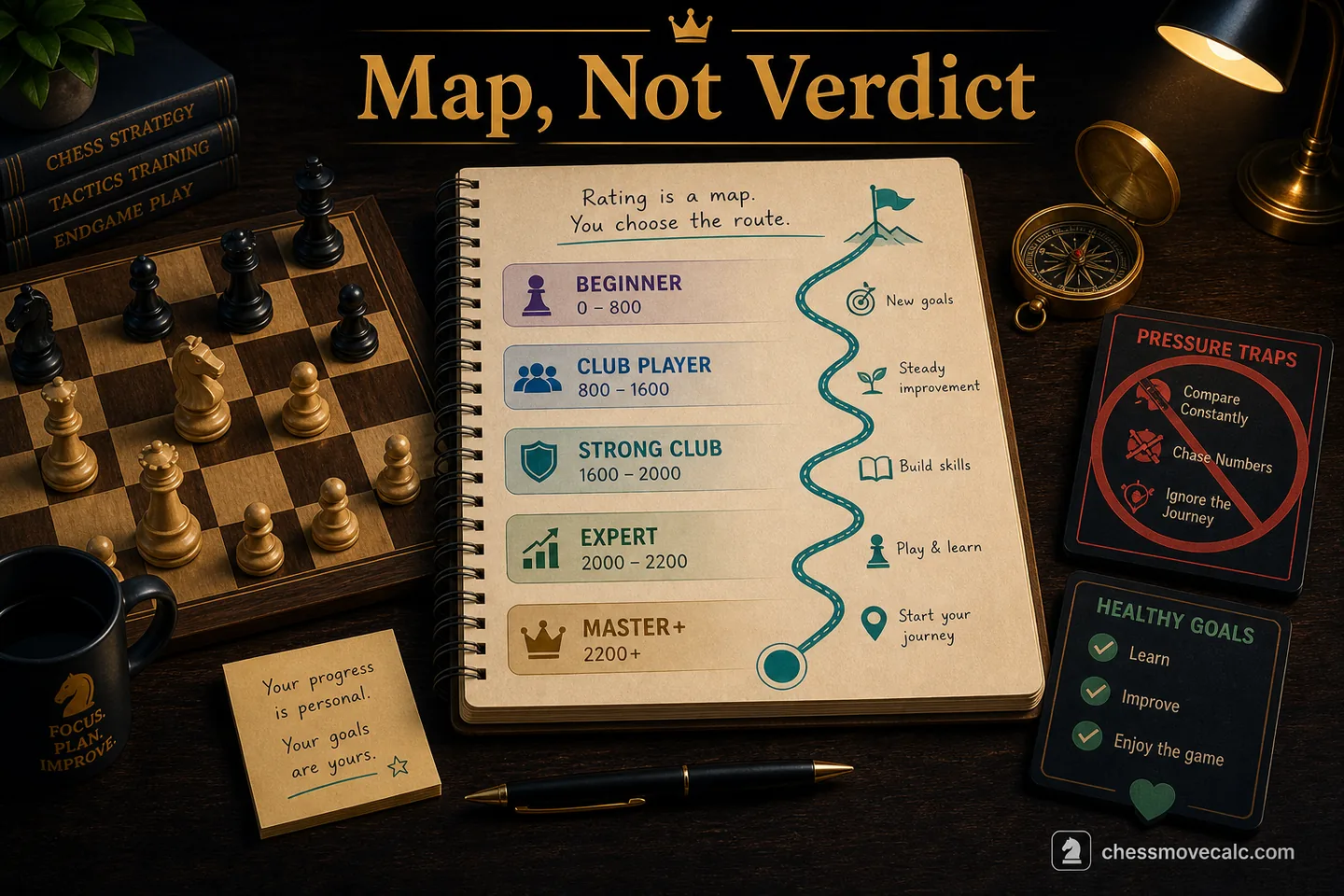
A benchmark is most useful when it motivates the next step instead of shrinking the whole journey into one label.
How to use rating benchmarks without turning them into pressure traps
Rating benchmarks help most when they point toward realistic training priorities rather than toward comparison anxiety. A good milestone should make your practice clearer, not only make your ego louder. Broad bands are useful because they show the landscape without pretending everyone grows on the same timeline.
Comparing yourself to players with similar context is usually healthier than comparing yourself to viral outliers. Small steady improvement often matters more than whether the label sounds impressive today.
A stronger habit is to ask what decision this concept should improve the very next time it appears. When you pair benchmarks with review habits, the number becomes more constructive. That is how a rating target becomes a training tool instead of a stress trigger.
That bridge is often the missing ingredient between reading an article once and truly keeping the lesson when the position becomes real.
- A good milestone should make your practice clearer, not only make your ego louder.
- Broad bands are useful because they show the landscape without pretending everyone grows on the same timeline.
- Comparing yourself to players with similar context is usually healthier than comparing yourself to viral outliers.
- Small steady improvement often matters more than whether the label sounds impressive today.
- When you pair benchmarks with review habits, the number becomes more constructive.
- That is how a rating target becomes a training tool instead of a stress trigger.
Practical takeaway
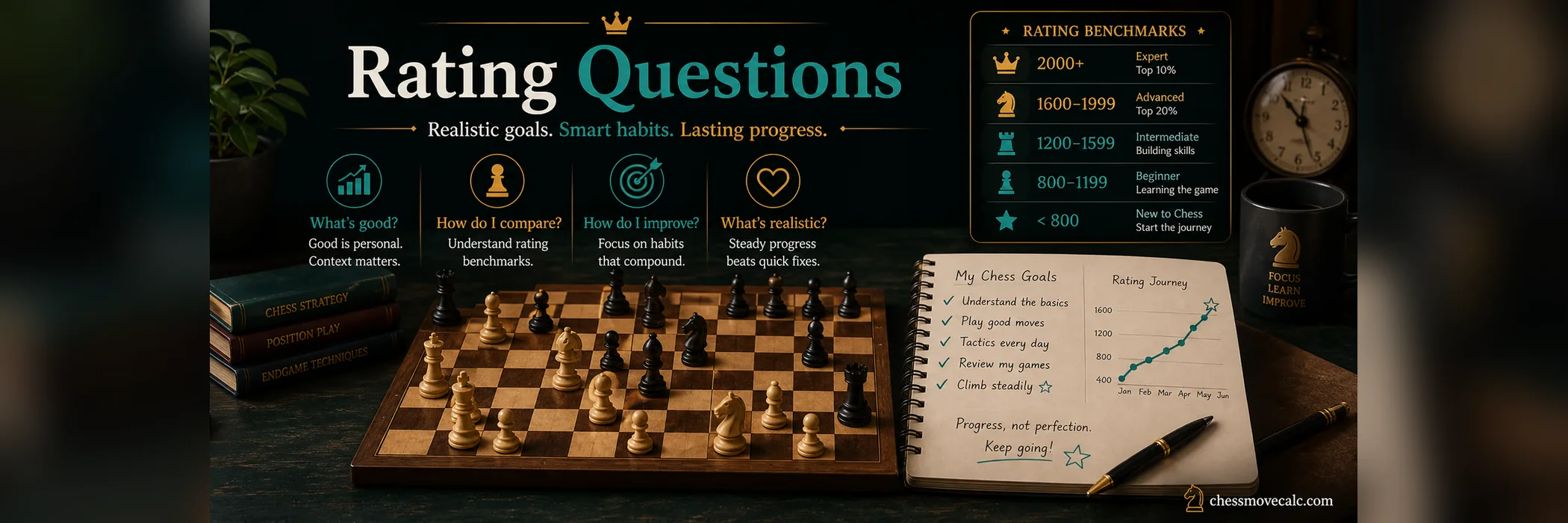
What Is a Good Chess Rating? FAQs
Is 1000 a good chess rating?
It can be a perfectly respectable early milestone, especially for a newer player in the right context.
Is 1200 good on Chess.com?
It depends on time control and experience, but it is often a meaningful developing-player benchmark.
What is an average club-player rating?
There is no single universal average, which is why broad ranges are better than one-size-fits-all claims.
How long does it take to reach 1500?
That depends on study quality, game volume, prior experience, and time control, so the timeline varies a lot.
Should I care more about rating or accuracy?
You should care about rating, but pair it with review quality and decision quality so the number has context.
What is the best way to improve steadily?
Play, review your games, train tactics consistently, and work on the weaknesses that appear repeatedly.
Estimate the next milestone, then train toward it honestly
Use the calculator for expectations and the analysis cluster for the work that actually moves the number upward over time.