One clear movement map makes almost every other beginner lesson easier
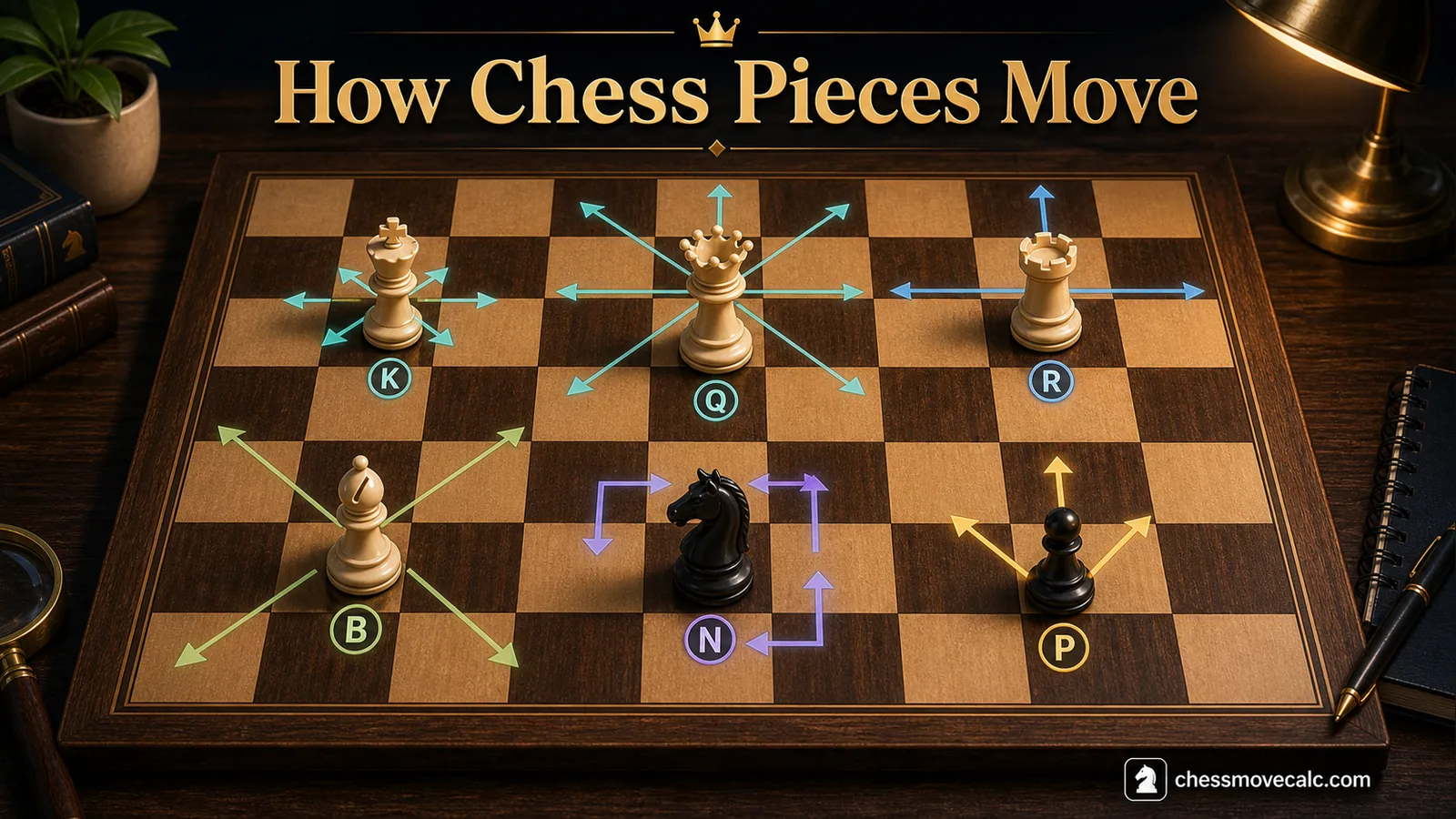
the king is simple to describe but easy to misuse because its safety rule matters as much as its movement pattern.
Most chess confusion starts before tactics, openings, or engines ever appear. It starts with piece movement. If movement rules are fuzzy, notation feels harder, board setup feels slower, and puzzles feel random because you cannot trust your own candidate moves yet.
That is why this article is broader than Where Does the Queen Go in Chess?, which owns one setup question, and broader than Castling Rules Explained or En Passant Explained, which cover special cases. This page is the full movement map.
A good movement guide does not only tell you the legal pattern. It also explains how captures work, what counts as a legal move, which beginner mistakes are common, and which later rules connect to that piece. That practical layer is what many thin SERP pages miss.
If you learn movement cleanly once, the rest of chess becomes easier to organize. Board setup makes more sense. Coordinates feel more useful. Notation becomes less abstract because the move letters actually point to patterns you recognize.
That is the job of this guide: turn six separate movement rules into one connected beginner system.
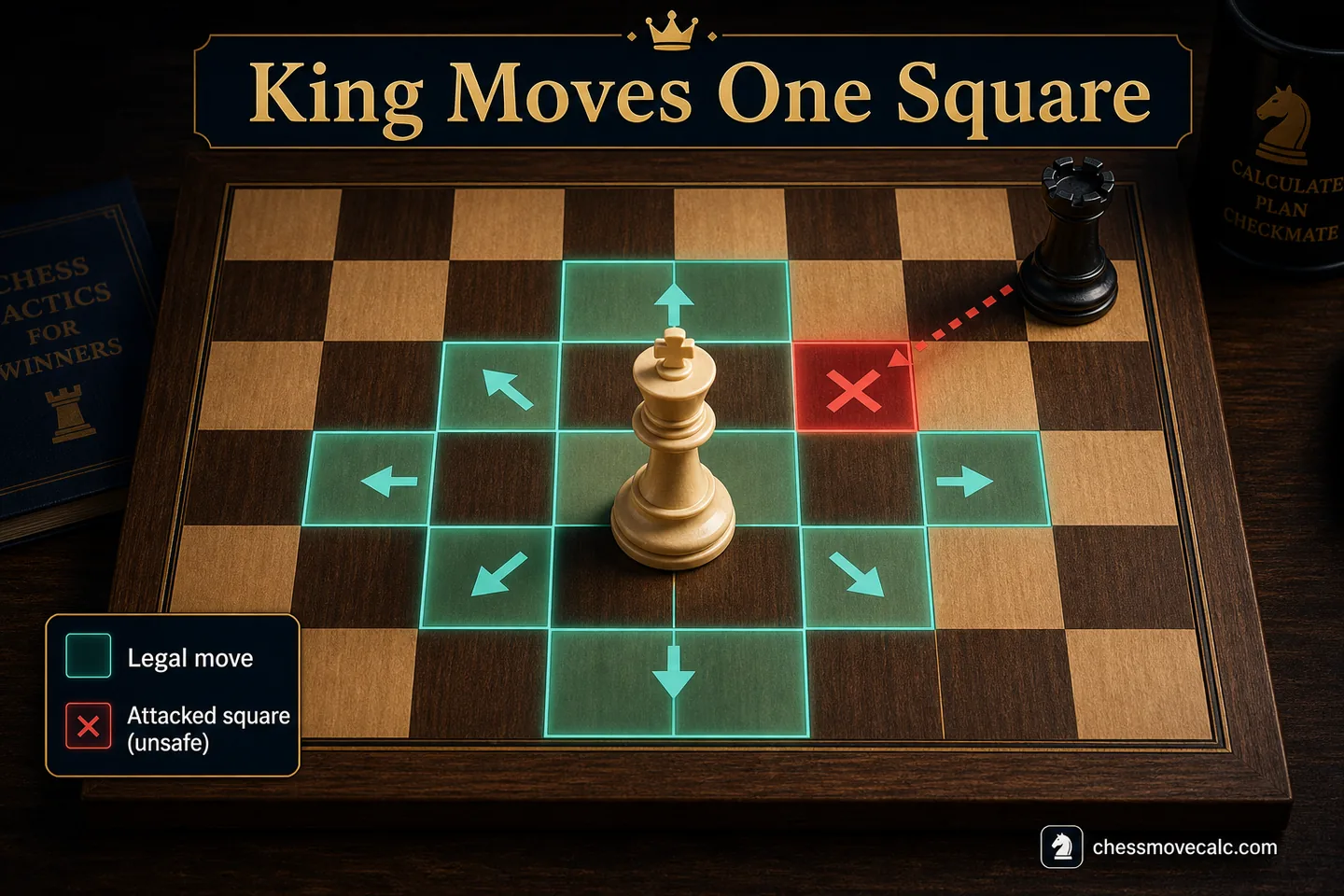
How the king moves
The king moves one square in any direction, but it cannot move into check. The king can move vertically, horizontally, or diagonally by one square. That wide one-square reach is balanced by the rule that the king must stay out of check.
That is where many beginners either simplify too much or remember the rule in a half-correct way. Beginners often remember the pattern but forget the safety restriction. That is why some moves that look physically possible are still illegal in real chess.
The practical goal is to make the rule easy to use over a real board, not just easy to recite in isolation.
- The king can move vertically, horizontally, or diagonally by one square.
- That wide one-square reach is balanced by the rule that the king must stay out of check.
- Beginners often remember the pattern but forget the safety restriction.
- That is why some moves that look physically possible are still illegal in real chess.
Key restriction
The king cannot move into check, remain in check, or ignore a direct threat.
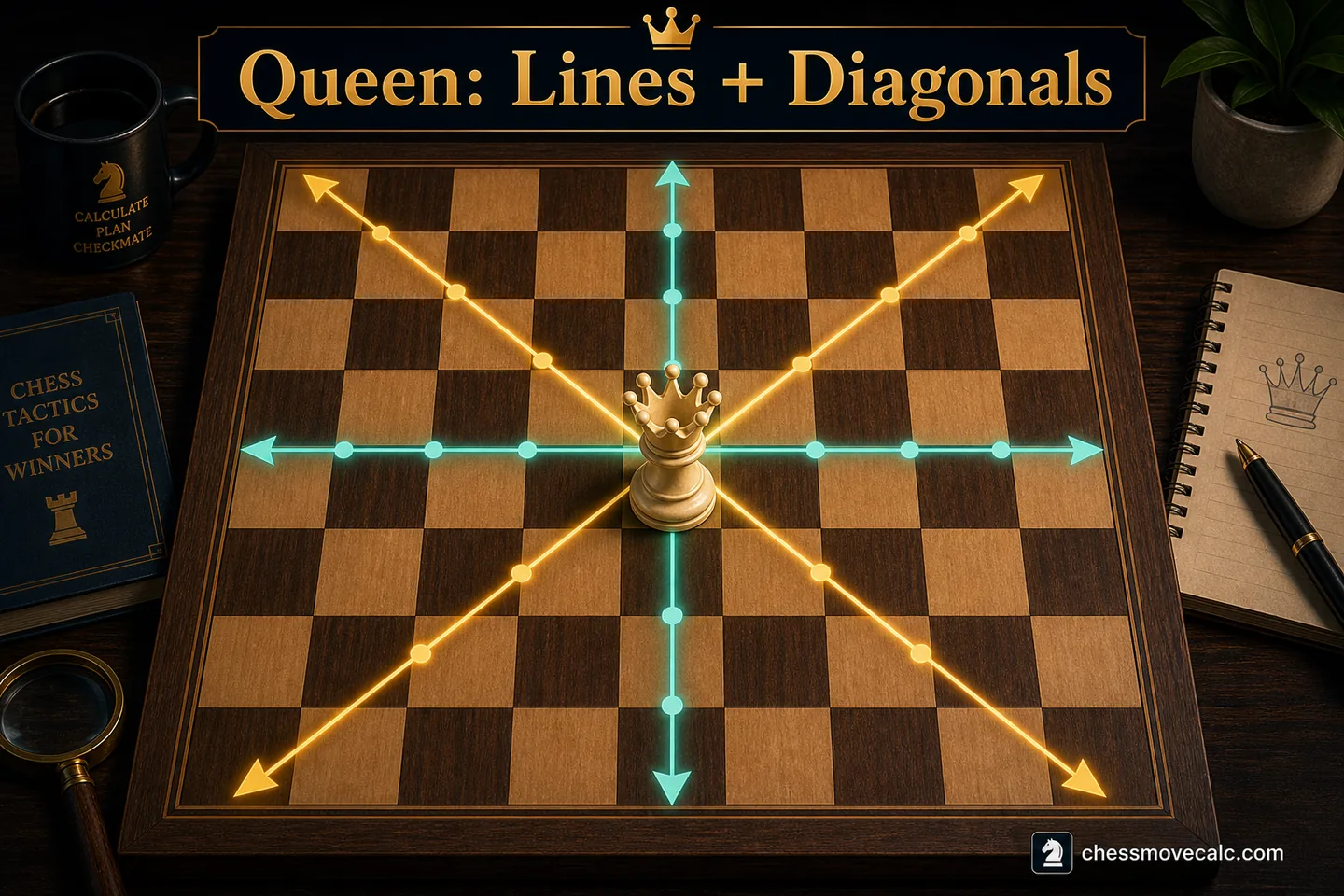
the queen combines rook and bishop movement, which is why it feels so powerful so quickly.
How the queen moves
The queen can move any number of squares along ranks, files, or diagonals as long as the path is clear. That makes the queen flexible in both attacking and defending roles. It also makes beginner overuse common because the piece feels strong before the rest of the position is ready.
That is where many beginners either simplify too much or remember the rule in a half-correct way. Learning the queen is not only about range. It is about remembering that long-range pieces still need open lines. A blocked path means the queen cannot jump through her own pieces to reach the target square.
- That makes the queen flexible in both attacking and defending roles.
- It also makes beginner overuse common because the piece feels strong before the rest of the position is ready.
- Learning the queen is not only about range. It is about remembering that long-range pieces still need open lines.
- A blocked path means the queen cannot jump through her own pieces to reach the target square.
Easy memory aid
The queen moves like a rook plus a bishop combined.
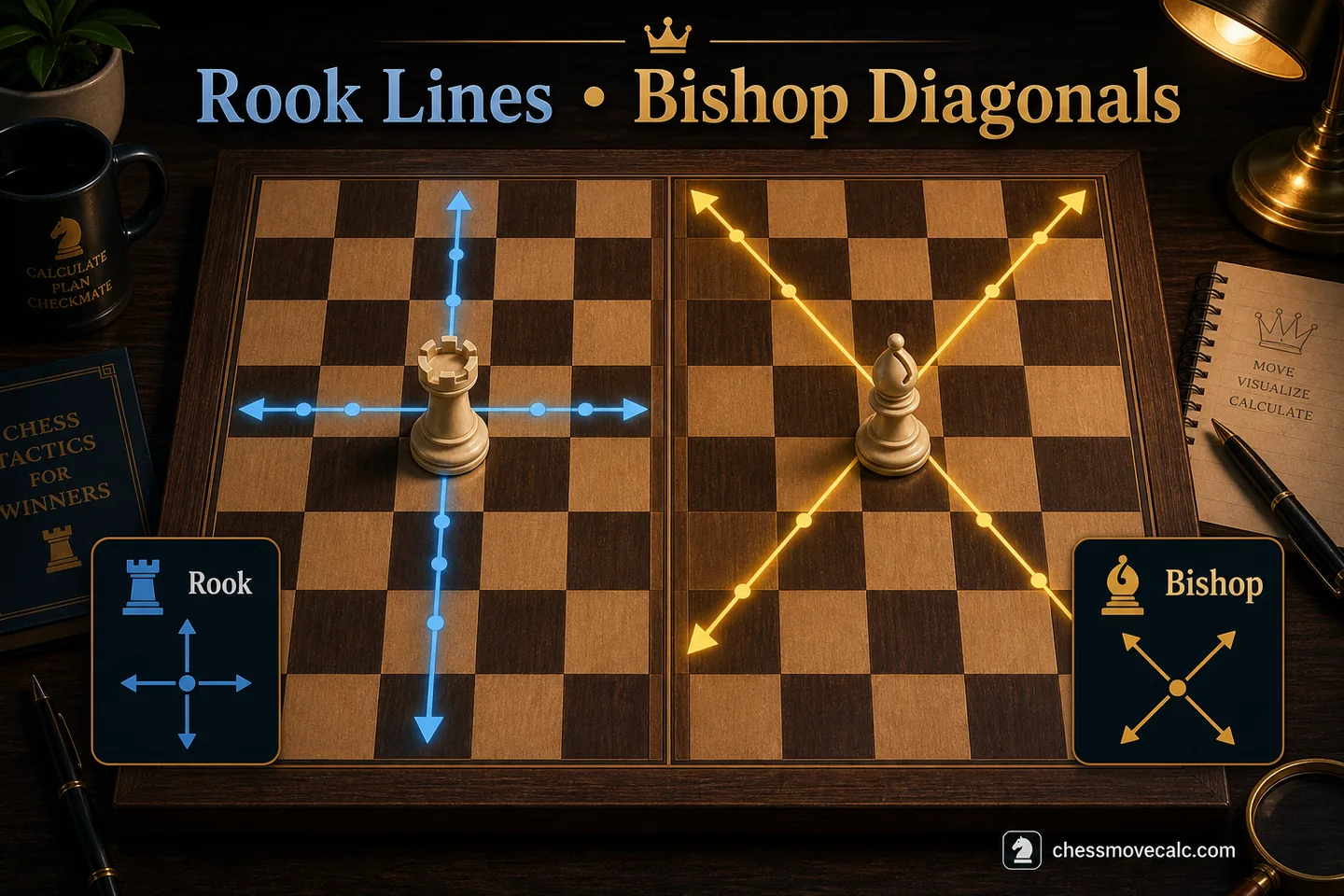
these pieces are easiest to confuse when beginners remember line movement but forget the direction limits.
How rooks and bishops move
Rooks move in straight lines while bishops stay on diagonals for the whole game. Rooks control files and ranks, which makes them strong in open positions. Bishops live on one color complex, so each bishop stays on either light or dark squares.
That is where many beginners either simplify too much or remember the rule in a half-correct way. Both pieces need clear paths because neither one can jump over blockers. Their long-range value grows when the board opens and lanes become available.
- Rooks control files and ranks, which makes them strong in open positions.
- Bishops live on one color complex, so each bishop stays on either light or dark squares.
- Both pieces need clear paths because neither one can jump over blockers.
- Their long-range value grows when the board opens and lanes become available.
Why this pair matters
Rook and bishop movement becomes much easier once you think in straight lines versus diagonals.
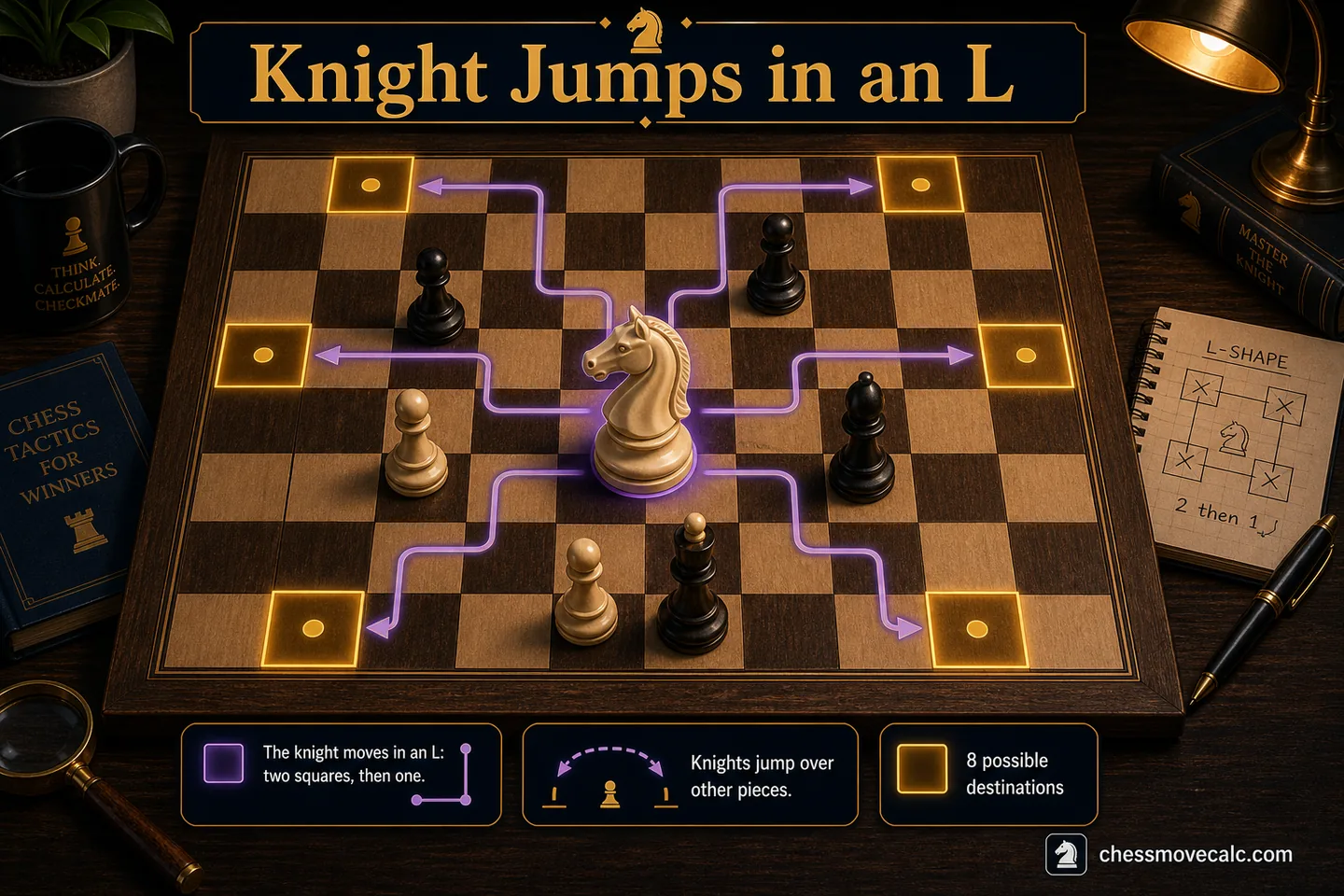
the knight breaks the normal line-movement pattern, which is exactly why it confuses and surprises people.
How the knight moves
It moves in an L-shape and can jump over any pieces standing in the way. The knight travels two squares in one direction and one square at a right angle. Because it jumps, blocked boards often favor knight activity early in the game.
That is where many beginners either simplify too much or remember the rule in a half-correct way. Beginners sometimes try to move it diagonally because the pattern is remembered too vaguely. A better habit is to picture the L-shape and the landing squares instead of tracing a path.
- The knight travels two squares in one direction and one square at a right angle.
- Because it jumps, blocked boards often favor knight activity early in the game.
- Beginners sometimes try to move it diagonally because the pattern is remembered too vaguely.
- A better habit is to picture the L-shape and the landing squares instead of tracing a path.
Fast memory trick
Think two plus one, not curved path. The knight lands; it does not slide.
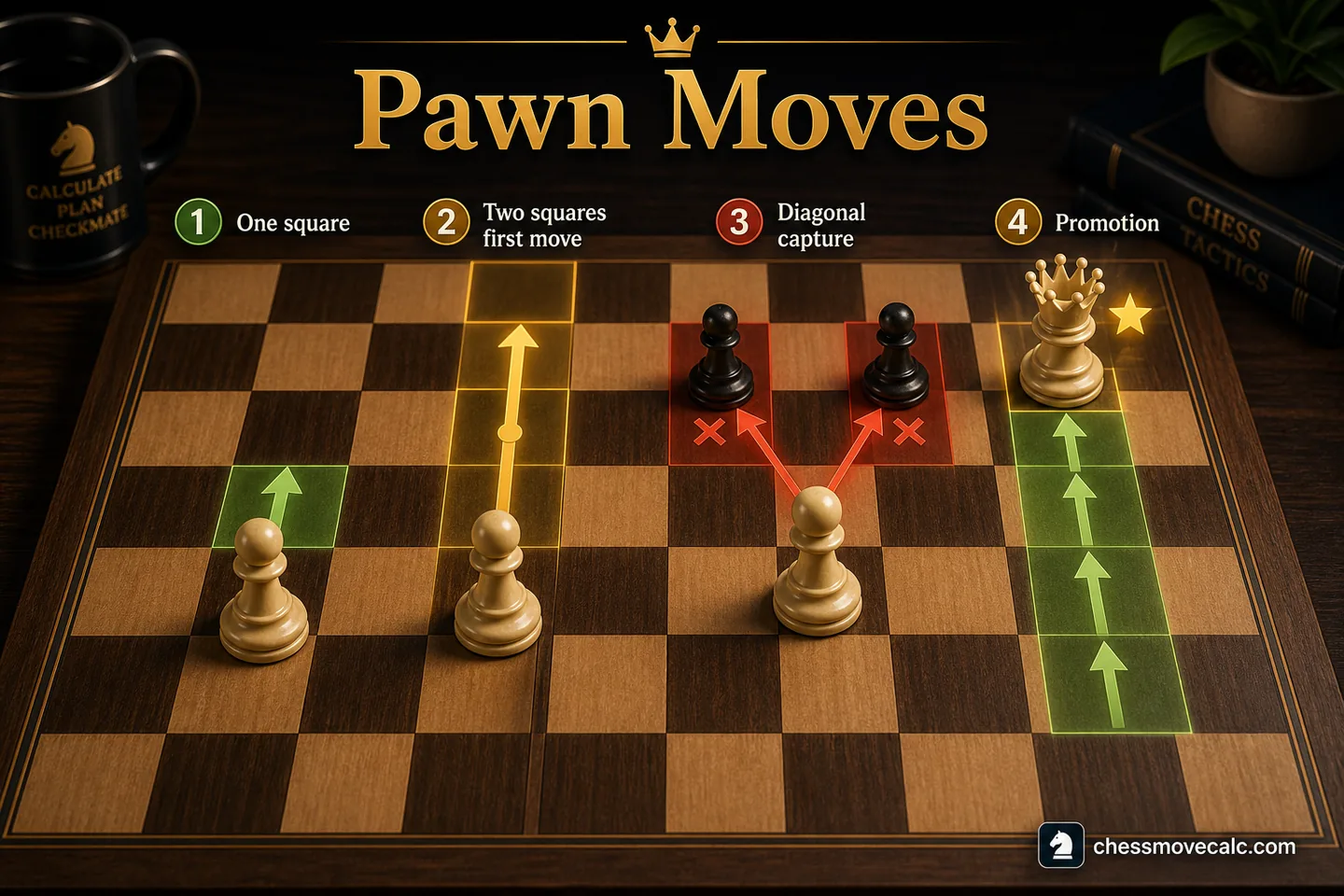
pawns create the most beginner mistakes because their movement rule and capture rule are different.
How pawns move and capture
A pawn usually moves forward but captures diagonally, and that single twist changes a lot of board logic. A pawn can move one square forward if the square is empty. From its starting rank, it may move two squares if both are clear.
That is where many beginners either simplify too much or remember the rule in a half-correct way. It captures one square diagonally forward, not straight ahead. When a pawn reaches the last rank, it promotes into another piece, usually a queen.
- A pawn can move one square forward if the square is empty.
- From its starting rank, it may move two squares if both are clear.
- It captures one square diagonally forward, not straight ahead.
- When a pawn reaches the last rank, it promotes into another piece, usually a queen.
Most common mistake
A pawn that sees an enemy straight ahead cannot capture it straight ahead.
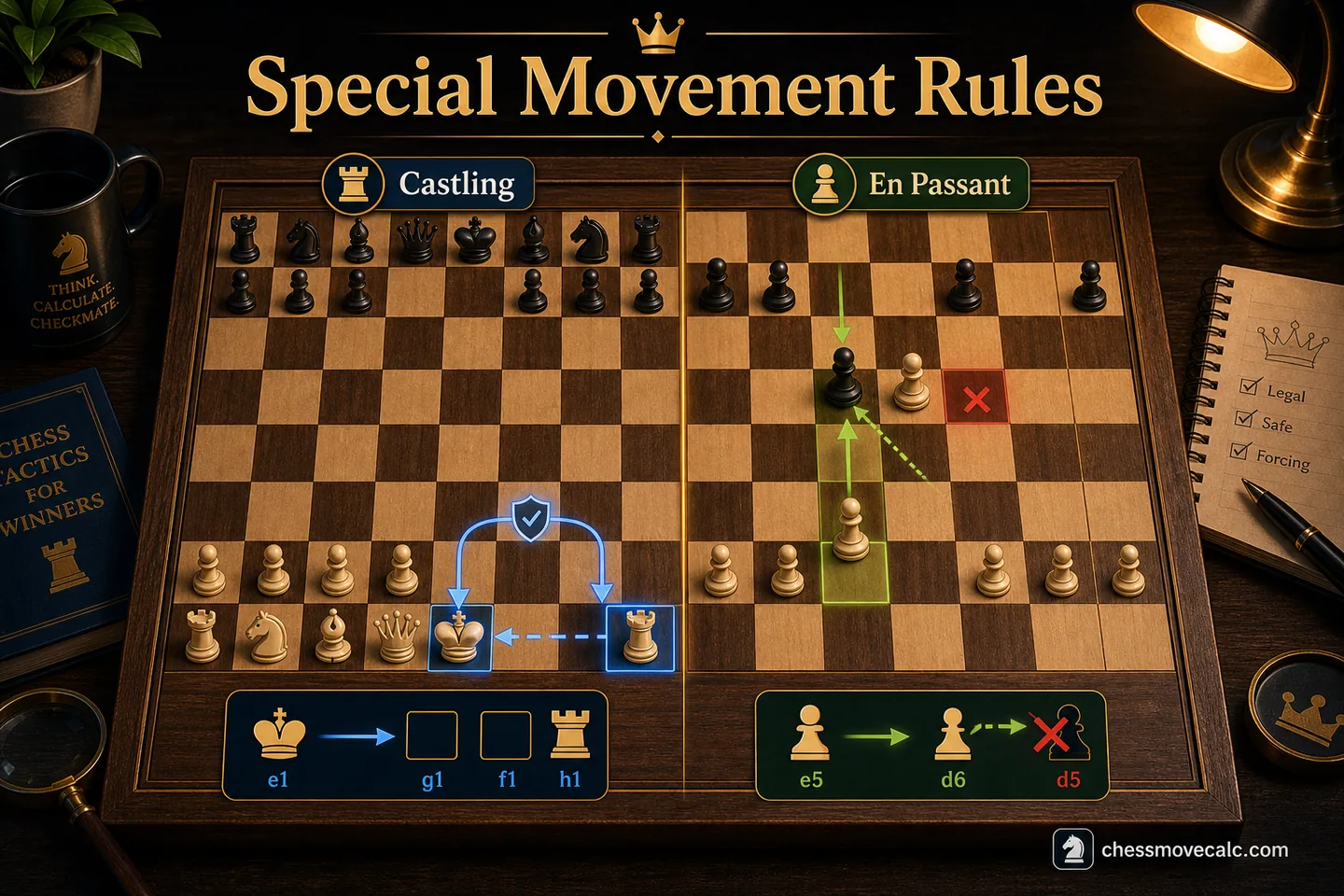
special rules are easier to learn once basic movement already feels stable.
Special rules connected to movement
Castling and en passant are not random exceptions; they are structured extensions of normal movement ideas. Castling connects king safety with rook development in one move. En passant exists because pawns move two squares from their starting rank.
That is where many beginners either simplify too much or remember the rule in a half-correct way. Both rules feel much easier once ordinary king, rook, and pawn movement already makes sense. That is why many beginners should learn special rules after the core movement patterns are stable.
- Castling connects king safety with rook development in one move.
- En passant exists because pawns move two squares from their starting rank.
- Both rules feel much easier once ordinary king, rook, and pawn movement already makes sense.
- That is why many beginners should learn special rules after the core movement patterns are stable.
Natural next reads
Continue to Castling Rules Explained and En Passant Explained once this base feels comfortable.
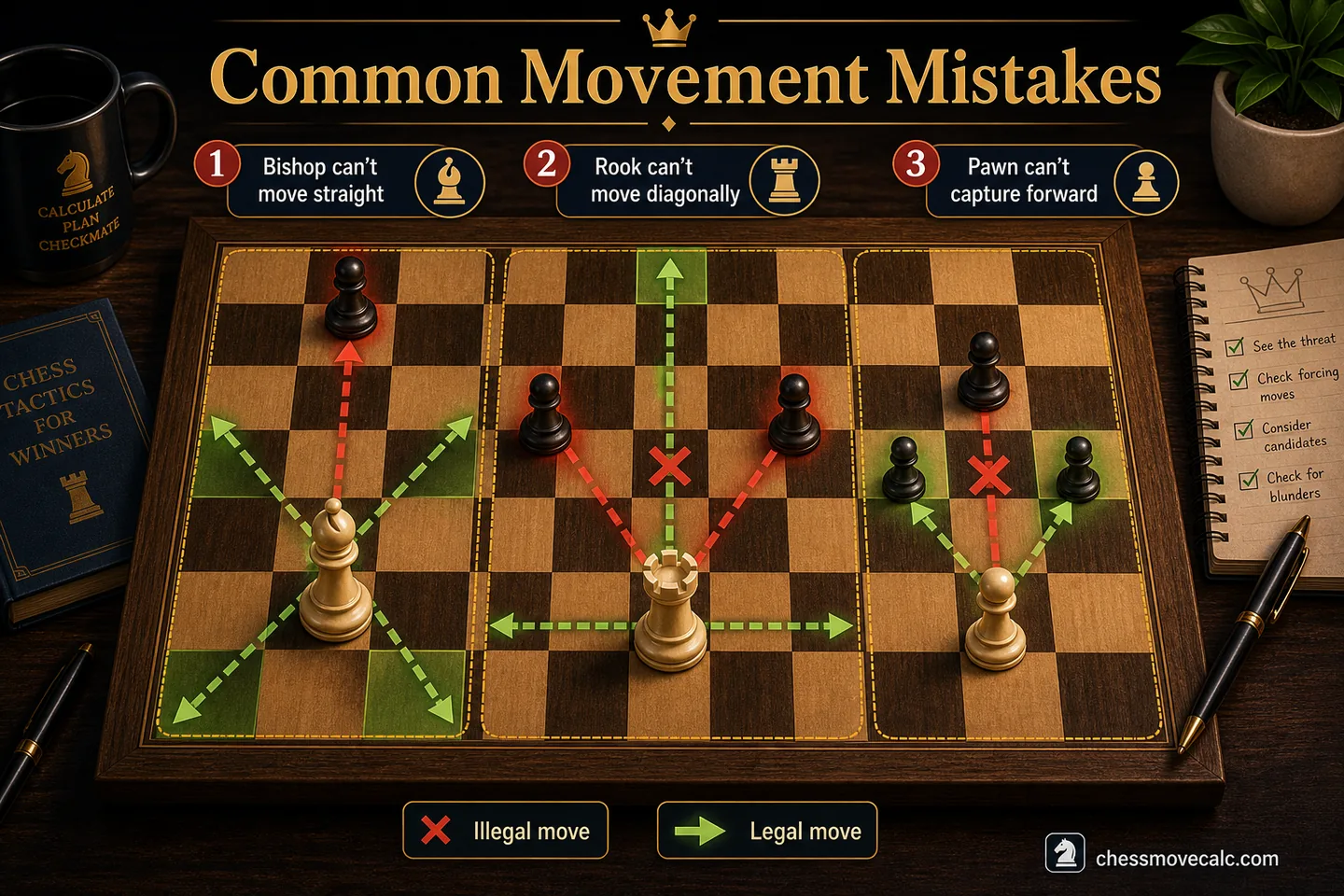
movement mistakes repeat so often that they deserve direct practice rather than vague reminders.
Common piece-movement mistakes beginners make
Most illegal beginner moves come from only half-remembering a pattern. Players try to move bishops straight, rooks diagonally, or pawns as if they capture forward. They also forget that kings cannot step into check and that long-range pieces cannot jump blockers.
That is where many beginners either simplify too much or remember the rule in a half-correct way. The fix is to slow down, name the movement rule, and verify the destination square before touching the piece. A few careful practice sessions usually clean up these errors faster than hundreds of rushed games.
- Players try to move bishops straight, rooks diagonally, or pawns as if they capture forward.
- They also forget that kings cannot step into check and that long-range pieces cannot jump blockers.
- The fix is to slow down, name the movement rule, and verify the destination square before touching the piece.
- A few careful practice sessions usually clean up these errors faster than hundreds of rushed games.
Best practice habit
When a move feels uncertain, say the rule out loud before you play it. That makes the pattern much easier to retain.
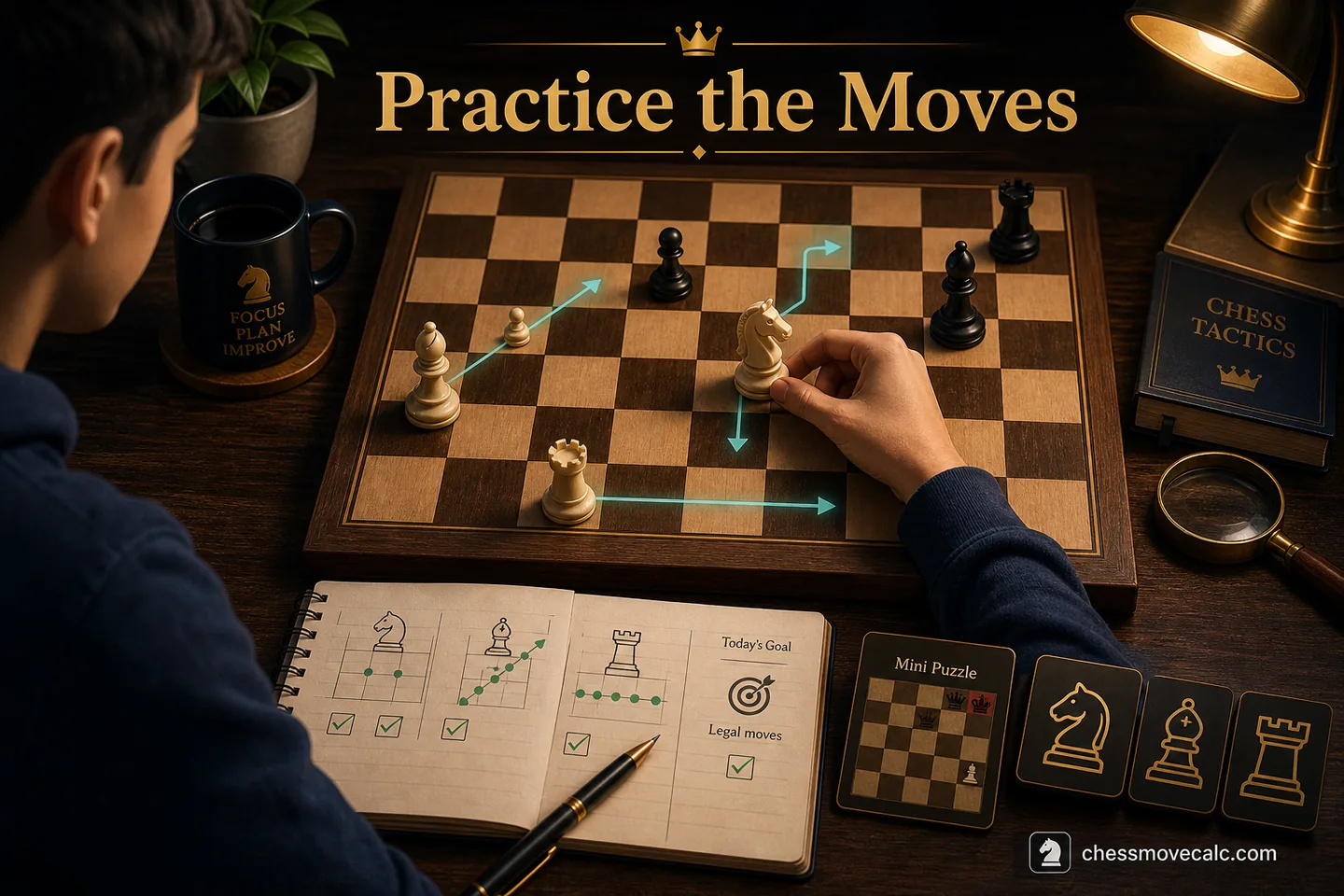
Movement rules become much easier once they are rehearsed actively instead of only read once.
Simple practice habits that make piece movement stick faster
Most movement confusion disappears when players practice the rules in short recognition drills instead of relying on vague memory. Name the movement rule before you move the piece in early practice games. Use mini-board drills to separate movement from capture when the rule changes, especially for pawns.
Pair movement study with coordinates so the destination squares start feeling natural too. Review illegal-move mistakes after games instead of just shrugging them off.
A stronger habit is to ask what decision this concept should improve the very next time it appears. A few careful sessions usually fix the most common errors faster than many rushed games. That is why movement practice compounds into stronger setup, notation, and puzzle work later.
That bridge is often the missing ingredient between reading an article once and truly keeping the lesson when the position becomes real.
- Name the movement rule before you move the piece in early practice games.
- Use mini-board drills to separate movement from capture when the rule changes, especially for pawns.
- Pair movement study with coordinates so the destination squares start feeling natural too.
- Review illegal-move mistakes after games instead of just shrugging them off.
- A few careful sessions usually fix the most common errors faster than many rushed games.
- That is why movement practice compounds into stronger setup, notation, and puzzle work later.
Practical takeaway
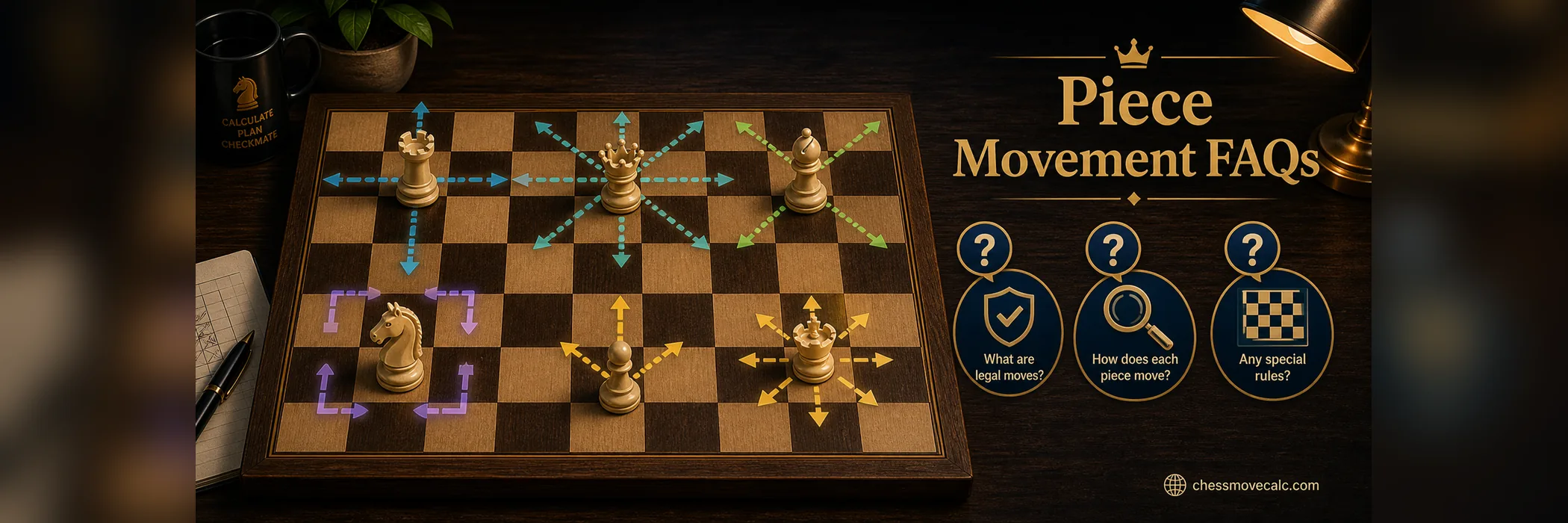
How Chess Pieces Move FAQs
Which chess piece is the strongest?
The queen is usually the strongest because it combines rook and bishop movement.
Can the knight jump over pieces?
Yes. It is the only piece that can leap over other pieces.
How do pawns capture?
Pawns capture one square diagonally forward, not straight ahead.
Can the king move into check?
No. Any move that places the king in check is illegal.
What special movement rules should beginners learn next?
Castling and en passant are the two key special movement rules to learn after basic piece movement.
What is the fastest way to remember piece movement?
Study one piece at a time, connect each rule to a board image, and practice short legal-move drills.
Practice movement on a live board
Use the setup and play pages to turn rule memory into faster recognition during real games.