Castling feels simple until you meet the exact conditions that make it legal or illegal
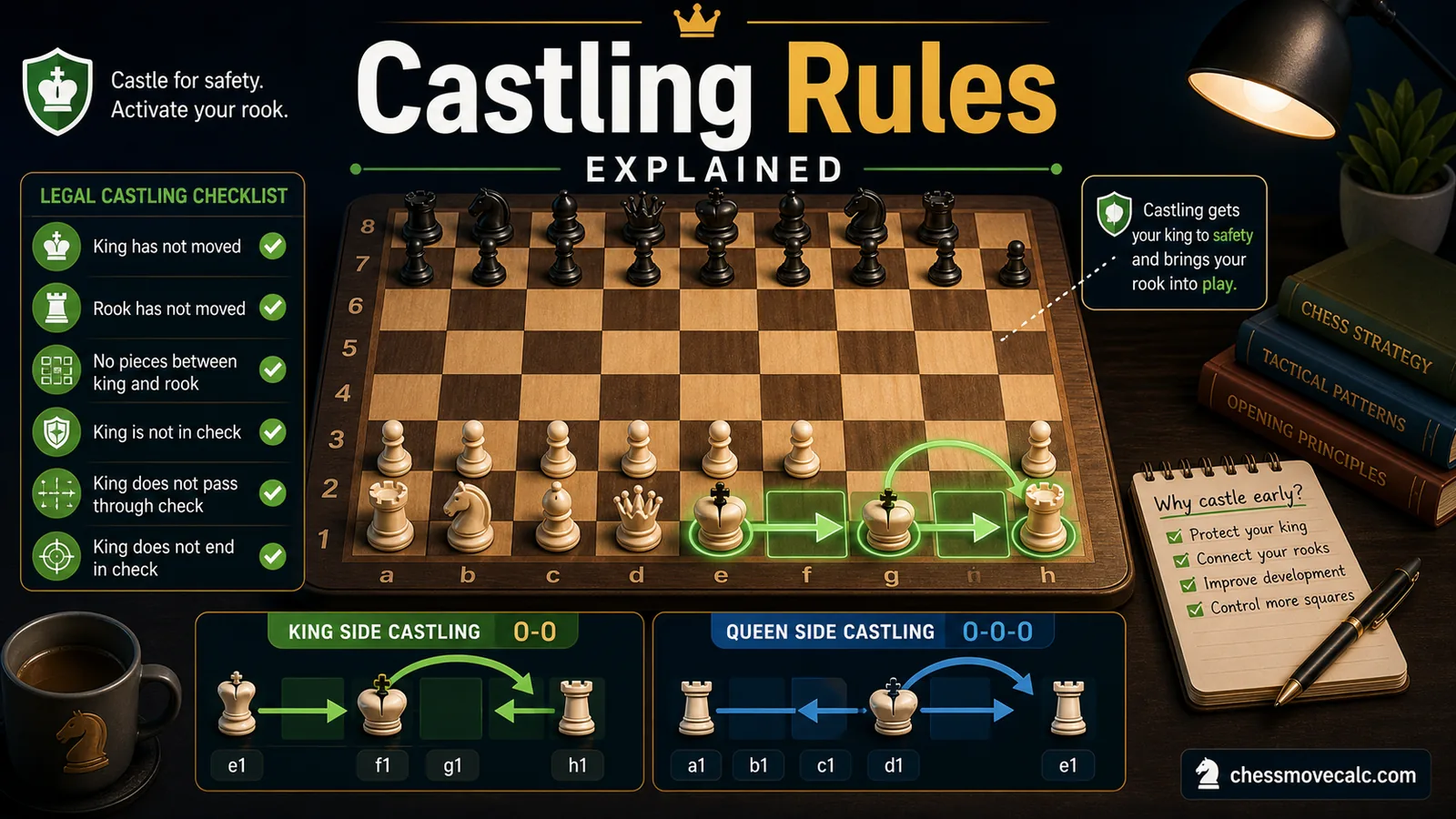
castling combines king safety and rook development in one move, which is why it is so important.
Castling is easy to recognize but surprisingly easy to misapply. Most beginner mistakes come from remembering the motion without remembering the legality checklist: whether the king or rook moved, whether the path is clear, and whether the king touches any attacked square.
This guide answers those rule questions visually and directly. It pairs well with How Chess Pieces Move because castling only makes sense once king and rook movement are already stable.
The good news is that castling is not random. It is a clean rule with a clear checklist. If you learn that checklist once and attach it to board examples, the confusion drops fast.
It also helps strategically because castling is not just a rules quiz. It is one of the main ways players protect the king and activate a rook.
So this guide covers both sides: how the rule works and why players care about it at all.
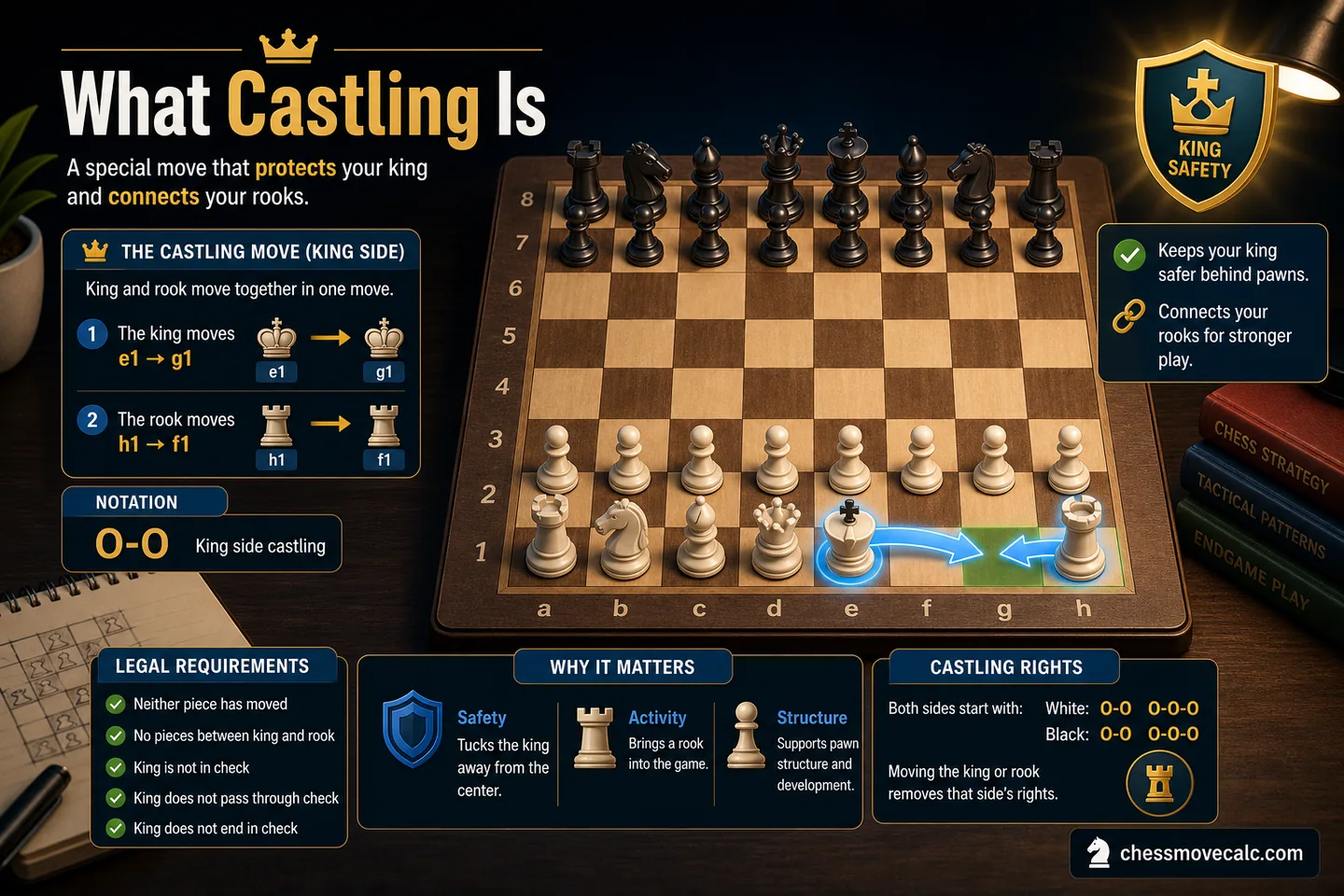
What castling is and why it matters
The king steps toward the rook and the rook jumps to the square beside the king. That one move usually makes the king less exposed and the rook more active. Beginners often learn the motion before they understand the strategic reason.
The reason is practical: after castling, the king is usually closer to pawn cover, and the rook is closer to the center files where it can become useful later.
Think of castling as a safety-and-coordination move first, then memorize the exact legal details that allow it.
- That one move usually makes the king less exposed and the rook more active.
- Beginners often learn the motion before they understand the strategic reason.
- Knowing the reason helps the rule stick because the move no longer feels arbitrary.
- It becomes a practical way to improve safety and coordination at the same time.
Strategic purpose
Castling is not mandatory, but it often improves king safety and rook activity quickly.

The full checklist: if one condition fails, castling is illegal.
The full list of legal castling conditions
Legal castling requires three separate checks. The king and chosen rook must both be unmoved, the squares between them must be empty, and the king must remain safe during the entire move.
The last part is the one beginners miss most often: the king may not start in check, pass through a checked square, or finish on a checked square. If any one condition fails, the move is illegal.
Run the checklist in that order and the rule becomes much easier to use in real games.
- Neither the king nor the chosen rook may have moved earlier in the game.
- No pieces may stand between the king and that rook.
- The king may not be in check, cross a checked square, or land on a checked square.
- If any one of those conditions fails, castling is illegal immediately.
Do not shorten the checklist
Many players remember only one or two conditions and then get surprised by illegal examples.
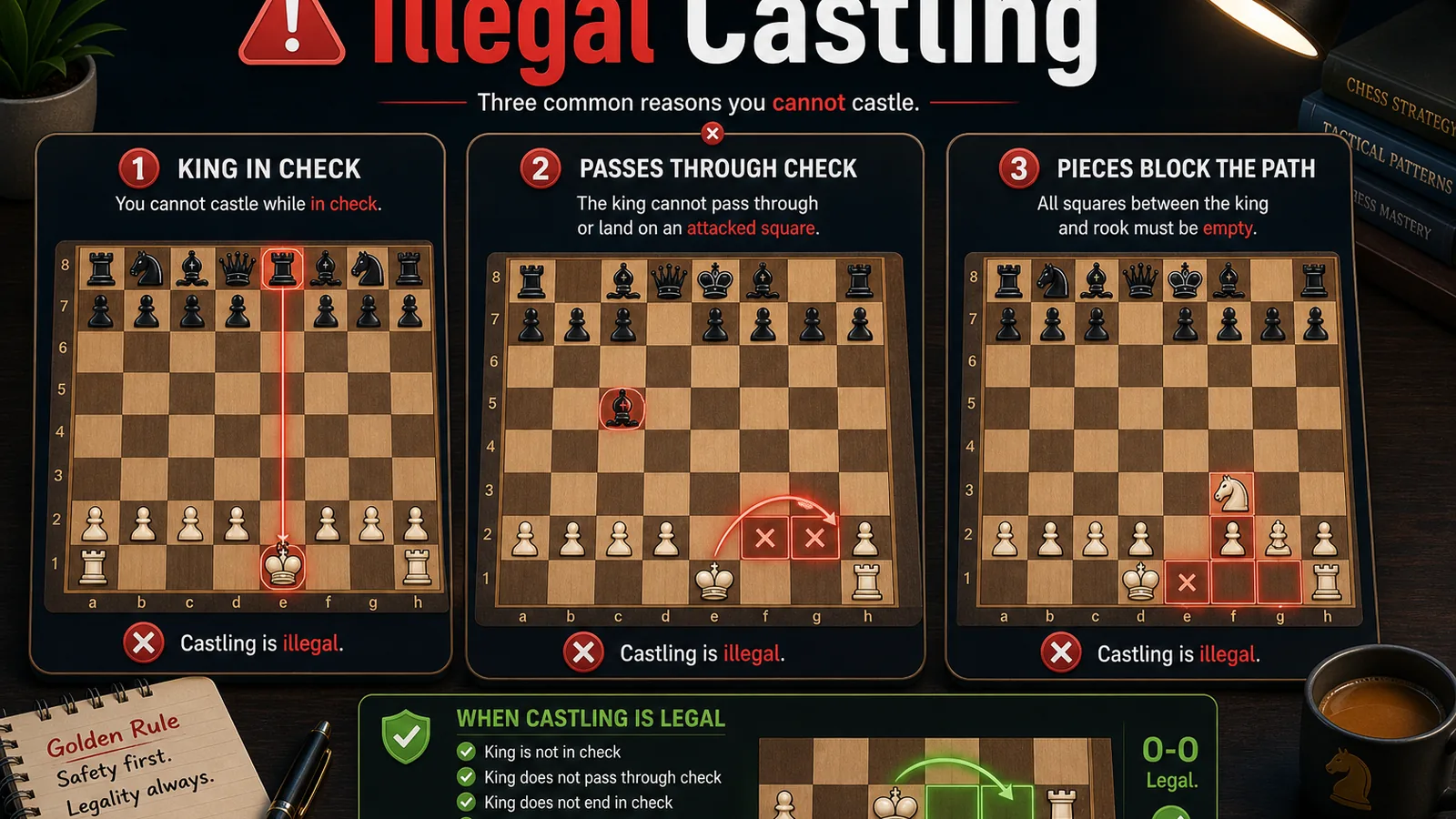
illegal examples teach the rule faster than abstract wording because they reveal which detail failed.
Illegal castling examples every beginner should know
Most castling mistakes come from overlooking one forbidden king square or forgetting that a piece moved earlier. Castling while already in check is illegal. Castling through check is illegal even if the final square looks safe.
Castling into check is illegal for the same reason: the king is not allowed to use castling to cross danger. Castling after the king or rook moved earlier is also illegal even if that piece returned to its original square later.
When an example feels unclear, ask which exact condition failed instead of trying to judge the move by memory.
- Castling while already in check is illegal.
- Castling through check is illegal even if the final square looks safe.
- Castling into check is illegal for the same king-safety reason.
- Castling after the king or rook moved earlier is also illegal even if they returned home later.
Fast test
Ask three questions: moved before, pieces between, or any checked king square? That catches most errors quickly.
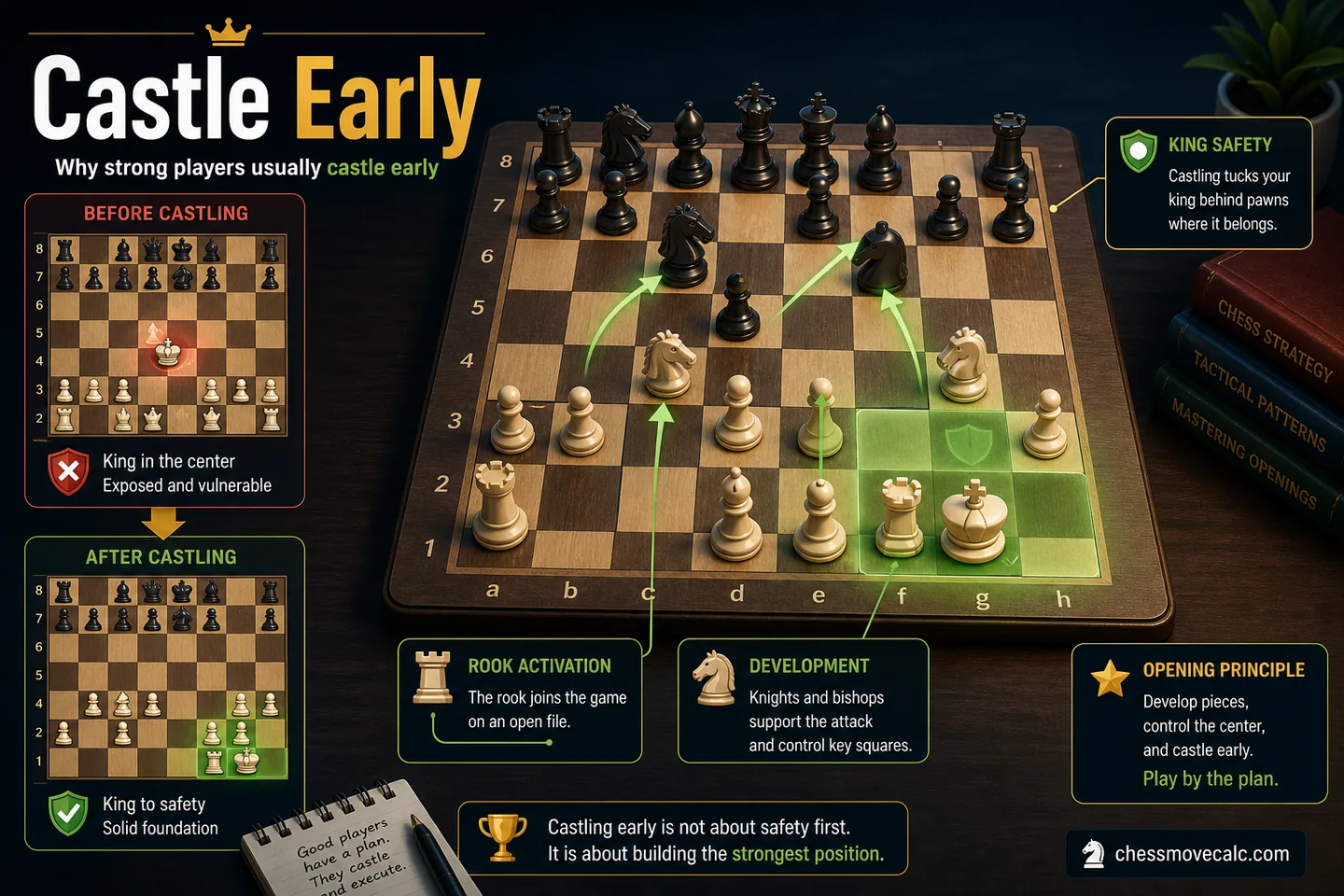
early castling is common because it solves practical problems before they become tactical disasters.
Why strong players usually castle early
An uncastled king often stays in the center while the game opens, and that can become dangerous quickly. Castling usually tucks the king behind pawns and develops a rook toward the center. That improved coordination makes middlegame play calmer and more flexible.
Strong players often castle early because they value safety and structure before complications explode. The rule is legal detail, but the timing is a strategic habit.
For beginners, early castling is usually a good default because it removes one major target from the center before tactics become sharp.
- Castling usually tucks the king behind pawns and develops a rook toward the center.
- That improved coordination makes middlegame play calmer and more flexible.
- Strong players often castle early because they value safety and structure before complications explode.
- The rule is legal detail, but the timing is a strategic habit.
Practical payoff
Castling early is often less about theory and more about reducing chaos around your king.
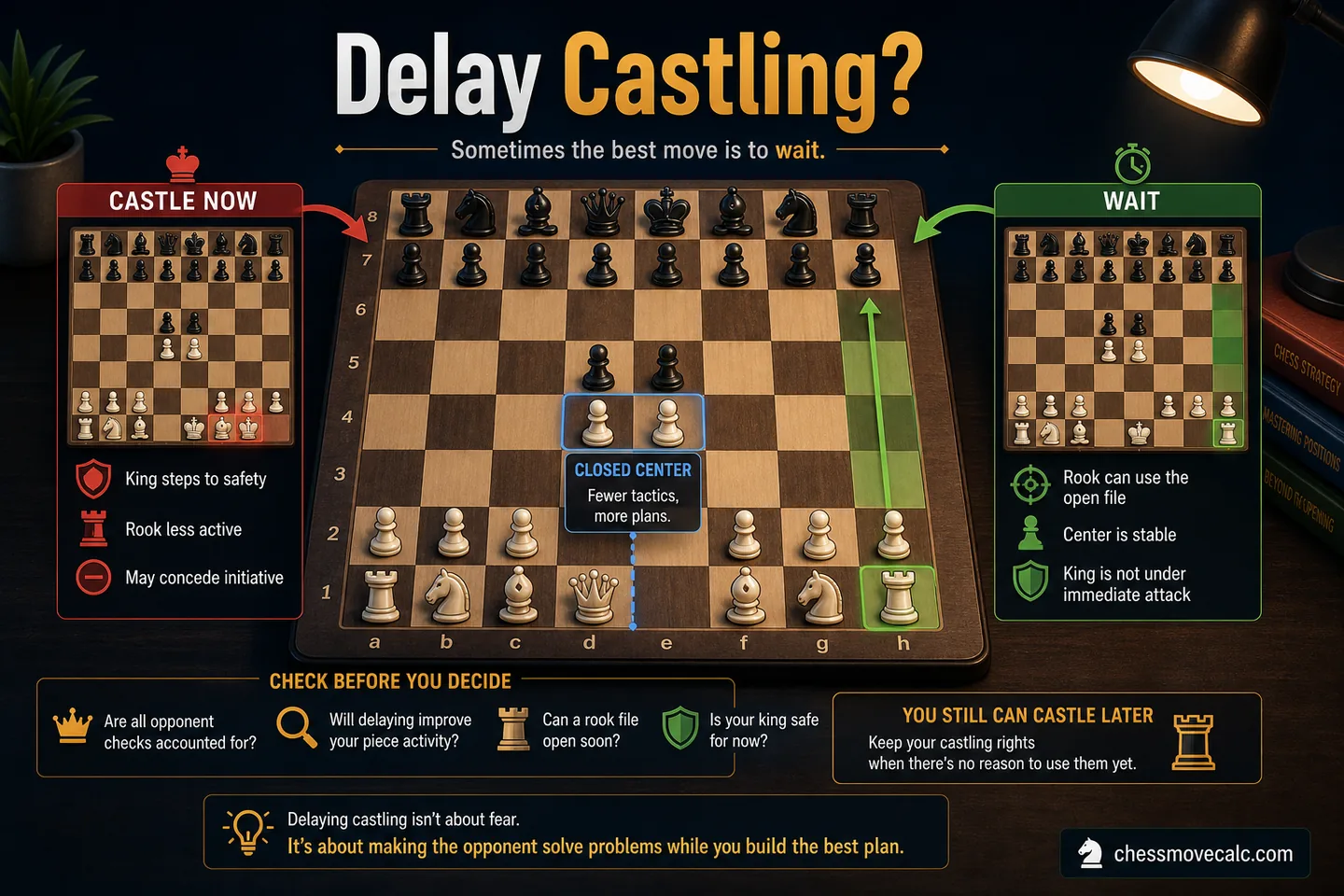
Castling is common, but not compulsory in every position.
When delaying castling makes sense
There are positions where waiting a move or two gives you more flexibility or avoids a direct attack. Opposite-side attacks can make immediate castling less attractive in some structures. Certain tactical positions reward keeping the king flexible for a little longer.
Even then, delaying should be a reasoned decision, not simple neglect. If the center is opening quickly or your king has no clear shelter, waiting can become risky fast.
Beginners are usually safer learning when to castle early before they experiment with rare exceptions.
- Opposite-side attacks can make immediate castling less attractive in some structures.
- Certain tactical positions reward keeping the king flexible for a little longer.
- Even then, delaying should be a reasoned decision, not simple neglect.
Best default
Castle early by default, then learn the exceptions after your basic king safety habits are strong.
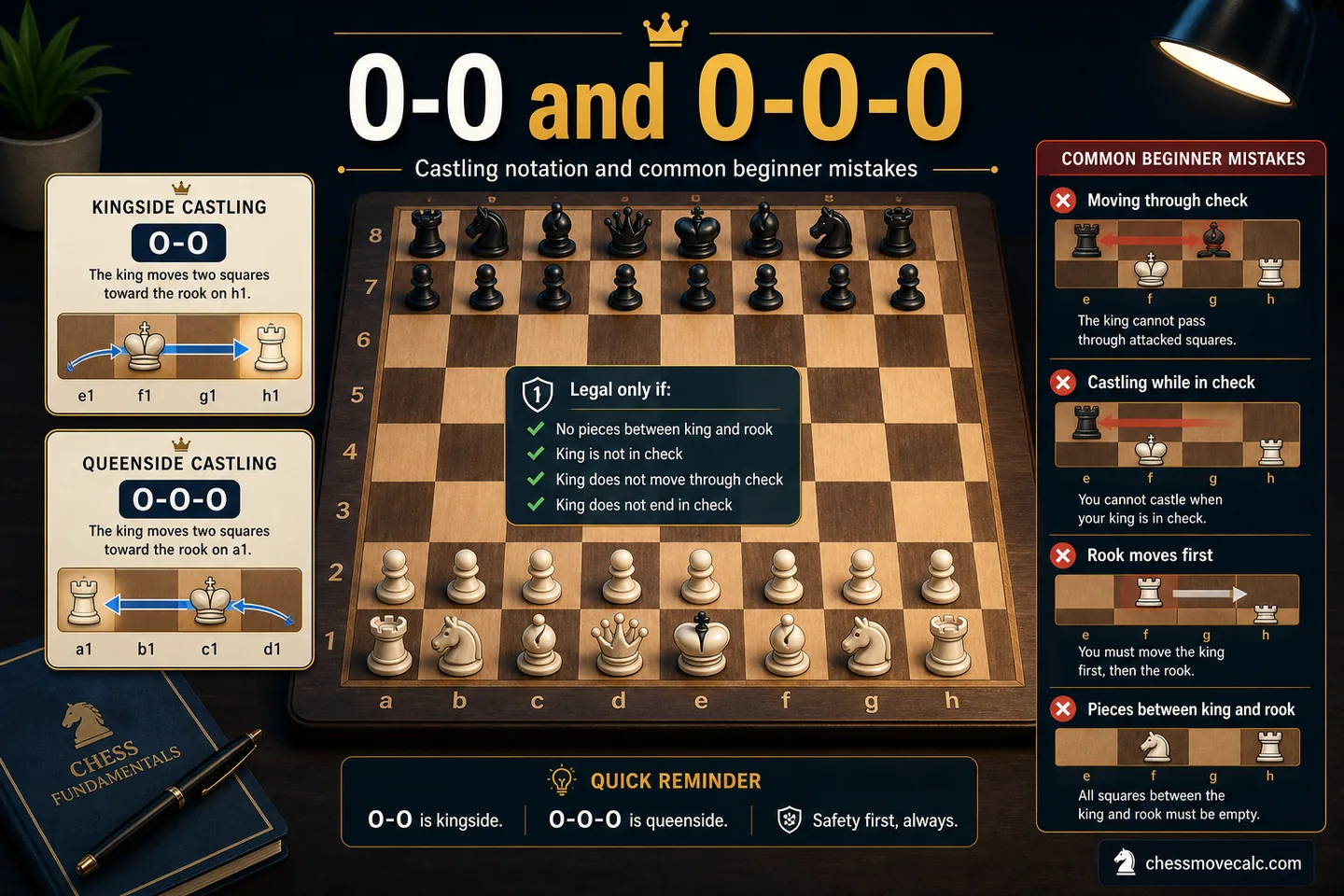
The notation is short: O-O for kingside, O-O-O for queenside.
Castling notation and common beginner mistakes
O-O means kingside castling and O-O-O means queenside castling. Beginners sometimes confuse the letter O with the number zero in notation. Others know the symbol but forget which side moves the king two squares.
Connecting notation to the board pattern makes both the symbol and the rule much easier to retain. That also helps when you read game scores or use notation tools later.
If a score sheet uses the number 0 instead of the letter O, read it as the same castling symbol in context.
- Beginners sometimes confuse the letter O with the number zero in notation.
- Others know the symbol but forget which side moves the king two squares.
- Connecting notation to the board pattern makes both the symbol and the rule much easier to retain.
- That also helps when you read game scores or use notation tools later.
Notation bridge
If you want the symbols to feel easier, pair this page with the notation symbols guide.
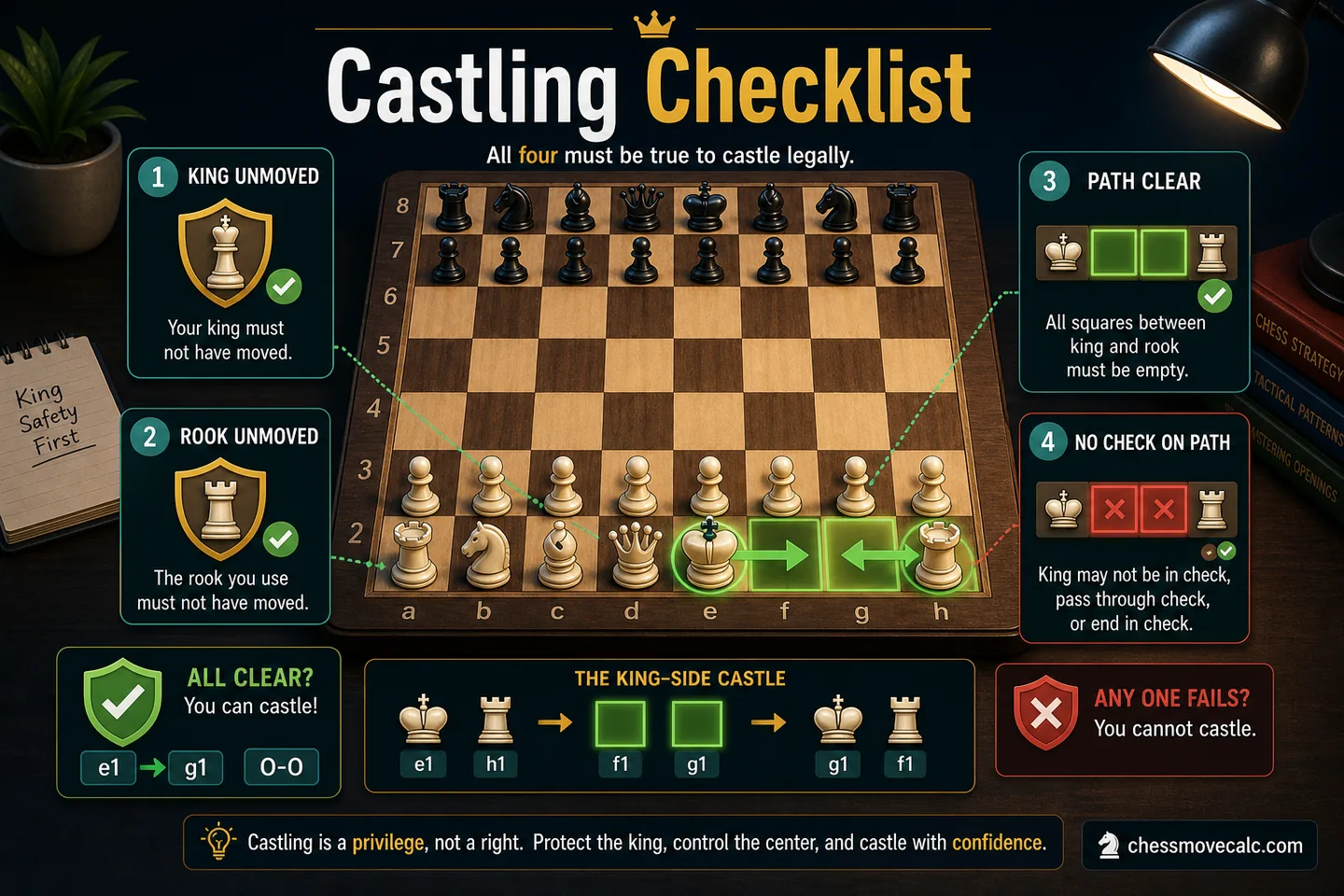
A short legality routine makes castling much easier to judge under pressure.
A move-by-move castling check you can use during real games
A short routine helps because most mistakes happen under time pressure. Check whether the king or rook moved earlier before looking at anything else. Then check whether pieces still stand between them.
Finally check whether the king is in check, passes through check, or lands in check. Running the questions in the same order each time reduces rushed mistakes.
This sequence is especially useful when you are tired or tactically distracted. It turns castling from a fuzzy memory problem into a repeatable board test.
Use the same order every time until the legality check becomes automatic.
- Check whether the king or rook moved earlier before looking at anything else.
- Then check whether pieces still stand between them.
- Finally check whether the king is in check, passes through check, or lands in check.
- Running the questions in the same order each time reduces rushed mistakes.
- This kind of sequence is especially useful when you are tired or tactically distracted.
- It turns castling from a fuzzy memory problem into a repeatable board test.
Practical takeaway
This kind of sequence is especially useful when you are tired or tactically distracted.

Castling Rules Explained FAQs
Can you castle while in check?
No. The king cannot castle while already in check.
Can you castle through check?
No. The king cannot pass through a square that is under attack.
Can you castle if the rook has moved before?
No. If the rook has moved earlier, castling with that rook is no longer legal.
Is castling mandatory in chess?
No. It is optional, although it is often strategically useful.
When should beginners castle?
Usually fairly early, once development and safety make it sensible.
What is the notation for castling?
O-O is kingside castling and O-O-O is queenside castling.
Practice castling from both the rule side and the board side
Use live boards and notation tools together so the motion, the legality, and the symbol all become familiar at once.