Official rules matter more here because the rating pool is narrower and the update path is formal
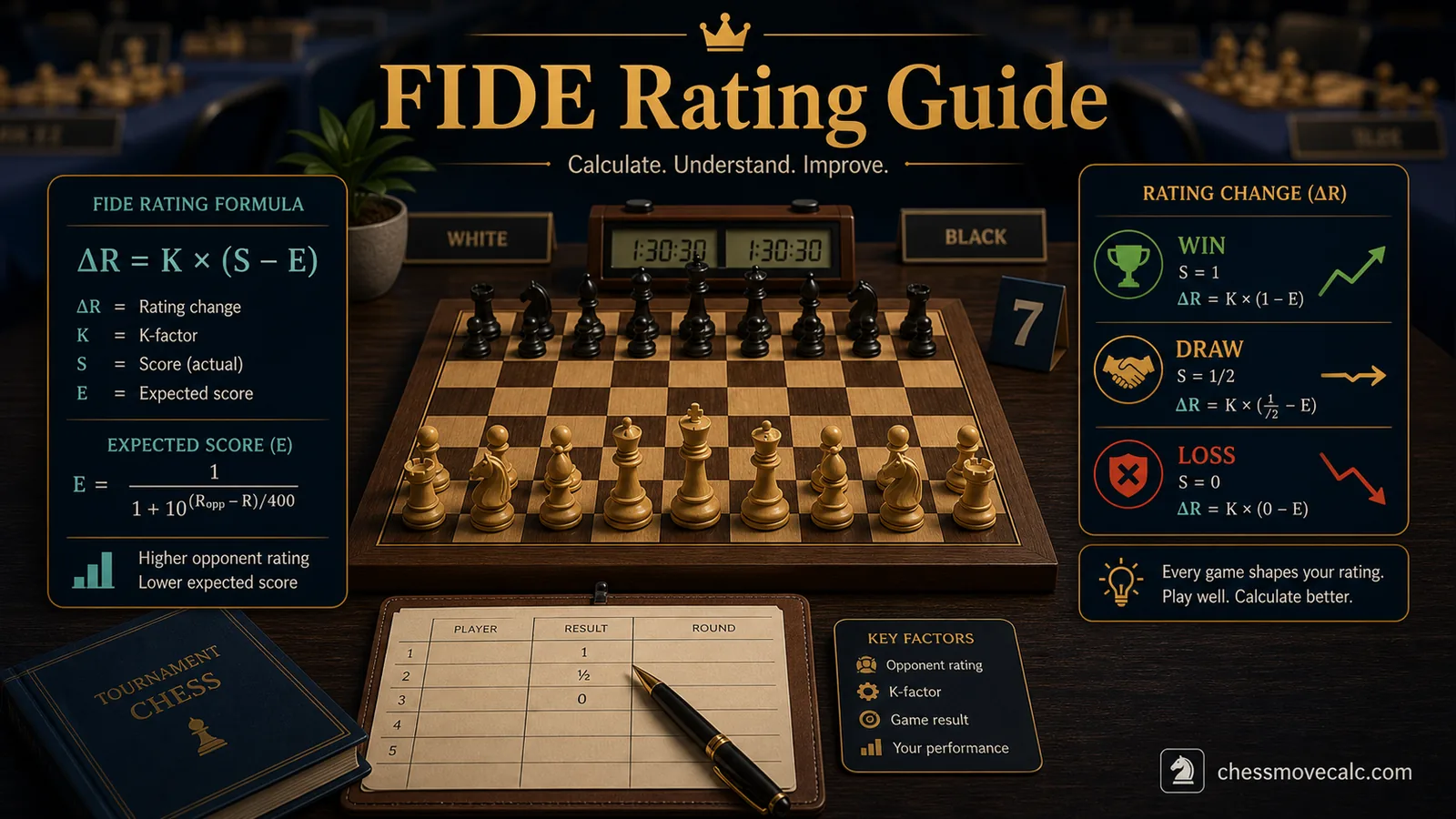
FIDE ratings live in a more formal ecosystem than online numbers do.
Many players search for a FIDE rating calculator because they want clarity on tournament expectations, not because they want to read regulation language for fun. The problem is that official documents are precise but not always beginner-friendly. That creates a useful gap for a player-language guide.
This page owns that FIDE-specific layer. It is different from the general Elo explainer, which covers the broader concept, and different from the gain-and-loss guide, which is more formula-focused across contexts. Here the focus is official over-the-board rating behavior.
That means we need to care about who gets which K-factor, how unrated and newly rated players are handled, and why your official list does not update instantly after every round. Those details are exactly what makes FIDE feel different from online play.
Once you understand those moving parts, official rating changes stop feeling mysterious. They become slower, more formal, and easier to plan around.

What makes FIDE ratings different from online ratings
They are built from rated over-the-board events, a specific player pool, and an official publication cycle. FIDE games come from sanctioned tournament environments rather than casual online volume. That narrower context changes how players should compare and interpret the numbers.
That is also where many players misread their own results. FIDE also feels slower because updates are published on an official timetable. This makes the rating more stable in some ways and less instantly visible in others.
A practical way to use this section is to translate the idea into decisions you can actually make during study and rating review, instead of treating the number as a mysterious label.
- FIDE games come from sanctioned tournament environments rather than casual online volume.
- That narrower context changes how players should compare and interpret the numbers.
- FIDE also feels slower because updates are published on an official timetable.
- This makes the rating more stable in some ways and less instantly visible in others.
Why the number feels different
A FIDE rating is not just another website score. It belongs to a different competitive environment.
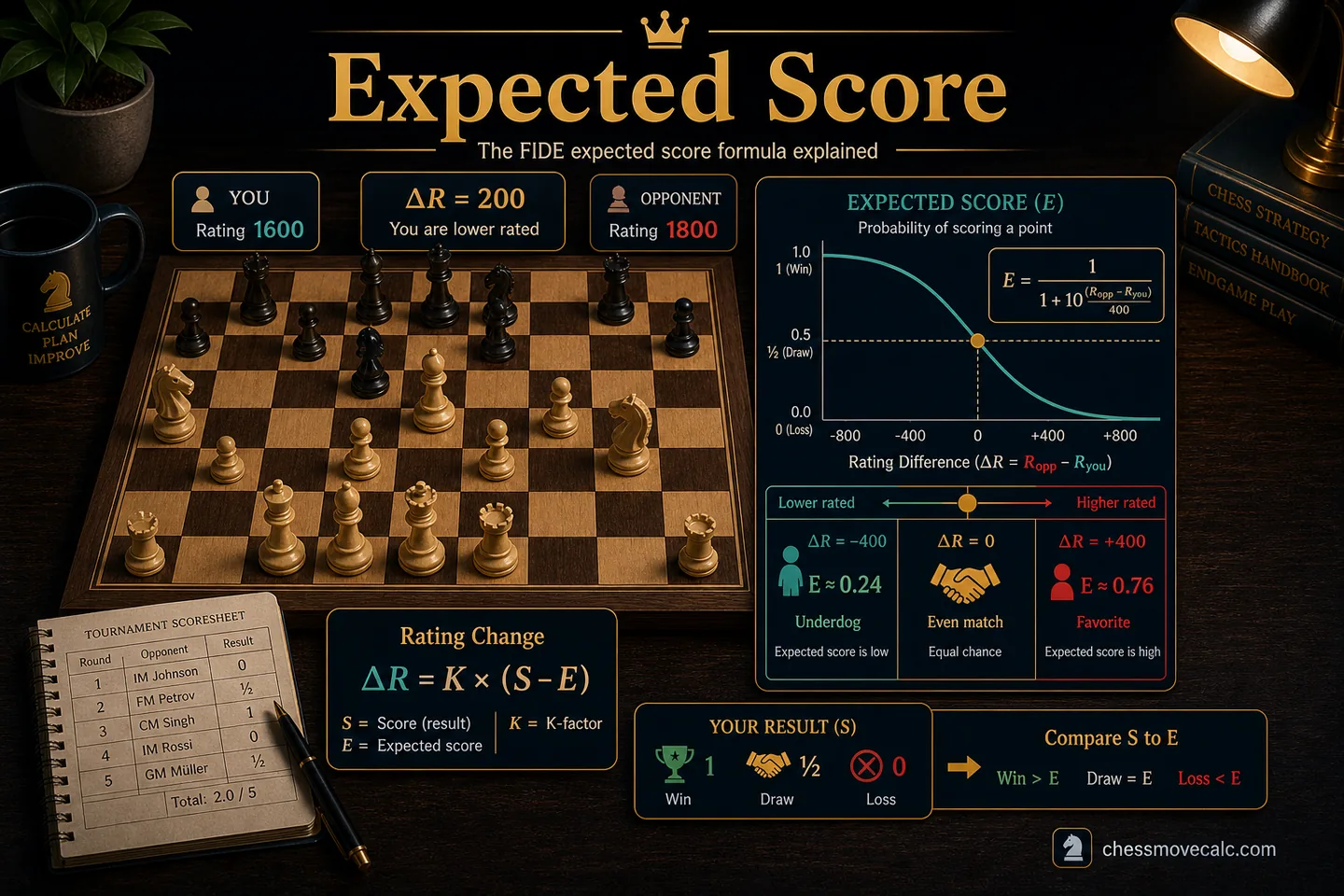
FIDE still uses the same core prediction idea that powers Elo elsewhere.
The FIDE expected-score formula explained
The FIDE expected-score formula explained matters because before the game, the system estimates how much you are expected to score from the rating gap. A stronger player starts with a higher expected score. That expectation sets the baseline for how much the result should move the rating.
That is also where many players misread their own results. The same actual result can therefore mean very different things against different opponents. Once you see expected score clearly, the rest of the FIDE math becomes easier to trust.
- A stronger player starts with a higher expected score.
- That expectation sets the baseline for how much the result should move the rating.
- The same actual result can therefore mean very different things against different opponents.
- Once you see expected score clearly, the rest of the FIDE math becomes easier to trust.
Do not overcomplicate it
The formula looks official, but the concept is still just expectation versus result.
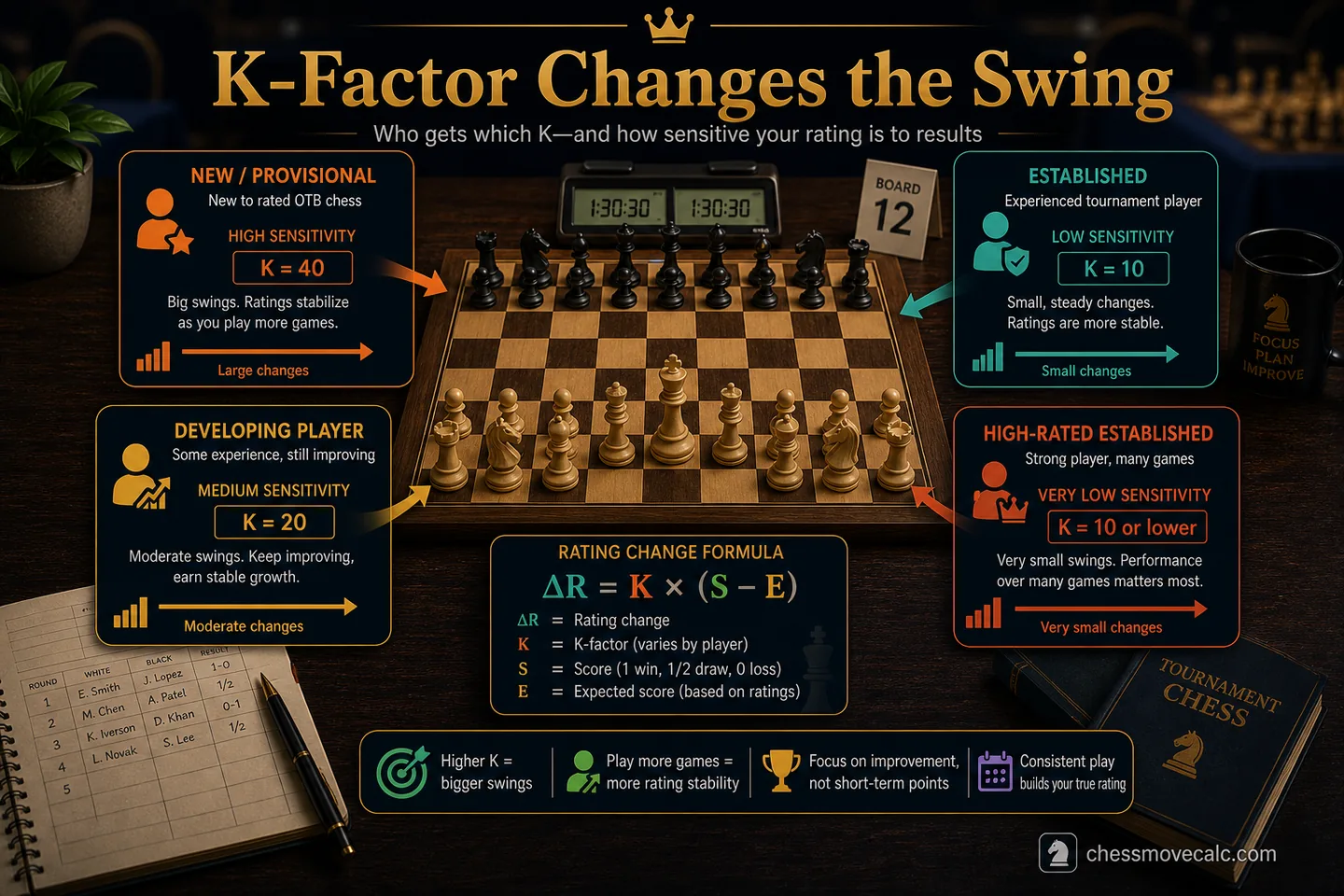
K-factor is where many players get lost because it changes the speed of rating movement.
FIDE K-factors and who gets which one
FIDE does not treat every player as equally stable, so different categories get different sensitivity levels. Newer or developing players can move faster because their rating estimate is still settling. More established players usually move more steadily because the signal is supposed to be more stable.
That is also where many players misread their own results. That means two players can get the same result and still see different rating swings. Understanding your category matters before you assume the calculator is wrong.
- Newer or developing players can move faster because their rating estimate is still settling.
- More established players usually move more steadily because the signal is supposed to be more stable.
- That means two players can get the same result and still see different rating swings.
- Understanding your category matters before you assume the calculator is wrong.
Category matters
Always make sure the K-factor assumption matches the player profile you are calculating for.
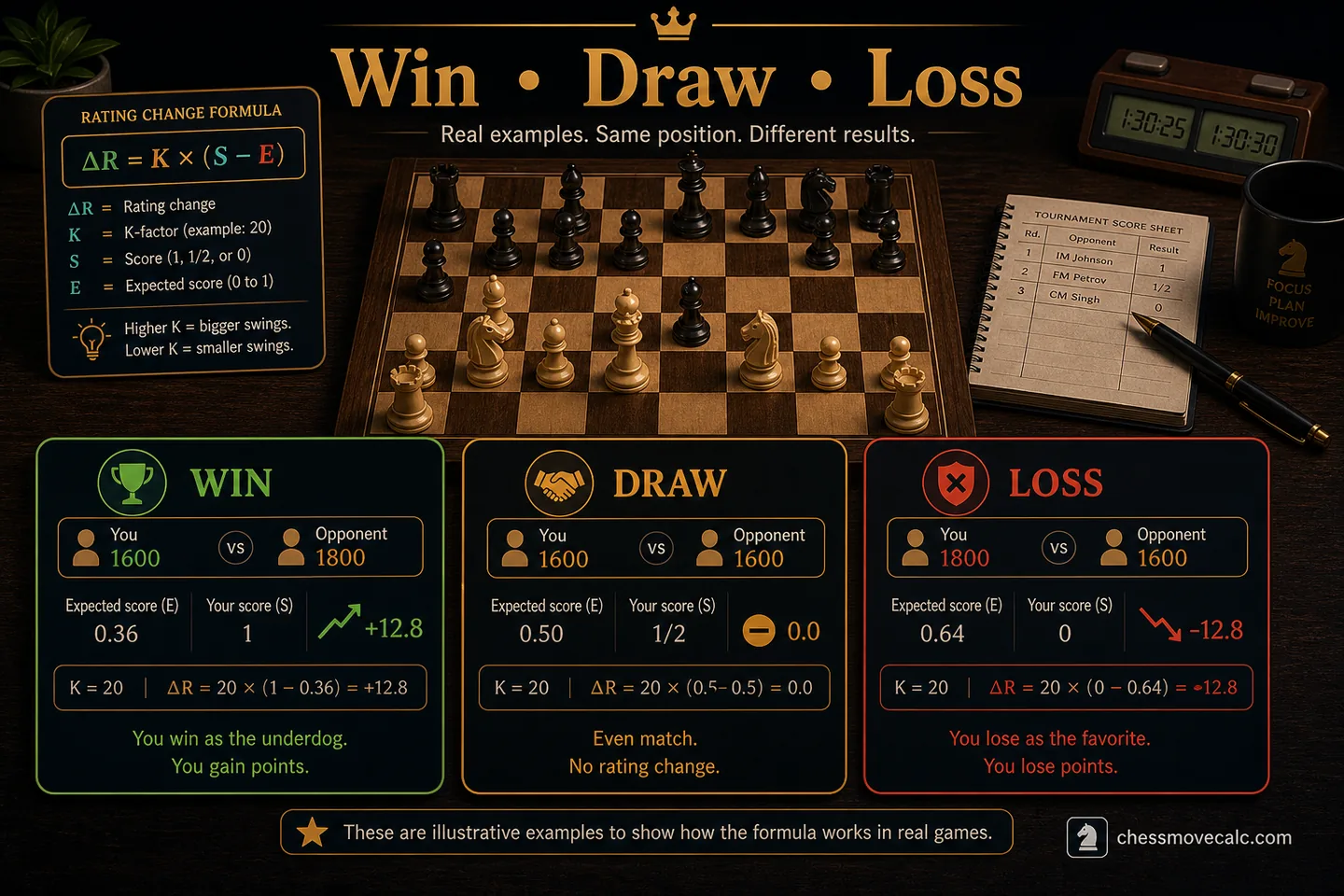
worked examples are the fastest way to make the regulations feel human.
Real examples for win, draw, and loss
They show how expectation and K-factor combine across several normal tournament results. A win against a stronger player gains more because it beats expectation clearly. A draw against a stronger player can still be valuable in rating terms.
That is also where many players misread their own results. A loss to a weaker player often hurts more because the result underperformed expectation. Examples help you see the logic before you start plugging your own pairings into a calculator.
- A win against a stronger player gains more because it beats expectation clearly.
- A draw against a stronger player can still be valuable in rating terms.
- A loss to a weaker player often hurts more because the result underperformed expectation.
- Examples help you see the logic before you start plugging your own pairings into a calculator.
Use a small sample set
Start by modeling one win, one draw, and one loss. That usually explains the shape of an entire event.
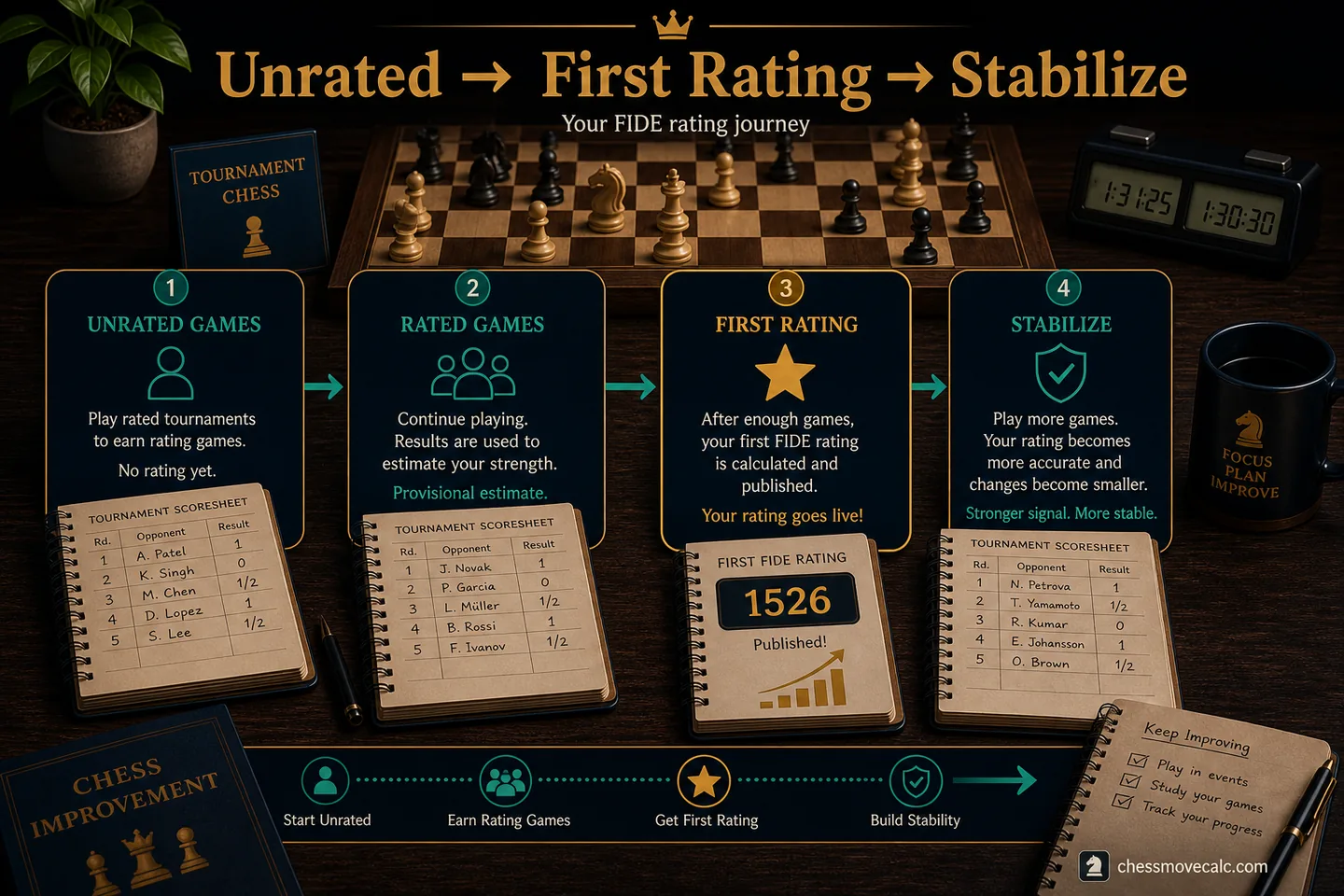
newly rated players create special confusion because people expect official status before enough games exist.
How FIDE handles unrated and newly rated players
The system needs enough structured evidence before a first official rating becomes meaningful. Your earliest games are not just random results; they are building the initial estimate. That early stage can feel more volatile because the system is learning quickly.
That is also where many players misread their own results. Players often misunderstand this stage and compare themselves too early against established ratings. The better habit is to treat the first published number as a starting point, not as a final identity.
- Your earliest games are not just random results; they are building the initial estimate.
- That early stage can feel more volatile because the system is learning quickly.
- Players often misunderstand this stage and compare themselves too early against established ratings.
- The better habit is to treat the first published number as a starting point, not as a final identity.
Healthy expectation
A new FIDE rating is the beginning of the sample, not the end of the story.
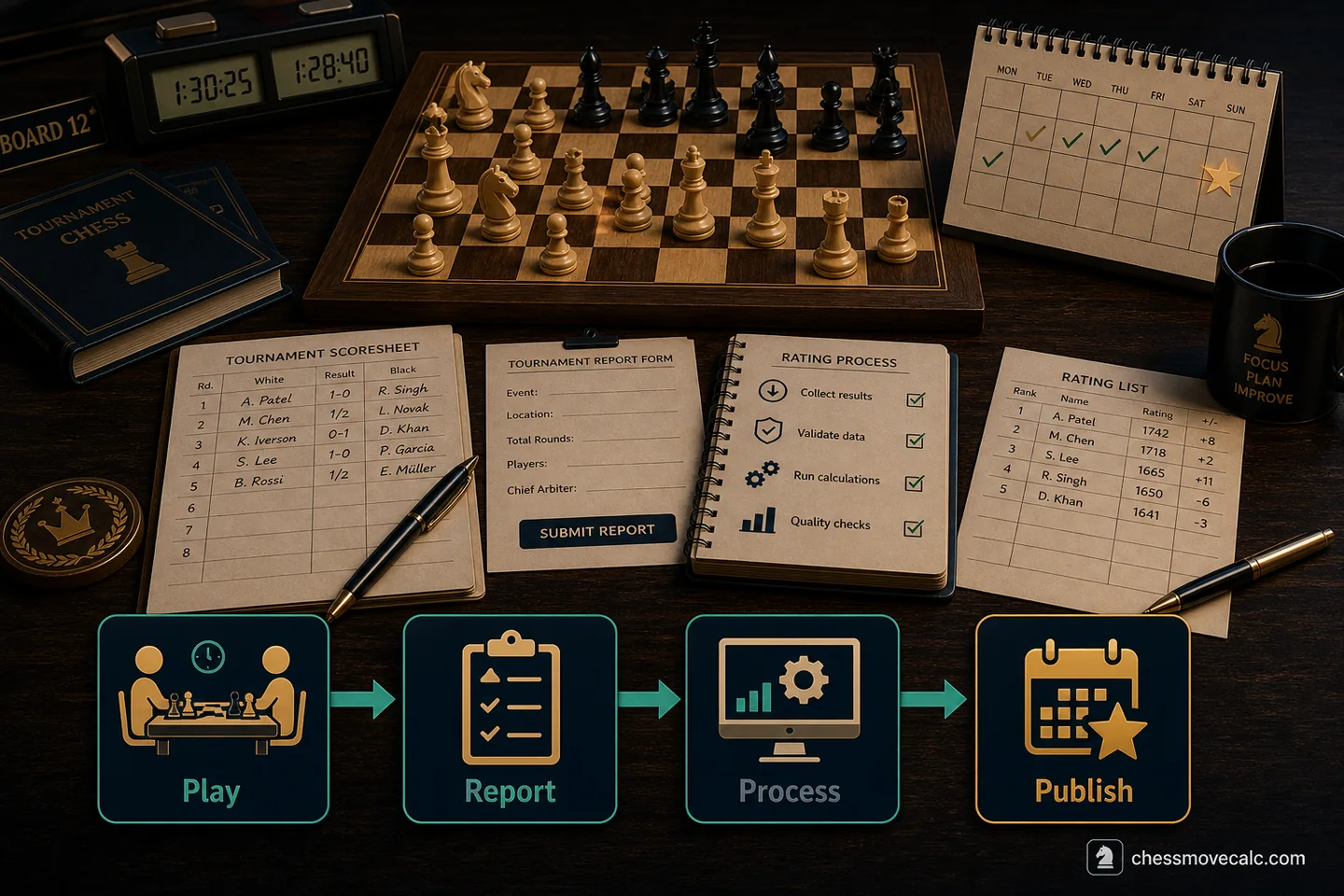
update timing is one of the biggest culture shocks for online players moving into official competition.
Why official FIDE ratings do not update instantly
The event result still counts immediately in principle, but the visible publication follows an official processing cycle. Tournament games must be reported and processed through the official system. That means your new number may not appear the same day you finish playing.
That is also where many players misread their own results. This delay is normal and does not mean your event was ignored. Understanding the timeline prevents a lot of unnecessary confusion after tournaments.
- Tournament games must be reported and processed through the official system.
- That means your new number may not appear the same day you finish playing.
- This delay is normal and does not mean your event was ignored.
- Understanding the timeline prevents a lot of unnecessary confusion after tournaments.
Best mindset
Judge the event by the games first. The published list will catch up through the normal FIDE process.
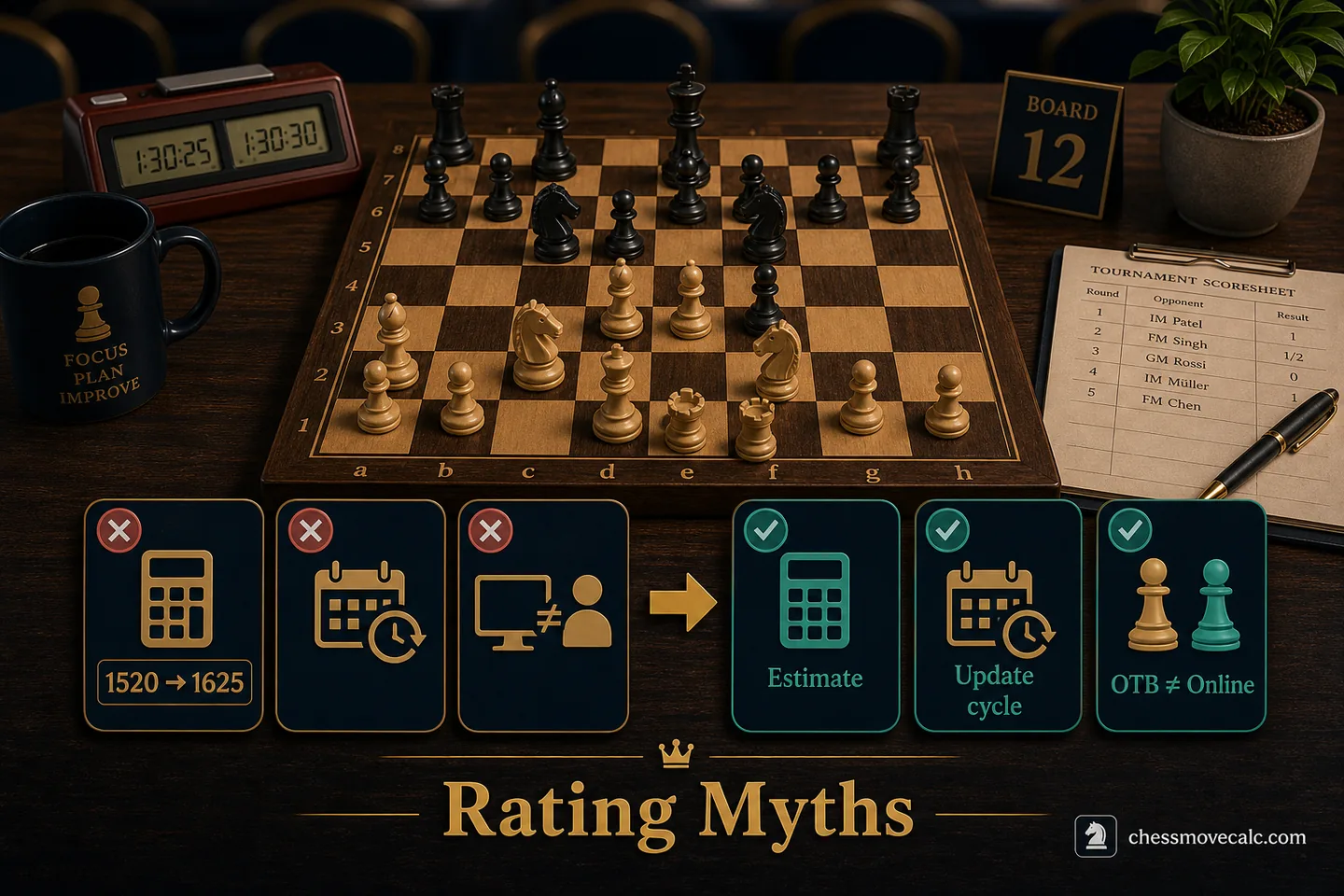
Official ratings feel less mysterious once the reporting and category logic is visible.
Common FIDE misunderstandings that disappear once the process is visible
Players often expect online-style immediacy from a system that is intentionally more formal and slower-moving. FIDE publication timing is different from instant site updates, so waiting is a normal part of the process. K-factor category matters enough that two players can see different movement from similar-looking results.
A first published rating is a starting estimate, not a final statement of ceiling or identity. Official context also means the player pool and event structure shape the meaning of the number.
A stronger habit is to ask what decision this concept should improve the very next time it appears. These details do not make FIDE harder; they simply make it more formal than casual online play. Once that expectation is clear, official ratings feel much easier to interpret.
That bridge is often the missing ingredient between reading an article once and truly keeping the lesson when the position becomes real.
- FIDE publication timing is different from instant site updates, so waiting is a normal part of the process.
- K-factor category matters enough that two players can see different movement from similar-looking results.
- A first published rating is a starting estimate, not a final statement of ceiling or identity.
- Official context also means the player pool and event structure shape the meaning of the number.
- These details do not make FIDE harder; they simply make it more formal than casual online play.
- Once that expectation is clear, official ratings feel much easier to interpret.
Practical takeaway
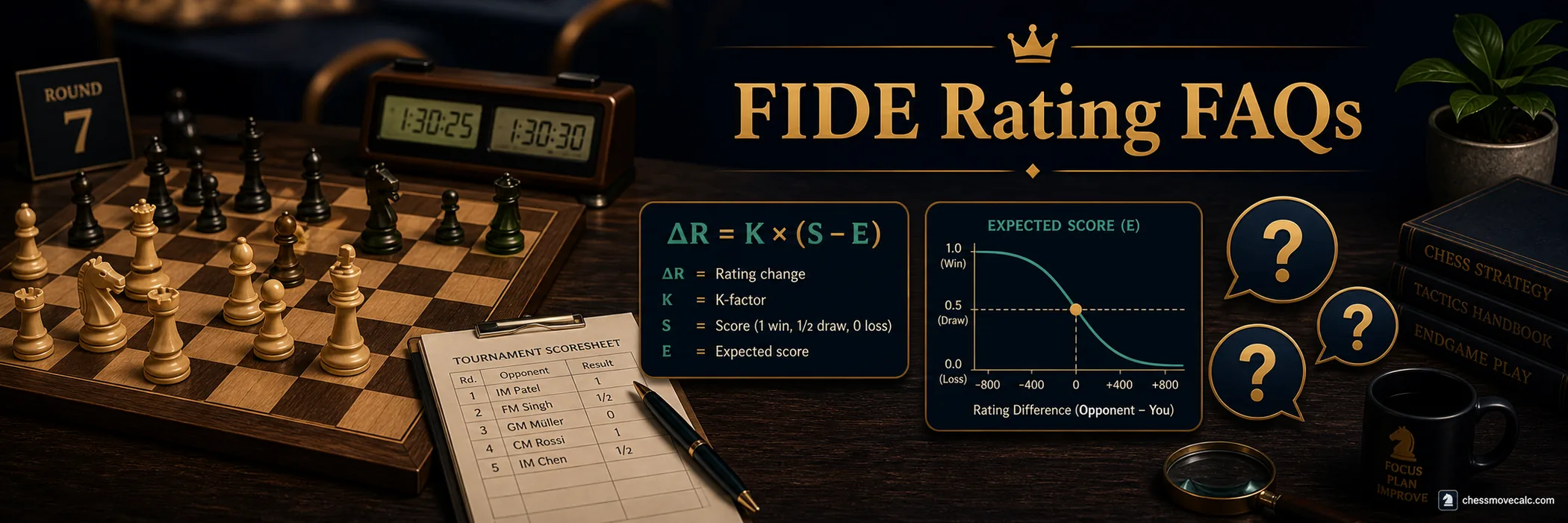
FIDE Rating Calculator Guide FAQs
What is a FIDE rating calculator for?
It estimates how official over-the-board results may affect a FIDE rating under the relevant rules.
Is a FIDE rating the same as an online rating?
No. FIDE ratings come from official rated events and a different player pool.
Why does FIDE not update instantly?
Official ratings follow a reporting and publication cycle rather than instant per-game updates.
Do FIDE K-factors differ by player type?
Yes. The sensitivity of rating movement depends on the player category and development stage.
Can a draw help my FIDE rating?
Yes. A draw against a stronger player can still be a positive rating result.
What should unrated players expect?
They should expect the first official rating to be a starting estimate built from early rated games, not a final fixed label.
Model an official-style rating scenario
Use the calculator to test a tournament result, then read it through the FIDE-specific lens instead of treating it like an online site change.