The formula becomes much less scary once you translate it into normal language
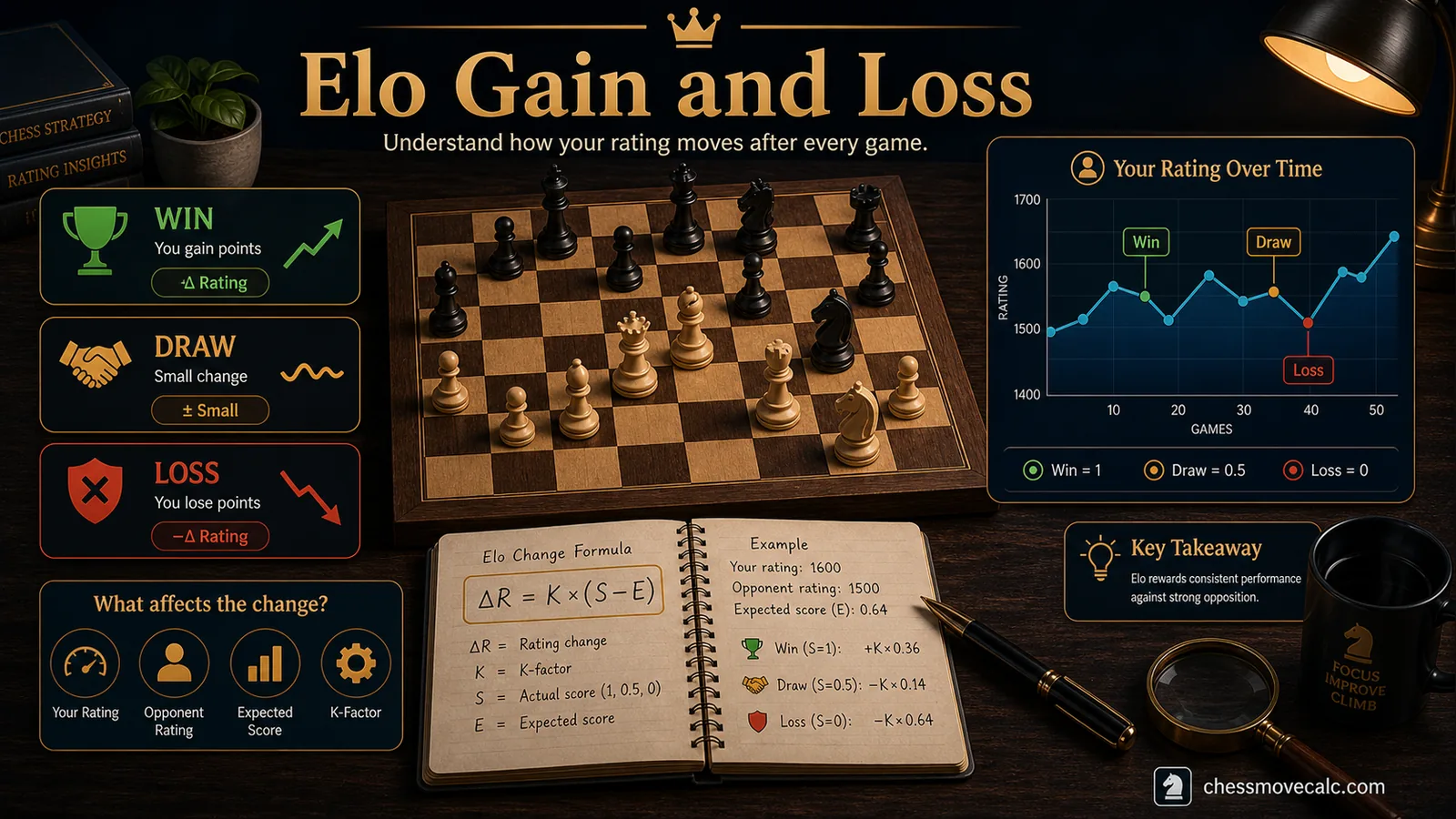
the formula looks more technical than it really is once you name what each piece is doing.
A lot of players memorize that Elo goes up for wins and down for losses, but that shortcut is not enough once you try to predict specific changes. The real story is that rating movement depends on how expected the result was and on the size-setting role of the K-factor.
This page is deliberately narrower than Chess Elo Explained. That article handles the big picture. This one owns the formula-focused question: why do specific wins, draws, and losses change the number by different amounts?
That focus matters because the formula alone rarely teaches the habit. A strong guide should do both: explain the equation in plain English and make each moving part visible through examples.
Once you understand the moving parts, calculators stop feeling like black boxes. They become quick ways to test expectations instead of magical number machines.
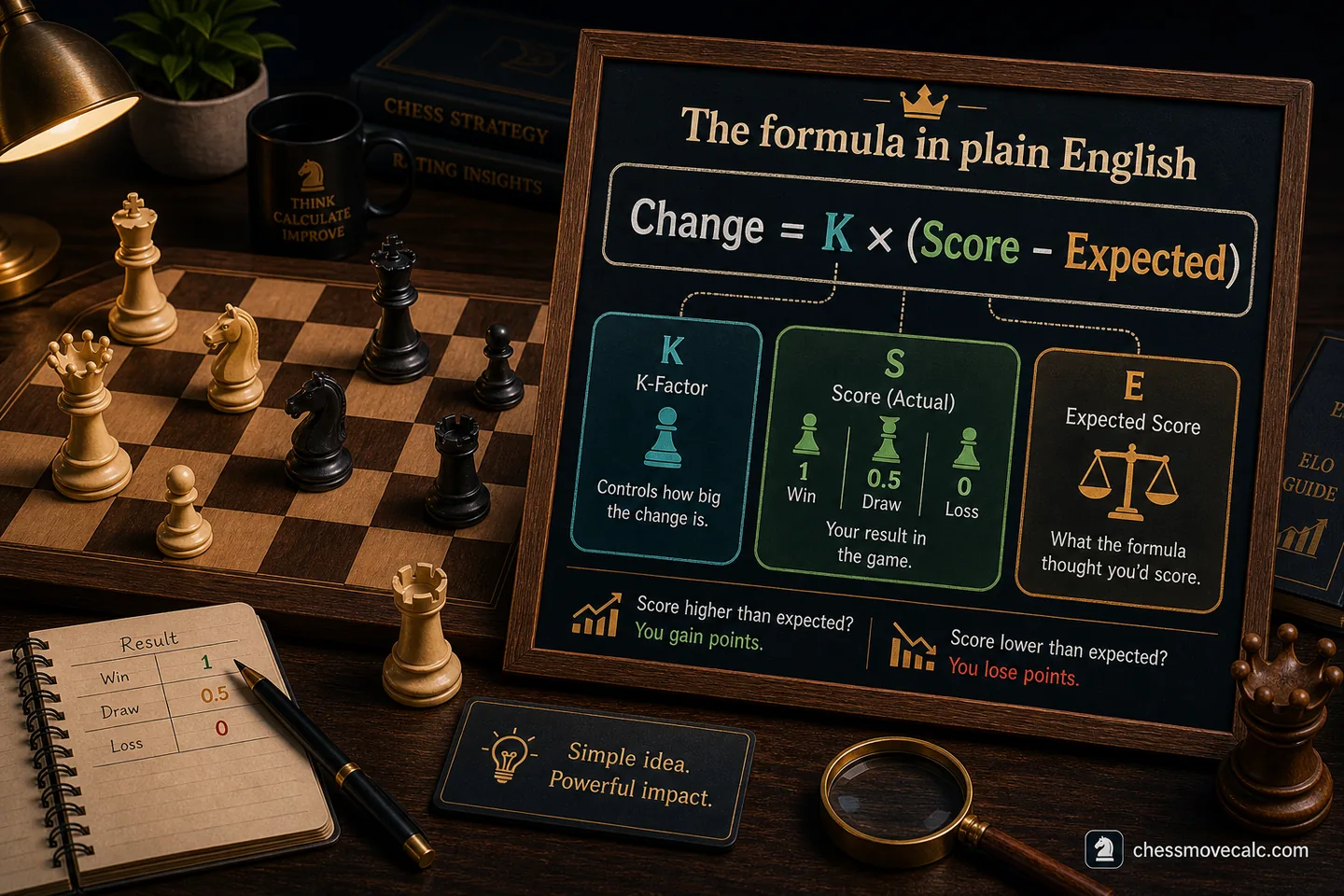
The formula in plain English
The formula in plain English matters because Delta rating is simply K multiplied by the gap between what happened and what was expected. The actual score is usually 1 for a win, 0.5 for a draw, and 0 for a loss. The expected score is the forecast generated from the rating gap before the game.
That is also where many players misread their own results. If actual score beats expected score, the rating goes up. If actual score falls short of expected score, the rating goes down.
A practical way to use this section is to translate the idea into decisions you can actually make during study and rating review, instead of treating the number as a mysterious label.
- The actual score is usually 1 for a win, 0.5 for a draw, and 0 for a loss.
- The expected score is the forecast generated from the rating gap before the game.
- If actual score beats expected score, the rating goes up.
- If actual score falls short of expected score, the rating goes down.
The short version
The formula rewards overperformance and corrects underperformance. That is the whole engine beneath the math.
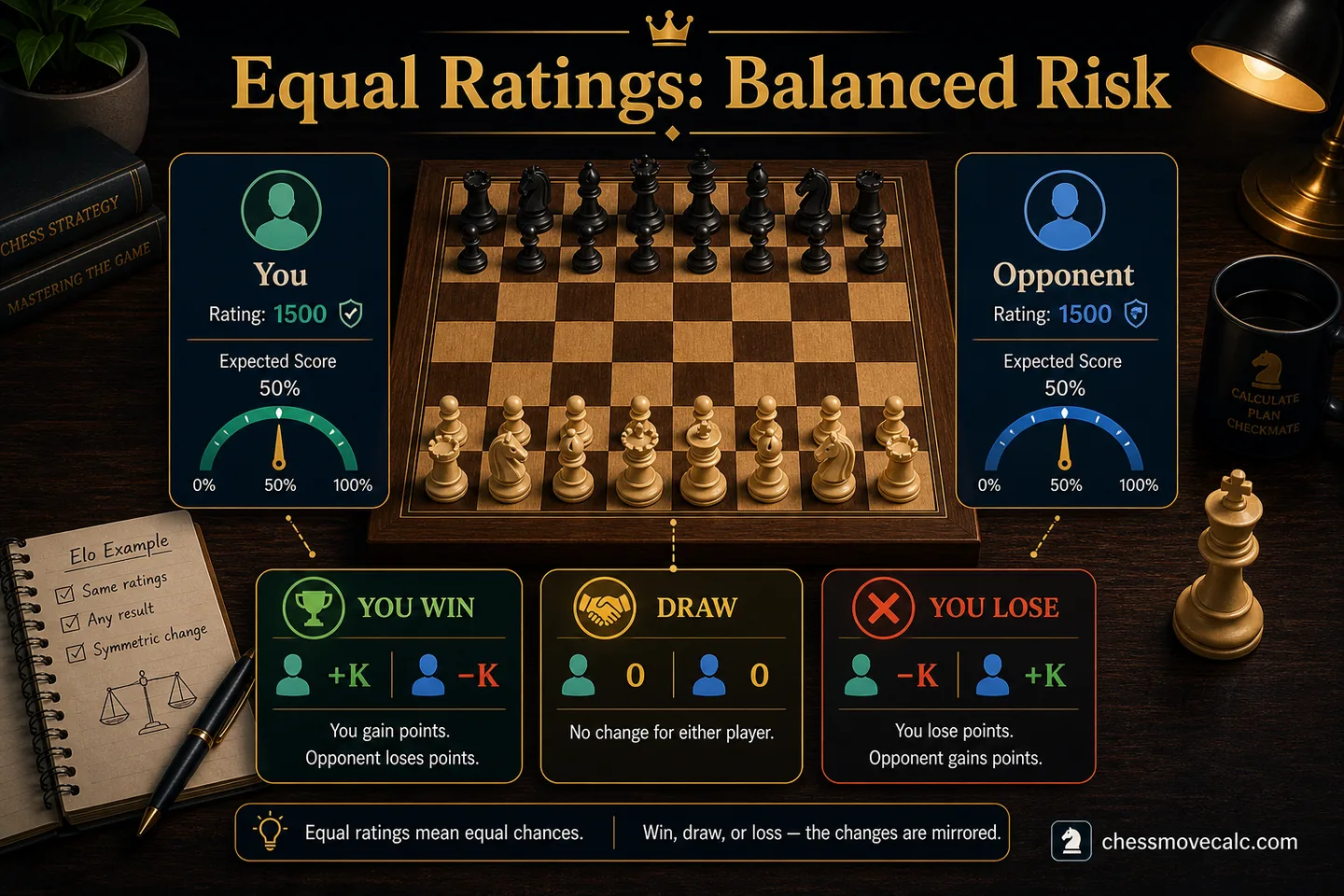
equal-rated examples are useful because they strip away the confusion and make the baseline obvious.
Example 1: equal ratings
When players start from the same rating, the expected score sits close to fifty-fifty. A win gains points because it beats the neutral expectation. A draw changes little because it is close to the predicted score.
That is also where many players misread their own results. A loss drops points because it falls below expectation. This baseline helps you understand all the more dramatic examples that follow.
- A win gains points because it beats the neutral expectation.
- A draw changes little because it is close to the predicted score.
- A loss drops points because it falls below expectation.
- This baseline helps you understand all the more dramatic examples that follow.
Why start here
Equal-rating examples make the logic visible before bigger gaps complicate the picture.
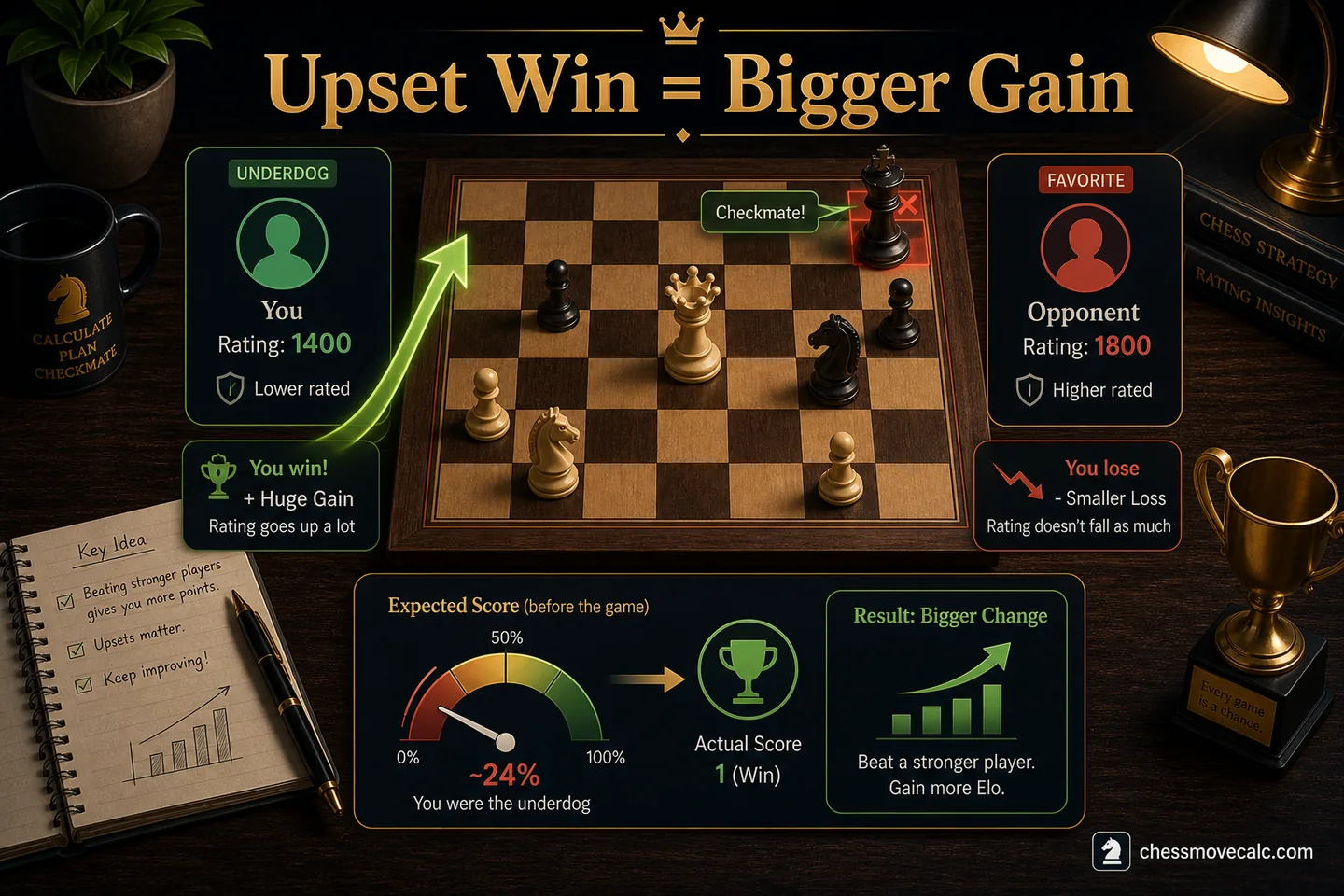
upset examples show the reward side of Elo very clearly.
Example 2: upset win against a stronger player
When the forecast says you were unlikely to win, the system gives more credit if you do. The stronger the opponent, the lower your expected score starts. That bigger expectation gap means the win creates a larger positive surprise.
That is also where many players misread their own results. The rating jump is therefore larger than it would be against an equal opponent. This is why strong results against tougher fields can move a rating quickly.
- The stronger the opponent, the lower your expected score starts.
- That bigger expectation gap means the win creates a larger positive surprise.
- The rating jump is therefore larger than it would be against an equal opponent.
- This is why strong results against tougher fields can move a rating quickly.
Use it correctly
One upset win is exciting, but the deeper lesson is that rating growth accelerates when you consistently outperform stronger opposition.
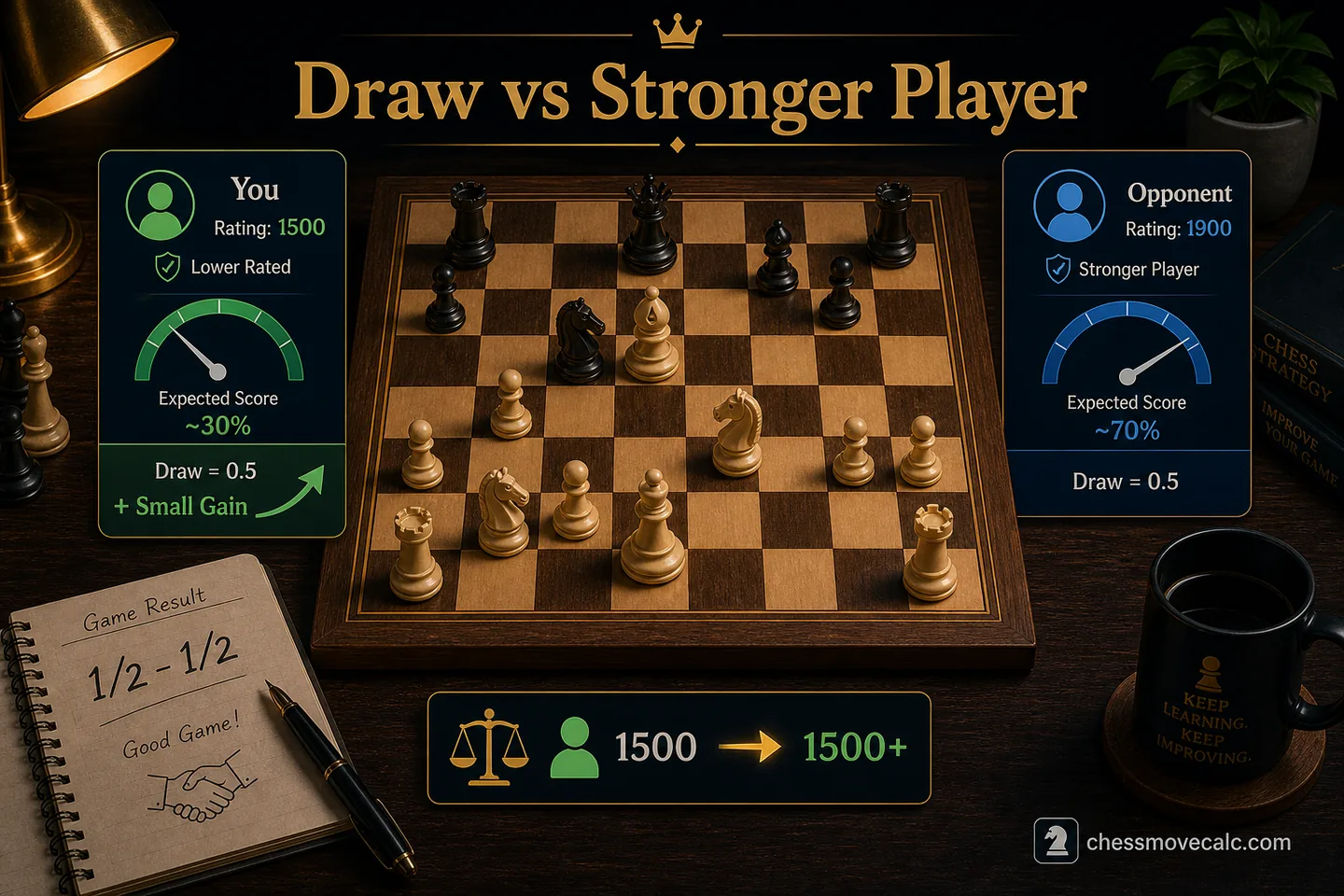
draws are not neutral in Elo because they depend on who the draw came against.
Example 3: draw against a higher-rated opponent
A draw against someone clearly stronger can still count as overperforming expectation. If your expected score was low, even half a point can be a good rating result. That is why some draws gain points while others barely move the number.
That is also where many players misread their own results. Context matters more than the raw result symbol on the scoresheet. The system is asking not just what happened, but how surprising that outcome was.
- If your expected score was low, even half a point can be a good rating result.
- That is why some draws gain points while others barely move the number.
- Context matters more than the raw result symbol on the scoresheet.
- The system is asking not just what happened, but how surprising that outcome was.
Useful perspective
A draw is not automatically flat. In rating terms, it can be a strong performance.
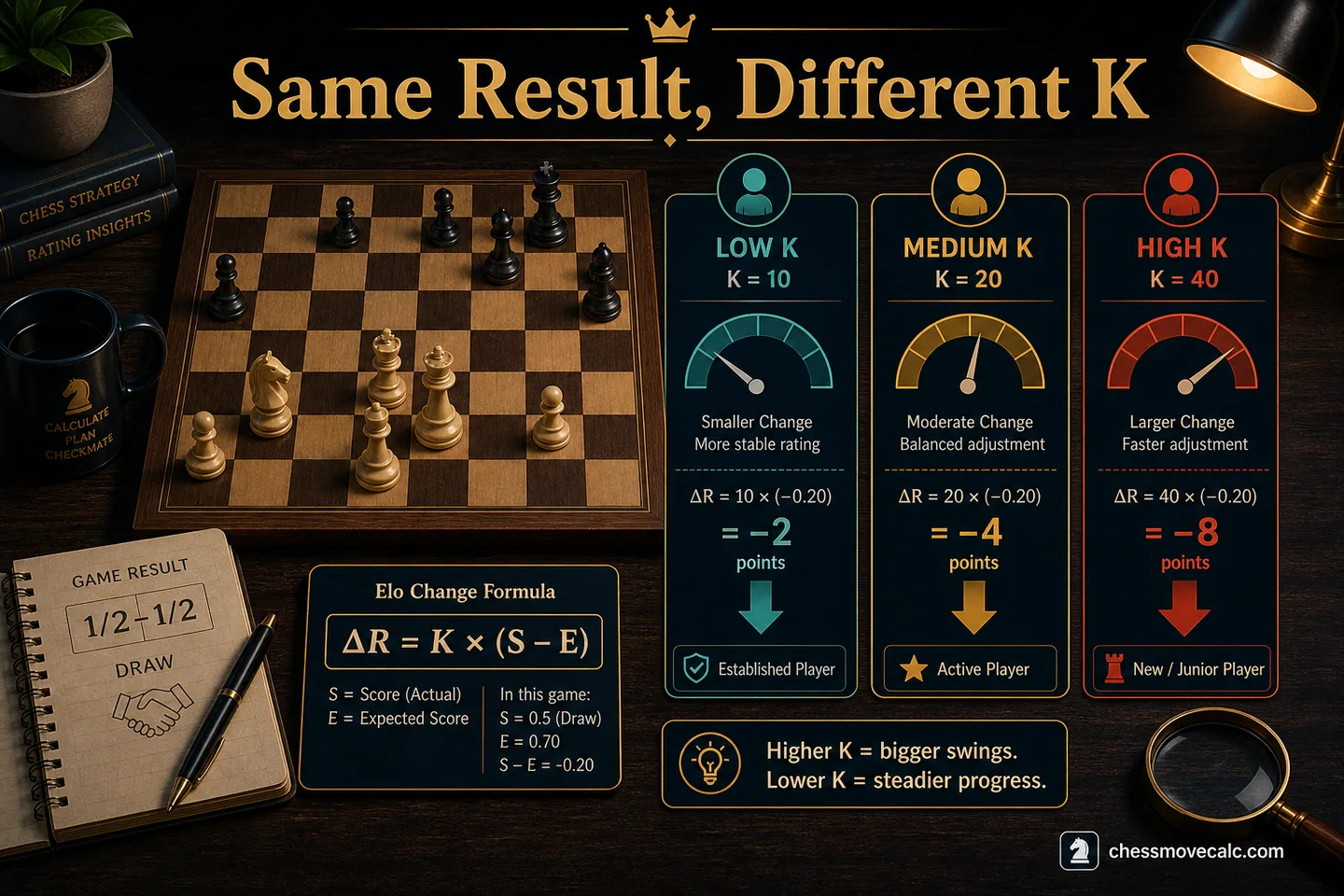
K-factor decides how sensitive the rating should be to new evidence.
Why K-factor changes everything
A bigger K-factor makes the same result create a larger rating swing in either direction. Developing or provisional players often have more volatile systems because the rating is still learning quickly. More established players usually have smaller K-factors because the estimate is supposed to move more steadily.
That is also where many players misread their own results. That means the same upset can look dramatic in one context and modest in another. If you ignore K-factor, many rating comparisons will look inconsistent when they are actually behaving as designed.
- Developing or provisional players often have more volatile systems because the rating is still learning quickly.
- More established players usually have smaller K-factors because the estimate is supposed to move more steadily.
- That means the same upset can look dramatic in one context and modest in another.
- If you ignore K-factor, many rating comparisons will look inconsistent when they are actually behaving as designed.
Do not compare blindly
Two calculators can give different outputs for the same game if they assume different K-factors or platform rules.
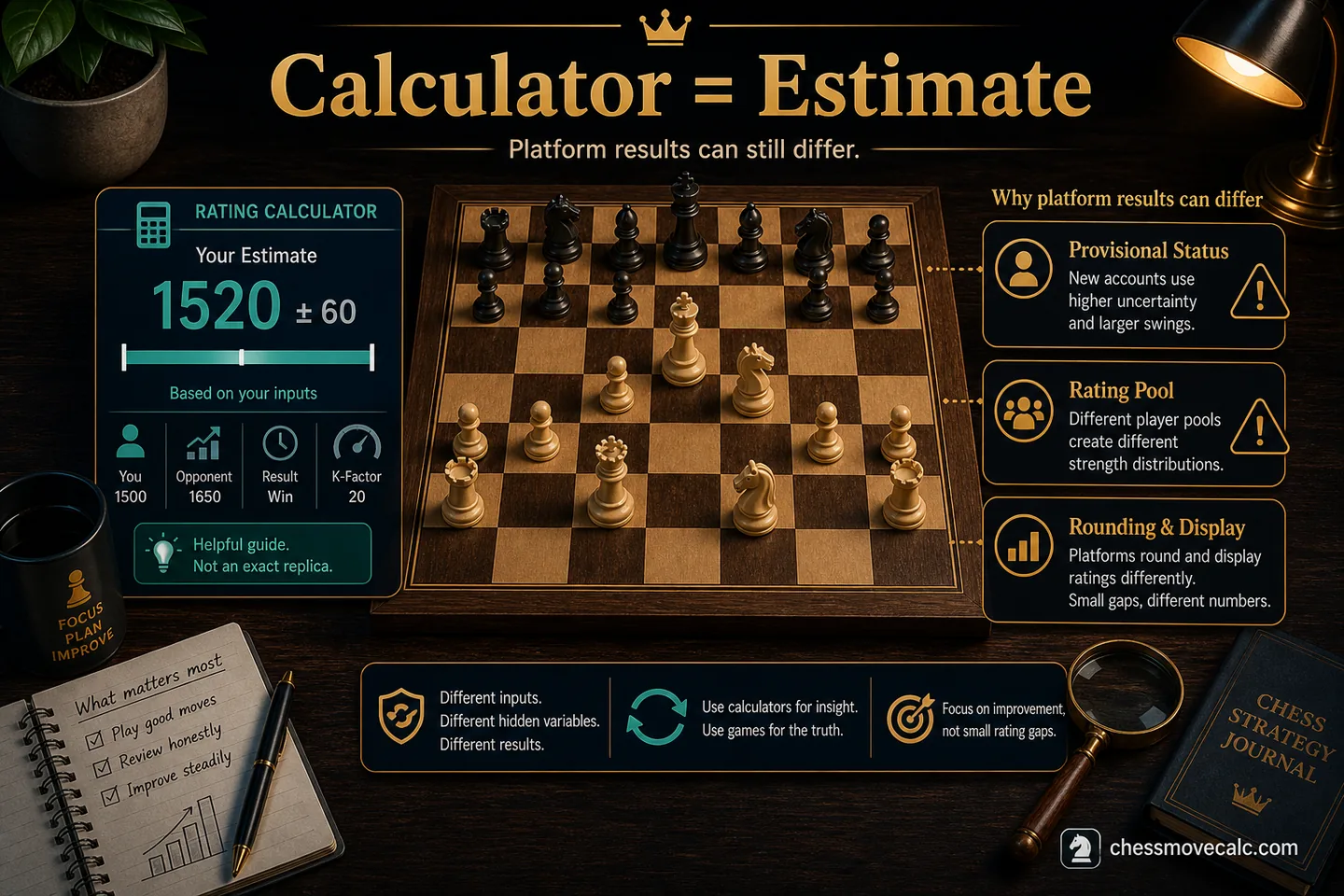
real systems still contain implementation details that calculators simplify.
Why real-life platform results can still differ
That does not make calculators useless, but it does mean they should be treated as models rather than official verdicts. Platforms may use provisional handling, hidden volatility logic, or pool-specific settings. Federations may publish updates on different schedules than online sites.
That is also where many players misread their own results. So a calculator is best used for understanding the structure of the change, not for point-perfect obsession. If you want precise platform context, pair the estimate with a guide for that specific rating pool.
- Platforms may use provisional handling, hidden volatility logic, or pool-specific settings.
- Federations may publish updates on different schedules than online sites.
- So a calculator is best used for understanding the structure of the change, not for point-perfect obsession.
- If you want precise platform context, pair the estimate with a guide for that specific rating pool.
Best pairing
Use this article with the FIDE guide or the platform comparison page when you need pool-specific context.

The math is useful, but the emotional interpretation matters too.
How to read Elo examples without obsessing over every single point
Players often understand the formula mechanically and still misread what a rating swing should mean in practice. A larger gain does not always prove a dramatic breakthrough; sometimes it only reflects a bigger upset relative to expectation. A smaller gain does not always mean the result was unimportant; it may simply have been closer to what the system predicted.
The formula is best used to explain outcomes, not to fuel point-by-point panic after every game. Repeated overperformance matters more than one isolated jump.
A stronger habit is to ask what decision this concept should improve the very next time it appears. Once you read the numbers in context, the model becomes a guide rather than a source of constant overreaction. That calmer interpretation is one of the best uses of rating math literacy.
That bridge is often the missing ingredient between reading an article once and truly keeping the lesson when the position becomes real.
- A larger gain does not always prove a dramatic breakthrough; sometimes it only reflects a bigger upset relative to expectation.
- A smaller gain does not always mean the result was unimportant; it may simply have been closer to what the system predicted.
- The formula is best used to explain outcomes, not to fuel point-by-point panic after every game.
- Repeated overperformance matters more than one isolated jump.
- Once you read the numbers in context, the model becomes a guide rather than a source of constant overreaction.
- That calmer interpretation is one of the best uses of rating math literacy.
Practical takeaway
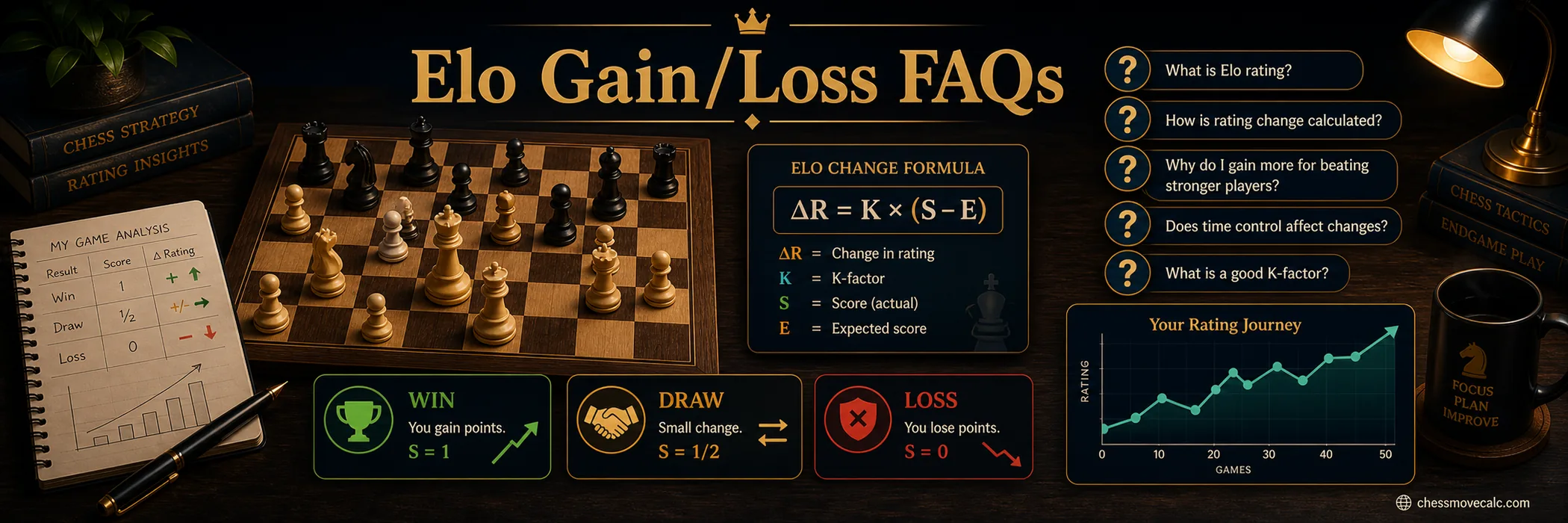
Elo Gain and Loss Guide for Chess Players FAQs
What is the Elo formula in simple terms?
It is K multiplied by the difference between your actual score and your expected score.
Why do I gain more after an upset win?
Because the result was less expected, so the actual-minus-expected gap is larger.
Can a draw gain rating points?
Yes. A draw against a stronger opponent can be a positive rating result.
What does K-factor do?
It controls how sensitive the rating is to new results.
Why do calculator results not always match sites perfectly?
Sites and federations can use different rules, pools, and update methods.
Is the formula still useful if platforms differ?
Yes. It helps you understand the logic of the rating change even when exact implementations vary.
Test equal, upset, and draw scenarios yourself
Run your own examples through the calculator and compare them against the logic from this guide.