Winning positions can still draw if the final checks and escape squares are handled carelessly
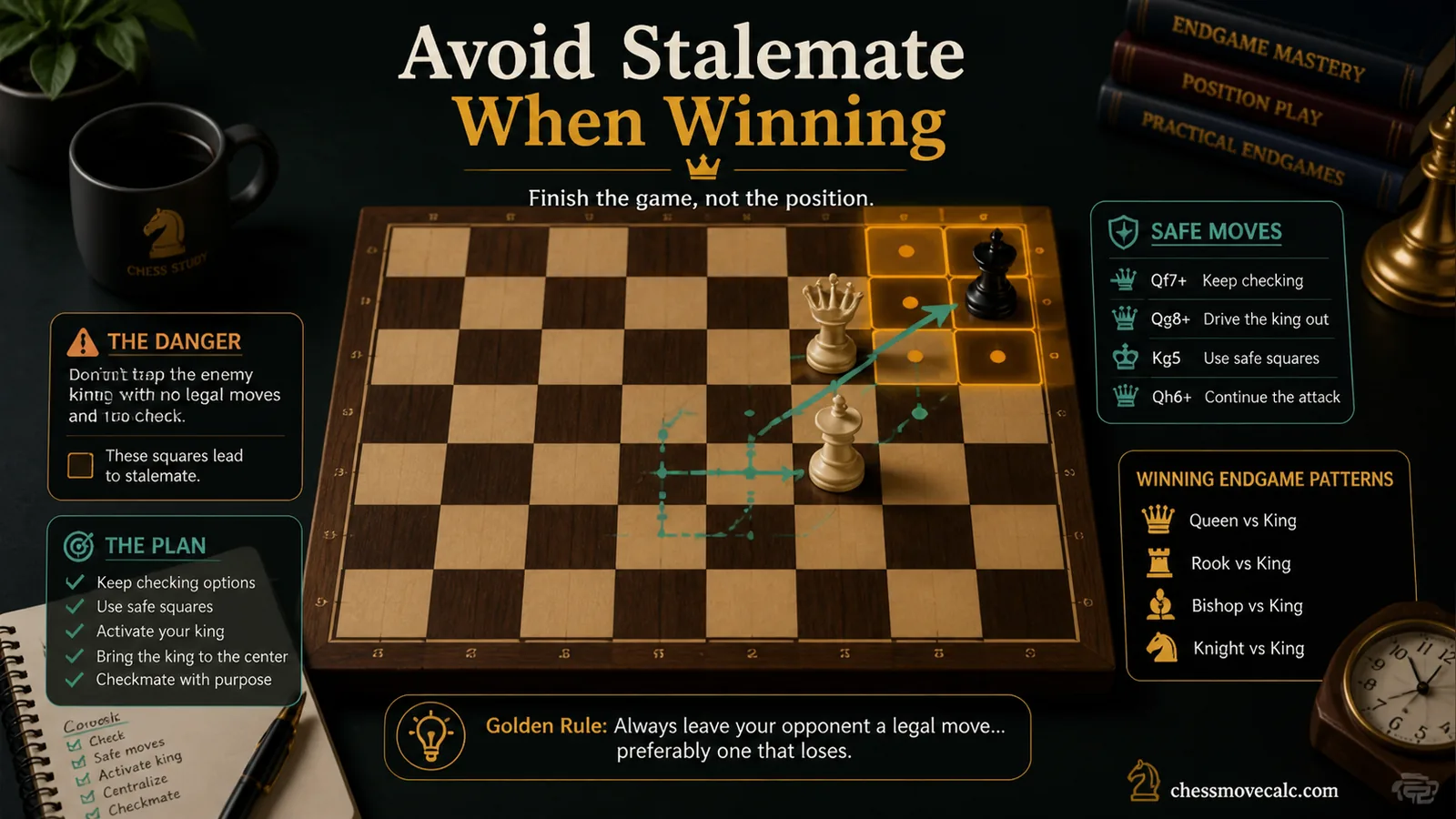
stalemate usually happens because the attacker focuses on domination but forgets the final legal definition.
Accidental stalemate hurts because it feels unnecessary. You had the stronger position, the safer king, and the material advantage, but one careless move removed every legal move without actually delivering check. Suddenly the win is gone.
That pain makes this a very practical page. It is narrower than the stalemate versus checkmate explainer, because the focus here is not the definition. The focus is prevention when you are already winning.
A strong prevention guide needs a checklist, common traps, safer finishing logic, and concrete examples from common endgames. That is what many thin SERP pages still lack.
The encouraging part is that stalemate prevention is learnable quickly. A few clear habits prevent a large share of these throws.
Once those habits are automatic, winning technique becomes calmer and much less fragile.
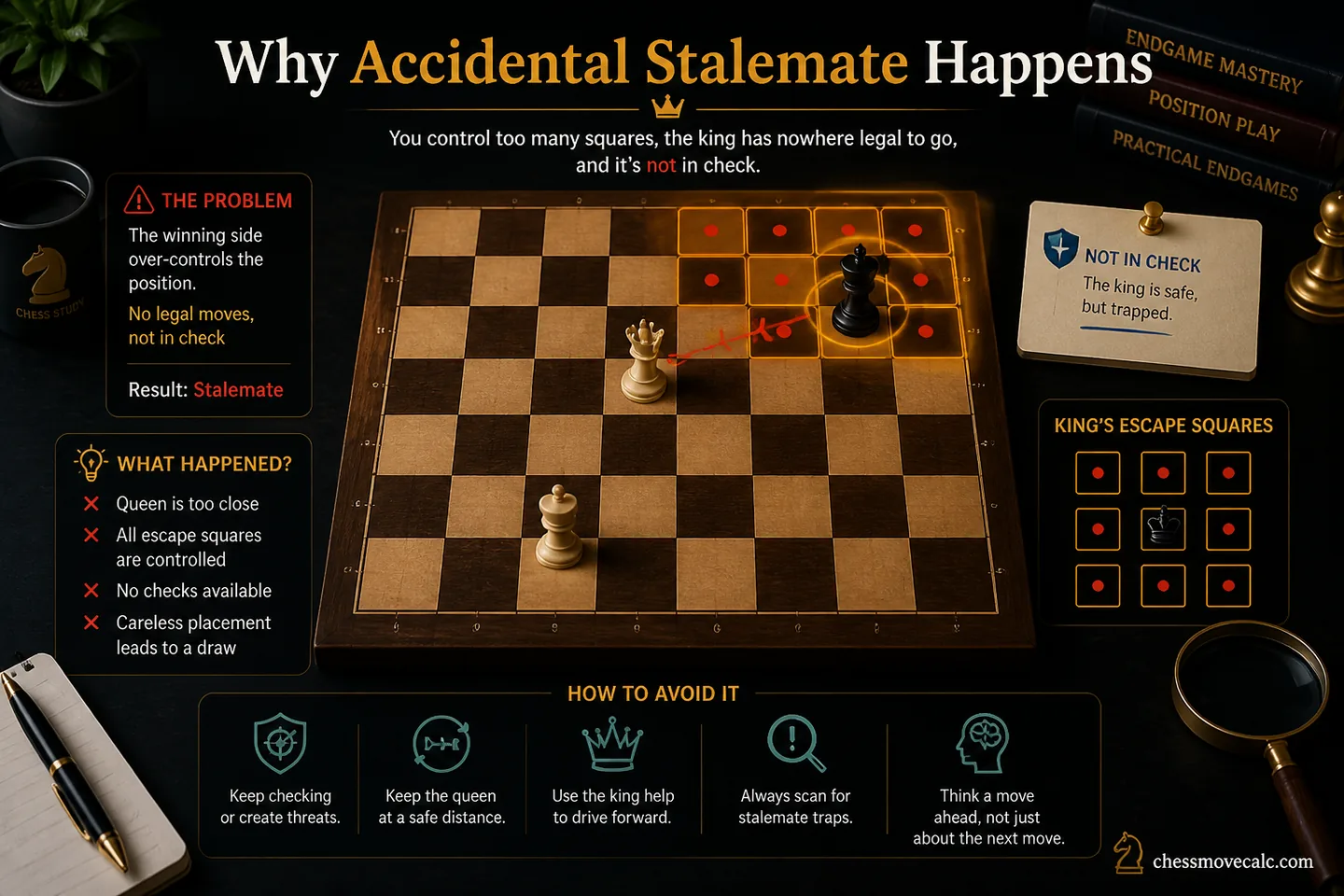
Why accidental stalemate happens
If the king has no legal move and is not in check, the game is a draw no matter how winning the position looked. Attackers often over-restrict the king with queen or rook moves that feel tidy but are not checking moves. The stronger side may also rush because the ending looks trivial.
That combination of confidence and incomplete legal checking creates the classic stalemate accident. Once you name that pattern, the danger becomes easier to anticipate.
- Attackers often over-restrict the king with queen or rook moves that feel tidy but are not checking moves.
- The stronger side may also rush because the ending looks trivial.
- That combination of confidence and incomplete legal checking creates the classic stalemate accident.
- Once you name that pattern, the danger becomes easier to anticipate.
Legal definition matters
A trapped king is not enough. Without check, total restriction can become stalemate instead of mate.
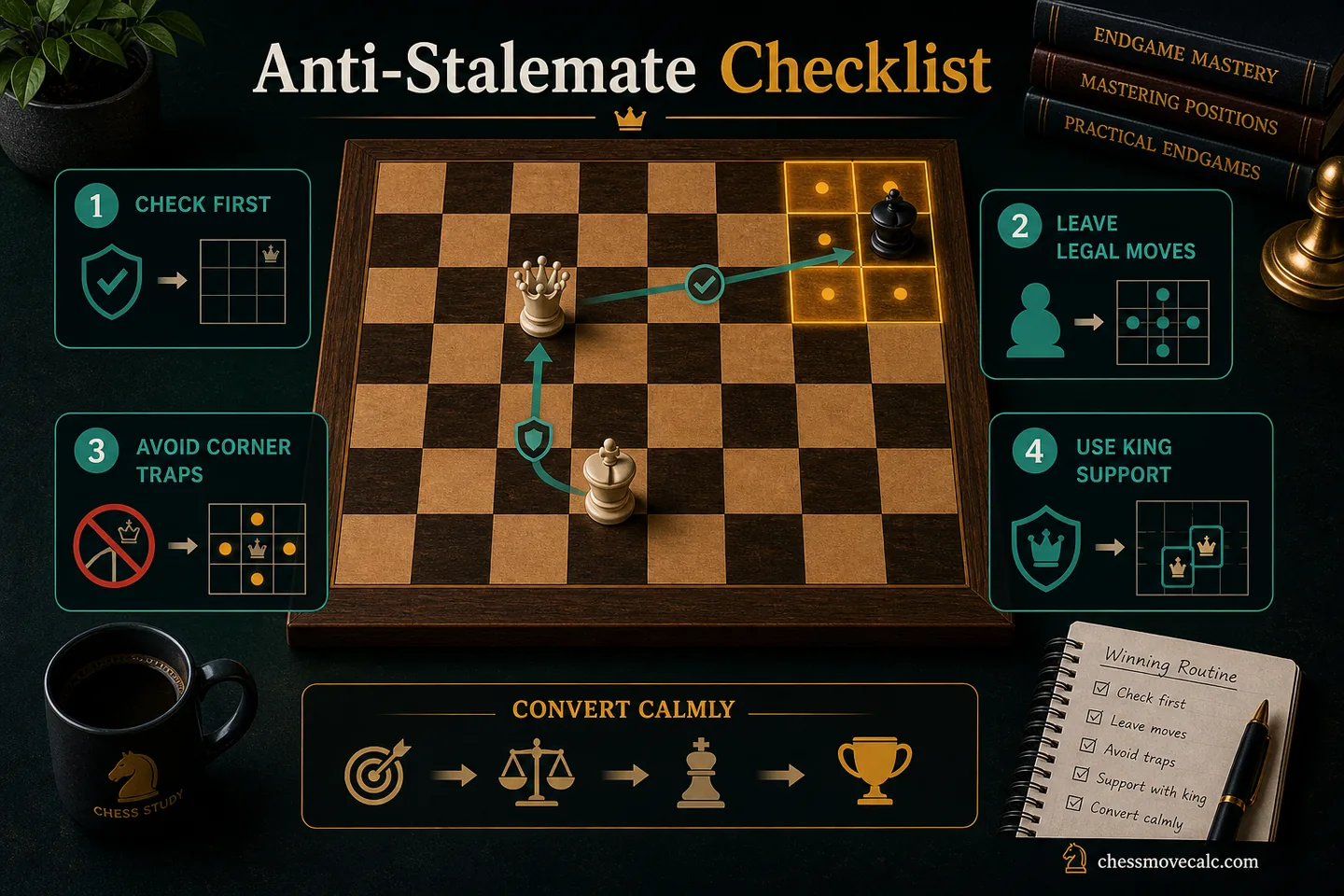
simple checklists are powerful here because they interrupt the rushed autopilot that causes many stalemates.
The 4-step anti-stalemate checklist
The 4-step anti-stalemate checklist matters because the goal is to verify the legal state before each supposedly final move. First ask whether the king is actually in check. Then count whether the defending side still has at least one legal move.
Preserve an escape square if the move is not checkmate yet. Whenever possible, finish the game with forcing checks rather than with decorative domination.
- First ask whether the king is actually in check.
- Then count whether the defending side still has at least one legal move.
- Preserve an escape square if the move is not checkmate yet.
- Whenever possible, finish the game with forcing checks rather than with decorative domination.
Use it every time
Run the checklist before the move that looks like the clean finish. That is where most stalemates happen.
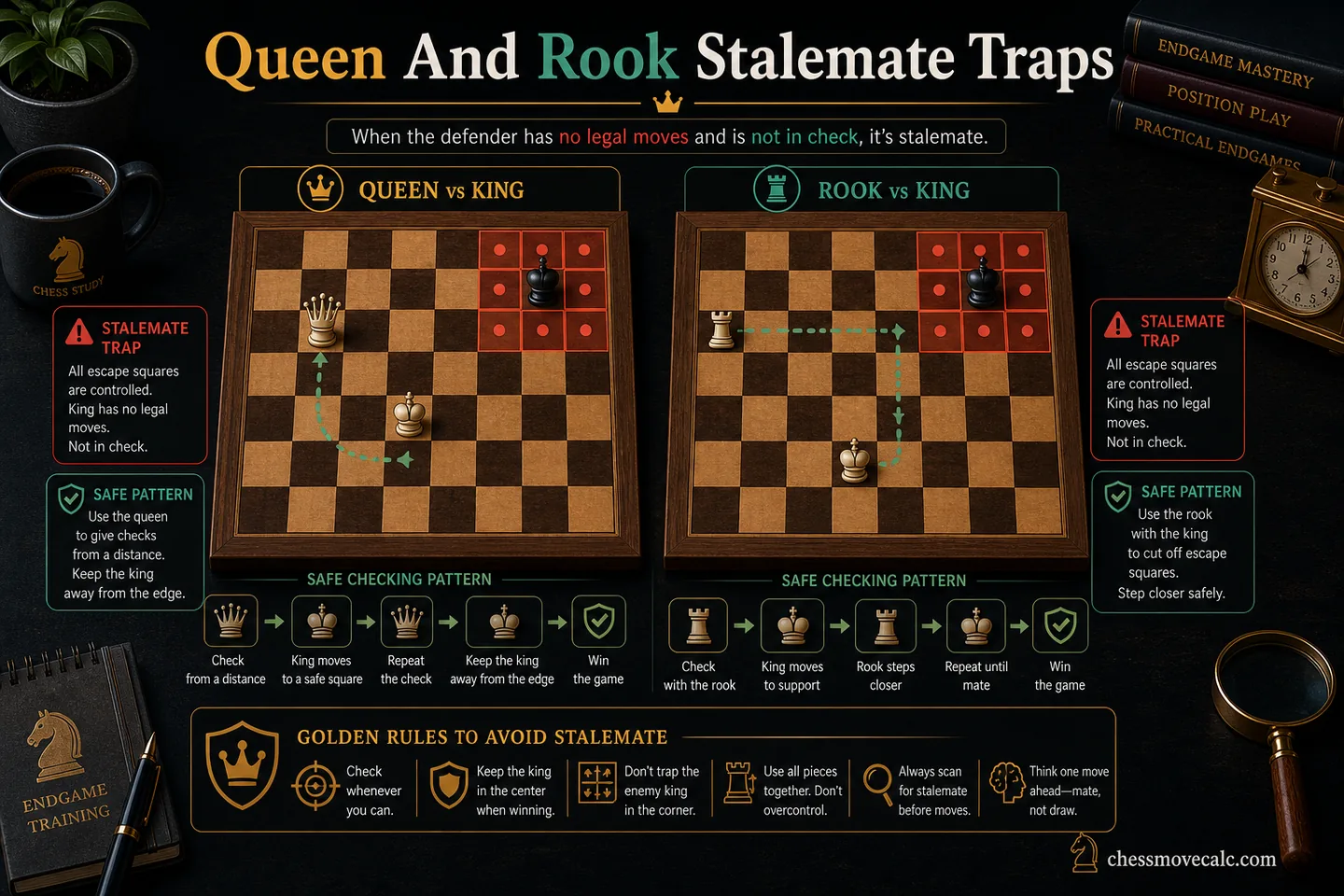
many stalemate accidents happen in basic winning endgames because the stronger piece can over-control too easily.
Queen vs king and rook vs king stalemate traps
Queen versus king and rook versus king both contain positions where one careless move kills all legal defender moves without mate. A queen can cover too many squares too cleanly if the attacker stops checking. A rook can also create tidy-looking boxes that remove movement without delivering mate.
These traps are common precisely because the attacker feels safe and in control. Learning the trap positions once saves many future half-points.
- A queen can cover too many squares too cleanly if the attacker stops checking.
- A rook can also create tidy-looking boxes that remove movement without delivering mate.
- These traps are common precisely because the attacker feels safe and in control.
- Learning the trap positions once saves many future half-points.
Why these endings matter
If you can finish queen and rook wins safely, a huge number of casual stalemates disappear from your results.
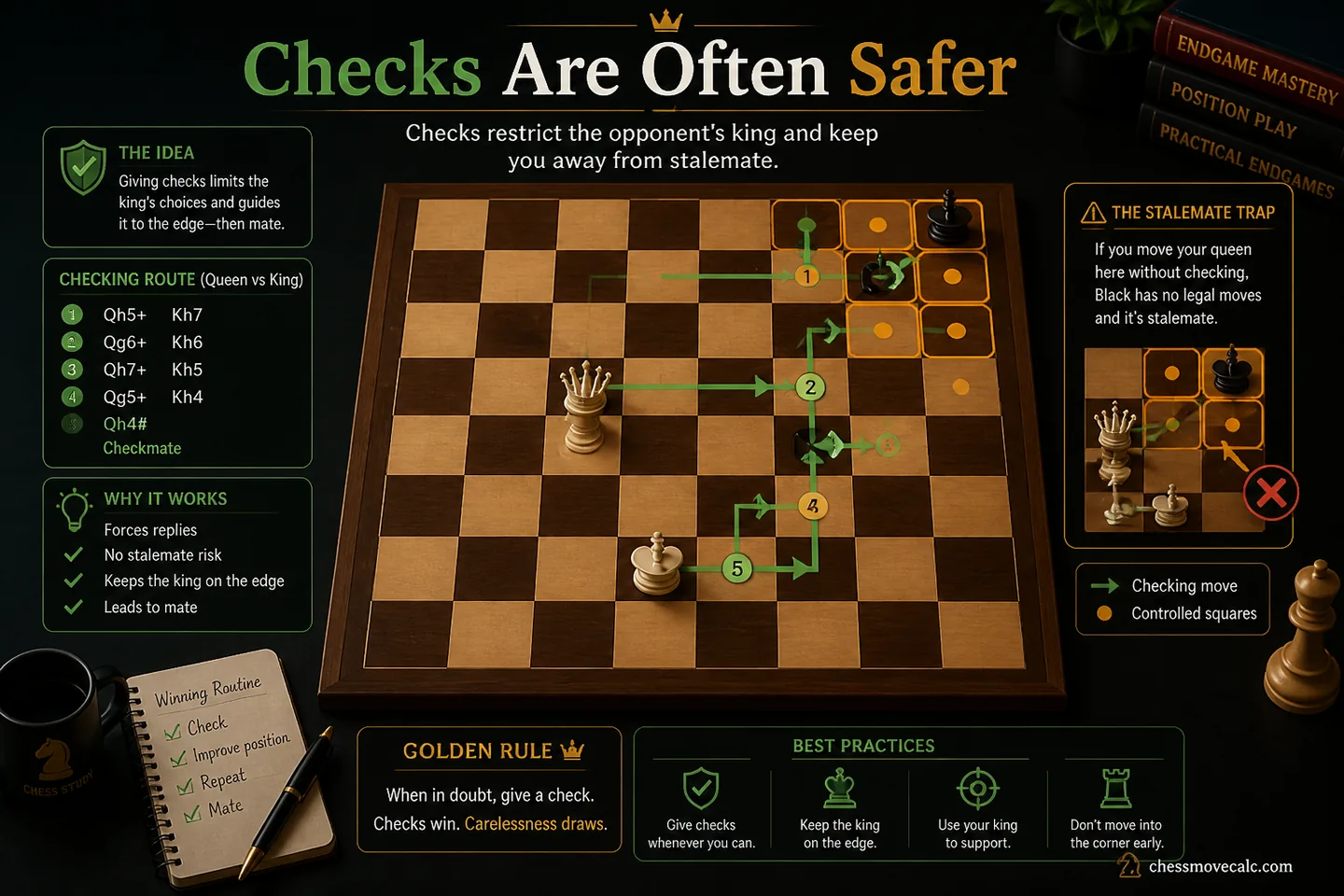
checks reduce ambiguity because they preserve forcing logic instead of silent restriction.
Why continuing to give checks is often safer
When you keep checking carefully, you are less likely to remove every legal move accidentally without noticing. A checking move keeps the legal question cleaner for the defender. It also forces the king to respond instead of quietly freezing the position into a draw.
That does not mean every move must be check, but it does mean forcing moves are often safer in basic winning endings. Quiet domination is where many needless stalemates are born.
- A checking move keeps the legal question cleaner for the defender.
- It also forces the king to respond instead of quietly freezing the position into a draw.
- That does not mean every move must be check, but it does mean forcing moves are often safer in basic winning endings.
- Quiet domination is where many needless stalemates are born.
Safer default
If you are unsure in a winning ending, forcing checks are often safer than quiet tightening moves.
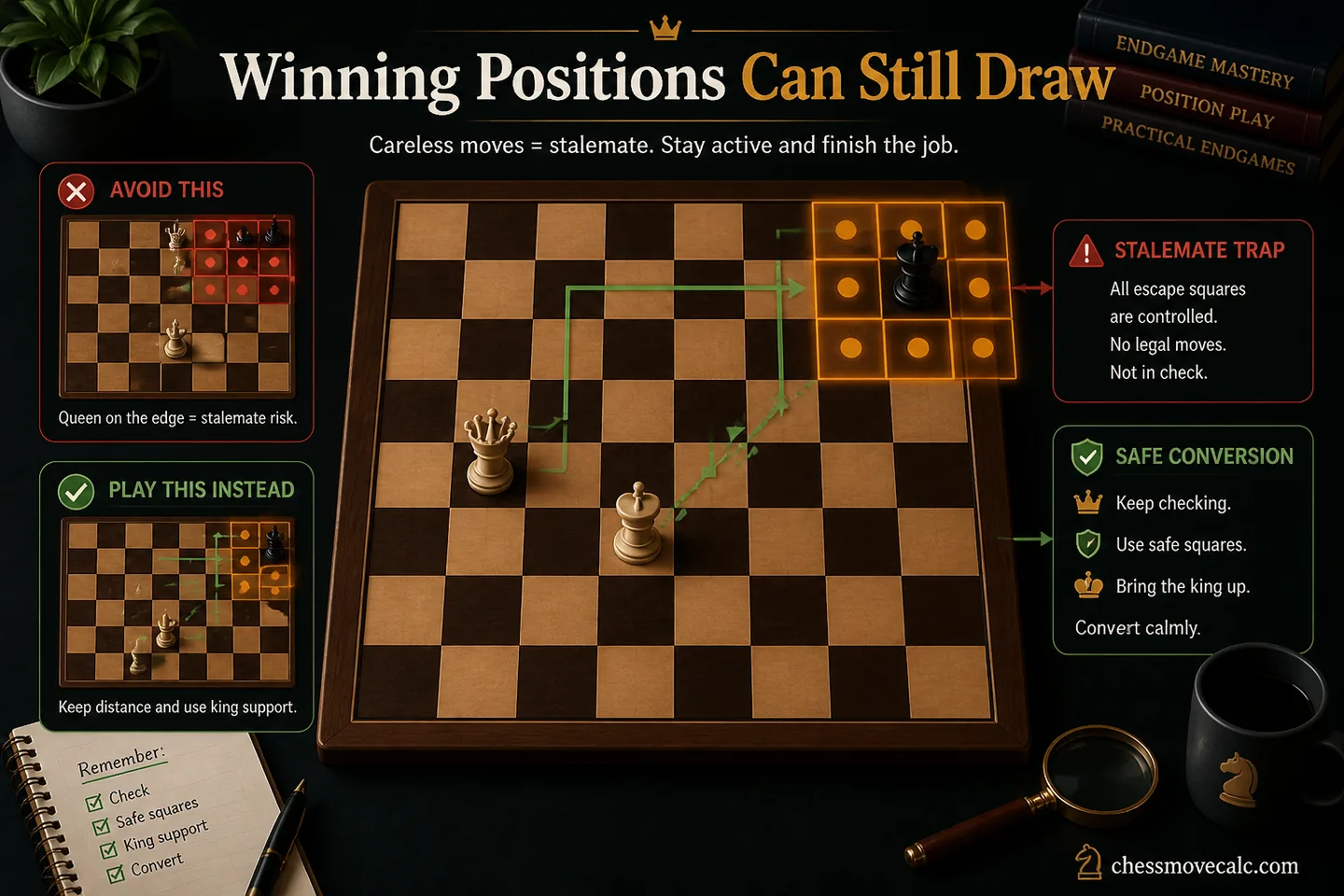
examples matter because stalemate prevention is easier to remember once you have felt the trap in real positions.
Training examples: winning positions that can still draw
The strongest drills show both the wrong move and the safe conversion move side by side. Practice positions where one tempting move stalemates and another wins cleanly. Use those examples to train the habit of counting legal moves before playing the final move.
This kind of rep is especially helpful in queen endings and puzzle-like finishes. A small set of repeated examples often changes behavior very quickly.
- Practice positions where one tempting move stalemates and another wins cleanly.
- Use those examples to train the habit of counting legal moves before playing the final move.
- This kind of rep is especially helpful in queen endings and puzzle-like finishes.
- A small set of repeated examples often changes behavior very quickly.
Best drill question
Before the final move, ask: what move does the defending king still have if this is not check?
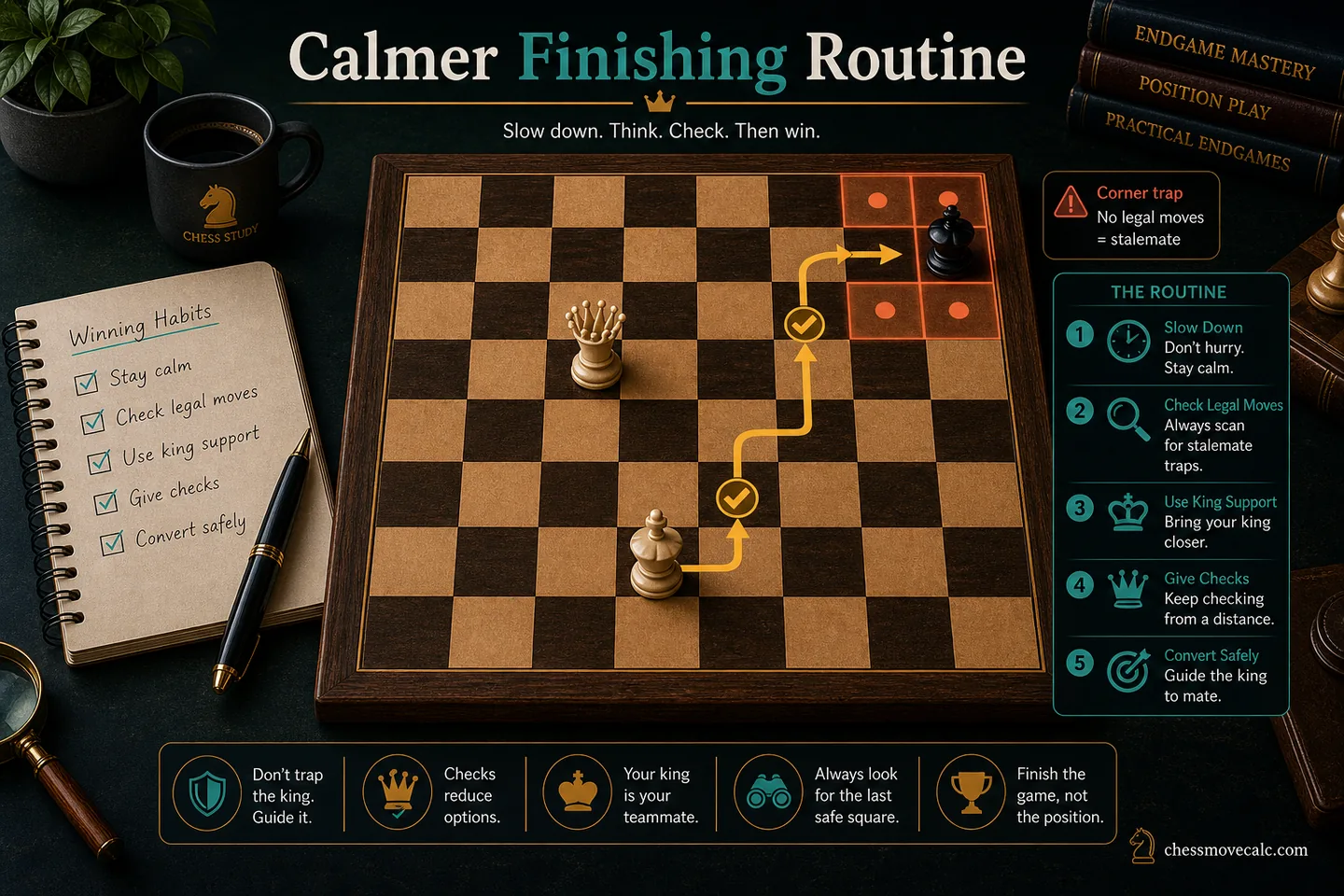
Winning technique improves when the attacker uses a calm routine instead of trying to finish with the prettiest move.
A calmer finishing routine for technically won endgames
A calmer finishing routine for technically won endgames matters because many stalemate accidents happen because the stronger side wants to finish elegantly instead of safely. Force yourself to pause before the move that feels like the final touch. Check whether the defending king still has a legal square if your move is not check.
Prefer forcing checks when the geometry still feels even slightly uncertain. Treat queen and rook endings with extra respect because over-control comes easily there.
A stronger habit is to ask what decision this concept should improve the very next time it appears. The safest win is better than the prettiest non-win. That mindset alone prevents a surprising number of stalemate throws.
That bridge is often the missing ingredient between reading an article once and truly keeping the lesson when the position becomes real.
- Force yourself to pause before the move that feels like the final touch.
- Check whether the defending king still has a legal square if your move is not check.
- Prefer forcing checks when the geometry still feels even slightly uncertain.
- Treat queen and rook endings with extra respect because over-control comes easily there.
- The safest win is better than the prettiest non-win.
- That mindset alone prevents a surprising number of stalemate throws.
Practical takeaway
How to Avoid Stalemate When Winning FAQs
Why does stalemate happen in winning positions?
Because the stronger side removes every legal move without actually giving check.
How do I know whether my opponent still has a legal move?
Count the king’s legal squares and any legal moves by other pieces before you play the final move.
Is giving check the safest way to avoid stalemate?
Often yes, especially in simple winning endings where forcing moves keep the logic cleaner.
What is the most common stalemate trap in queen versus king?
A quiet queen move that covers every escape square without checking the king is a classic trap.
Can stalemate still happen with lots of pieces on the board?
Yes, but the most common accidental examples happen in simplified winning endings.
What is the easiest prevention habit?
Slow down and run an anti-stalemate checklist before the move that looks like the finish.
Test winning endgames before you finish them
Use the solver to check whether a winning move really mates or whether it accidentally removes all legal moves without check.