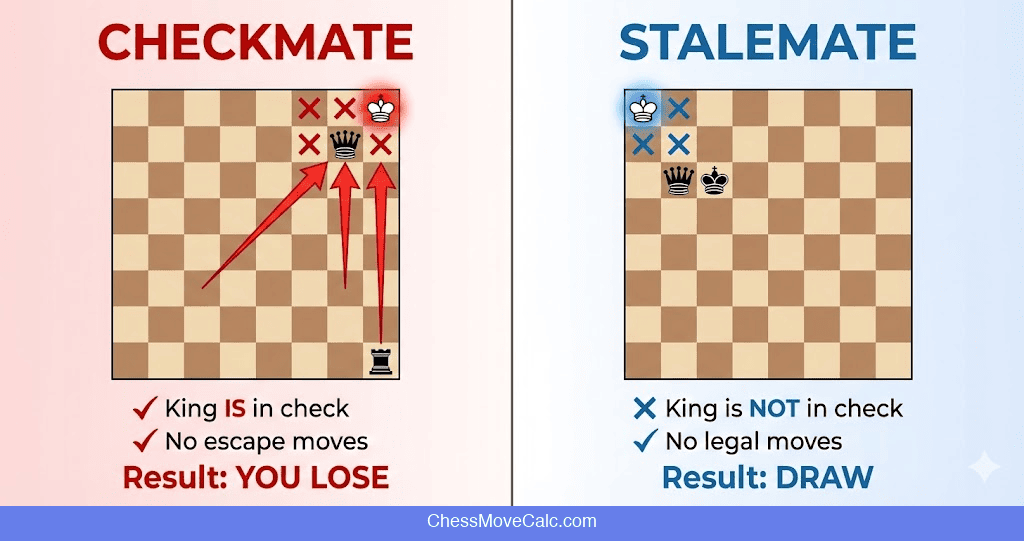
Key Difference: Checkmate = King in check + no escape (loss) | Stalemate = King NOT in check + no moves (draw)
Understanding the difference between stalemate and checkmate is crucial for every chess player. These two outcomes look similar – both involve a king with no legal moves – but one ends the game with a winner, while the other results in a draw. This single difference has decided countless games and frustrated many beginners who accidentally stalemated their opponent when victory was within reach.
What is Checkmate?
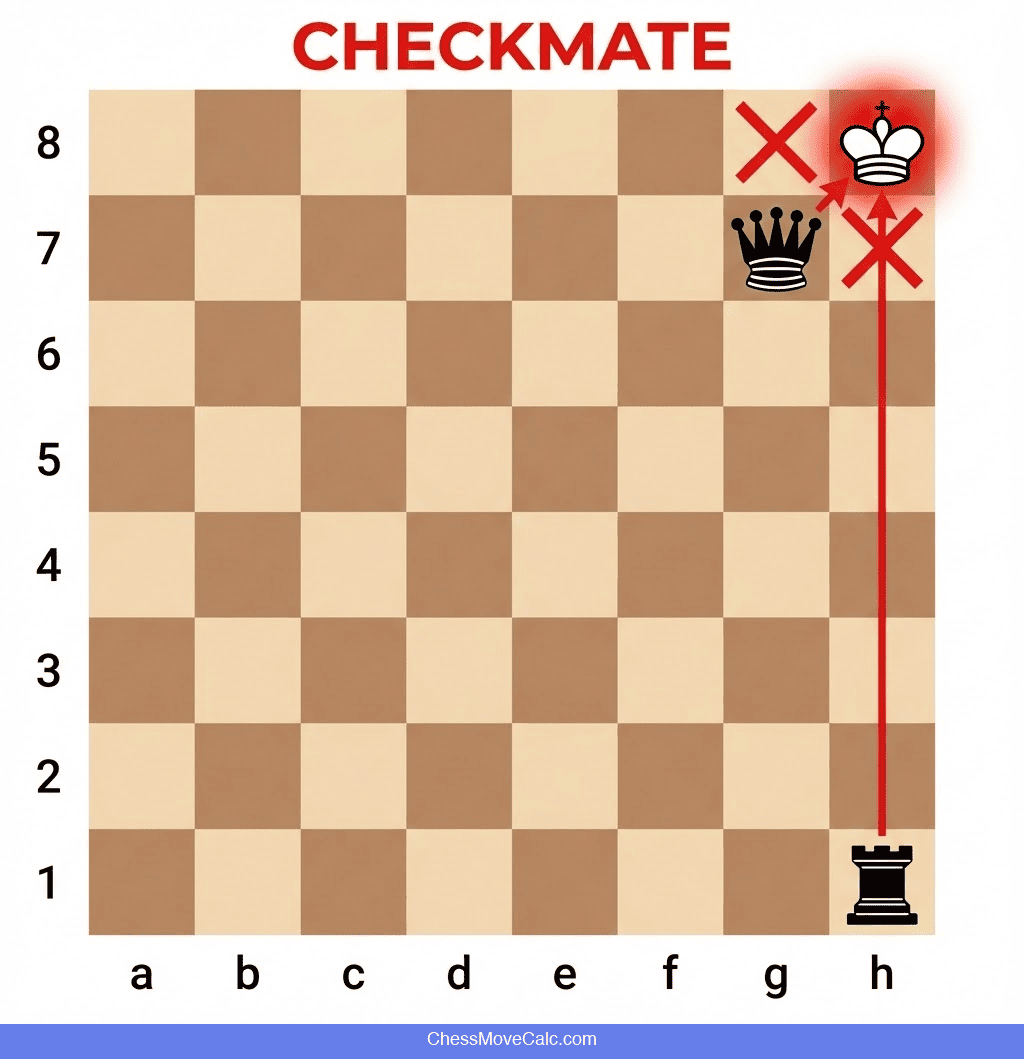
Checkmate: The white king on h8 is attacked (in check) and has no legal moves to escape
Checkmate (often written as "mate") is the ultimate goal in chess. It occurs when:
Checkmate Requirements
1. The king IS in check (currently being attacked by an opponent's piece)
2. The king cannot move to a safe square
3. No other piece can block the attack or capture the attacking piece
What is the meaning of checkmate? When checkmate occurs, the game immediately ends. The player who delivered checkmate wins the game. There's no way to escape or continue playing – it's game over.
In the position above, the white king on h8 is attacked by the black rook on h1. The king cannot:
- Move to g8 or h7 (controlled by the queen on g7)
- Capture the rook (too far away)
- Block the attack (no pieces available)
This is checkmate – White loses the game.
What is Stalemate?
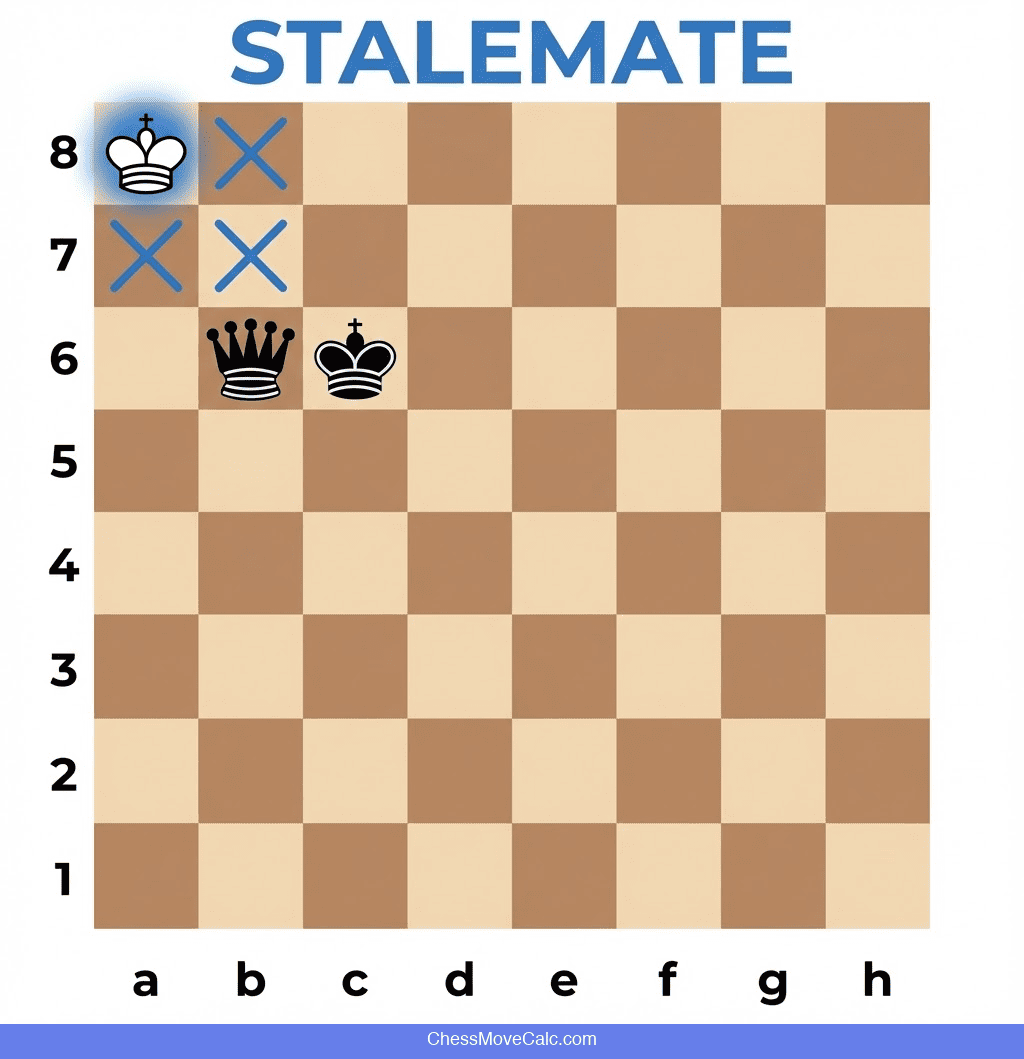
Stalemate: The white king has no legal moves but is NOT in check - game is a draw
Stalemate is one of the most misunderstood rules in chess. It occurs when:
Stalemate Requirements
1. The king is NOT in check (not currently being attacked)
2. The player has no legal moves available
3. It's that player's turn to move
What is stalemate in chess? When stalemate occurs, the game immediately ends in a draw. Both players receive 0.5 points (equivalent to half a win). This is often frustrating for the stronger side, as they might have been completely winning just one move earlier!
In the position above, the white king on a8 is NOT being attacked. However:
- Moving to a7 is illegal (controlled by the black queen on b6)
- Moving to b8 is illegal (also controlled by the queen)
- Moving to b7 is illegal (controlled by the black king on c6)
Since White has no legal moves and the king is NOT in check, this is stalemate – the game is a draw, even though Black is completely winning materially.
Stalemate vs Checkmate: Side-by-Side Comparison
| Feature | Checkmate | Stalemate |
|---|---|---|
| Is king in check? | ✓ YES - King IS under attack | ✗ NO - King is NOT under attack |
| Legal moves available? | ✗ NO - No way to escape | ✗ NO - No legal moves |
| Game result | Game ENDS - Loser's king is checkmated | Game ENDS - DRAW (0.5-0.5 points) |
| Winner? | Player who delivered checkmate WINS | NO WINNER - Both get half a point |
| Common in games? | Very common - This is the goal! | Less common - Usually a mistake |
The KEY Difference
The ONLY difference between checkmate and stalemate is whether the king is currently in check. If the king IS in check and can't escape = Checkmate (you lose). If the king is NOT in check but has no moves = Stalemate (draw).
Common Checkmate Patterns
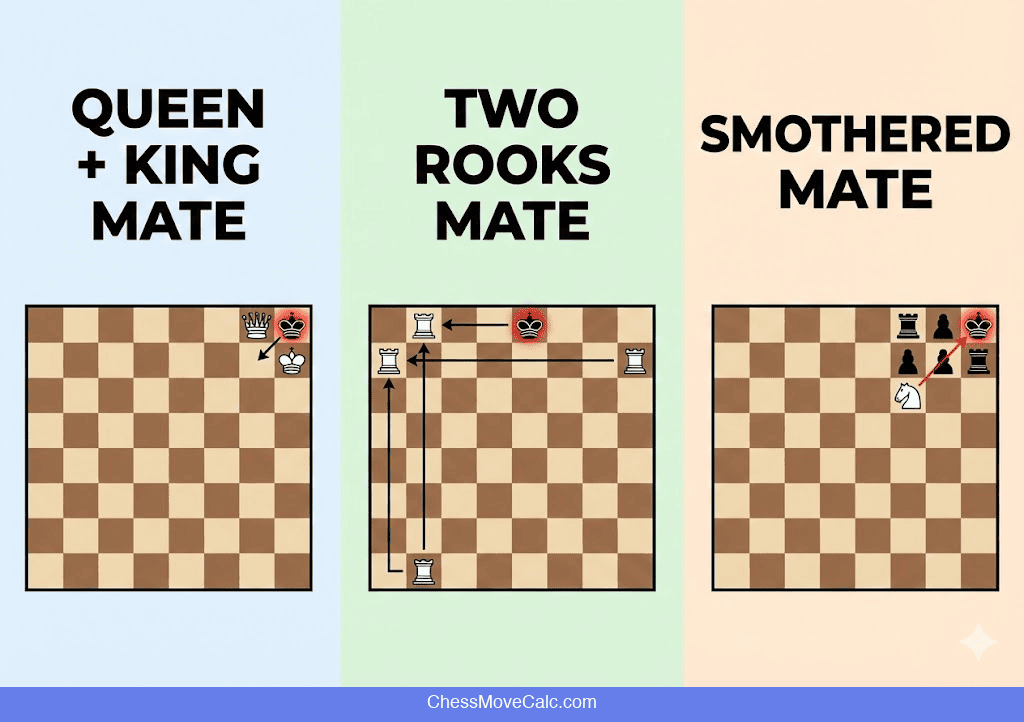
Master these 3 fundamental checkmate patterns to improve your endgame
Learning common checkmate patterns helps you finish games confidently. Here are three essential patterns every player should know:
1. Queen + King Mate
The most common checkmate in the endgame. Use your queen to control squares while your king helps cut off escape routes. Drive the enemy king to the edge of the board, then deliver checkmate with the queen protected by your king.
2. Two Rooks Mate
Also called the "ladder mate" or "lawnmower mate." Use your two rooks to progressively push the enemy king towards the edge. Alternate rook moves, creating a moving barrier that forces the king backwards until it's checkmated on the back rank.
3. Smothered Mate
A beautiful checkmate delivered by a knight when the enemy king is completely surrounded by its own pieces. The king cannot move because its own pieces block all escape squares, and the knight delivers an unstoppable check.
Back Rank Checkmate
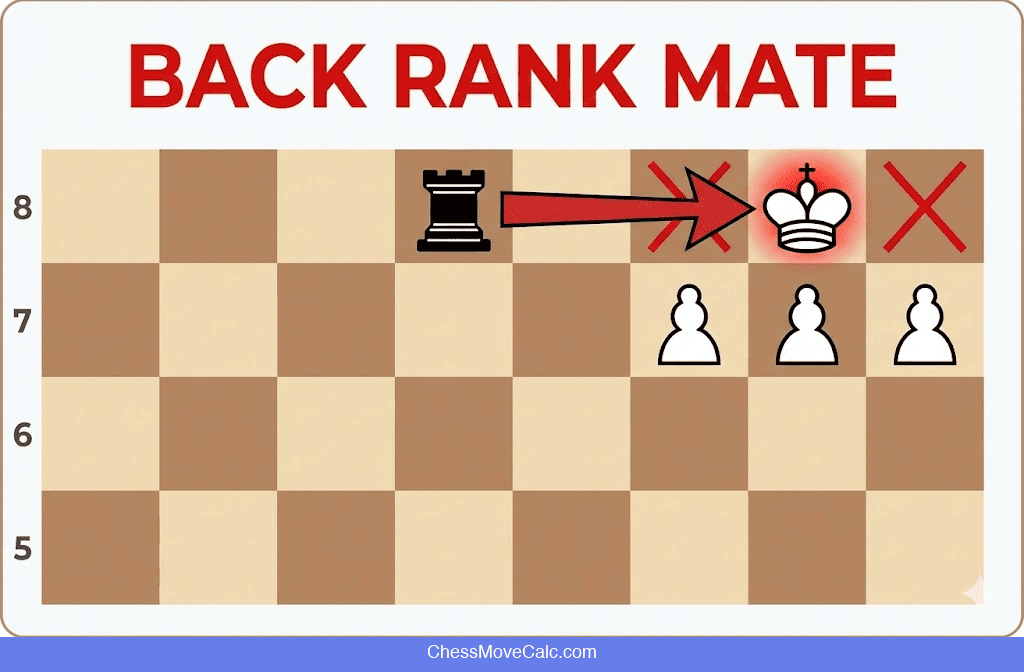
Back Rank Mate: A common checkmate pattern where the king is trapped by its own pawns
The back rank checkmate is one of the most common tactical patterns in chess. It occurs when a king is trapped on its starting rank (1st or 8th) by its own pawns, and an opponent's rook or queen delivers checkmate along that rank.
How to avoid back rank mate:
- Create an escape square for your king (often called "giving your king luft")
- Move one of the pawns in front of your king (typically the h-pawn)
- Be aware when your opponent has heavy pieces (rooks/queens) on the back rank
- Keep a defender on the back rank if you can't create an escape square
How to Avoid Stalemate When Winning
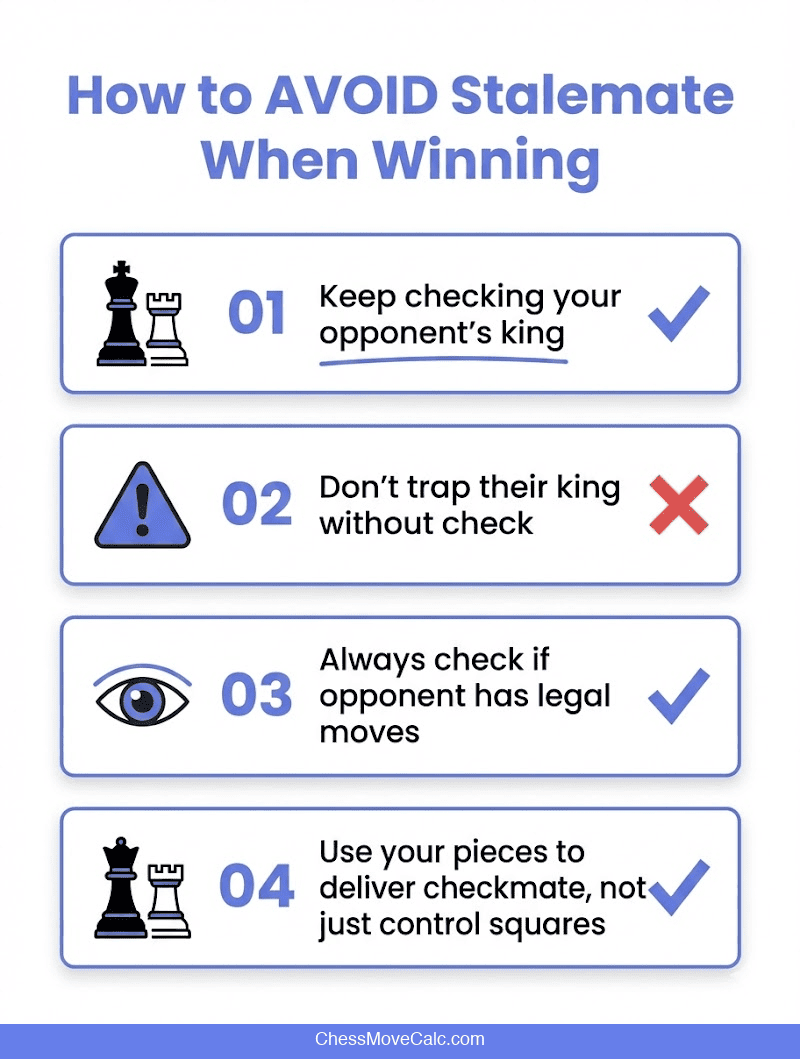
Follow these 4 tips to avoid accidentally causing a stalemate when you're winning
One of the most frustrating experiences in chess is accidentally stalemating your opponent when you had a winning position. Here's how to avoid this common mistake:
Tip #1: Keep Checking the Opponent's King
When you're winning, continue giving checks when possible. If the king is in check, stalemate is impossible! This is the safest approach – drive the king to the edge with checks, then deliver checkmate.
Tip #2: Don't Trap Their King Without Check
The classic stalemate blunder: You control all the squares around the enemy king, but you're NOT giving check. Before making your move, ask yourself: "After this move, does my opponent have ANY legal moves?" If the answer is "no" and you're not giving check, it's stalemate!
Tip #3: Always Check if Opponent Has Legal Moves
Before delivering what you think is the final blow, take a moment to verify your opponent has at least one legal move available (even if it's a terrible move). This ensures you won't accidentally stalemate them.
Tip #4: Use Your Pieces to Deliver Checkmate
Don't just control empty squares – actively attack the enemy king. Your goal is checkmate, not just domination. Use your queen, rooks, or other pieces to deliver checks and force the king into a checkmate position.
Common stalemate scenario: King + Queen vs lone King. Beginners often push the enemy king to the corner and accidentally trap it without giving check. The solution? Keep your king close to help, and deliver checks with your queen until you can checkmate safely.
Stalemate Rules and Examples
Understanding stalemate rules can save you from throwing away winning positions or help you escape from lost games. Here are key points:
When Does Stalemate Occur?
Stalemate can only occur when:
- It's a player's turn to move
- That player's king is NOT in check
- That player has NO legal moves with ANY piece (not just the king)
Is Stalemate a Draw?
Yes! Stalemate is always a draw in chess. Both players receive 0.5 points, equivalent to half a win. This is an official rule recognized by FIDE (the international chess federation) and all chess organizations worldwide.
Can You Force a Stalemate?
Yes, in losing positions, deliberately forcing a stalemate is a legitimate defensive technique. If you're down material and facing certain defeat, causing a stalemate salvages a draw instead of a loss. Many famous games have been saved through clever stalemate tactics!
Stalemate as a Defensive Resource
If you're losing badly, look for ways to give away all your pieces except your king (without moving into check). If you can trap your own king with no legal moves while NOT being in check, you force a stalemate draw!
Stalemate vs Checkmate FAQ
Is stalemate a win for anyone?
No. Stalemate is a draw, meaning neither player wins. Both players receive 0.5 points. This is often frustrating for the player with more material who was trying to checkmate their opponent.
What happens after checkmate?
The game immediately ends when checkmate occurs. The player who delivered checkmate wins the game and receives 1 point. The checkmated player loses and receives 0 points. No further moves are played.
Can you have stalemate with pieces on the board?
Yes! Stalemate can occur even when multiple pieces remain on the board. The requirement is simply that the player to move has NO legal moves and their king is NOT in check. It doesn't matter how many pieces are still on the board.
Is checkmate better than stalemate?
If you're the attacking side, yes! Checkmate means you win (1 point), while stalemate means you only draw (0.5 points). However, if you're losing, forcing a stalemate is much better than being checkmated.
How do you deliver checkmate with queen and king?
The key is to use your king to help! Push the enemy king towards the edge using your queen. Use your king to control squares and prevent the enemy king from escaping. Once the enemy king is on the edge, position your queen to give check while your king prevents all escape squares. Practice this essential endgame technique!
Can you stalemate yourself?
Yes, players often accidentally stalemate themselves by running out of legal moves. This usually happens in complicated endgames where a player focuses too much on controlling squares and forgets to leave their opponent with legal moves.
Summary: Stalemate vs Checkmate
The difference between stalemate and checkmate comes down to one simple question:
The One Question That Matters
"Is the king currently under attack (in check)?"
If YES + no escape = Checkmate (you win!)
If NO + no legal moves = Stalemate (draw)
Remember these key points:
- Checkmate is the goal of chess – you win when you checkmate your opponent
- Stalemate is a draw – neither player wins
- Both involve a king with no legal moves, but only checkmate involves a king in check
- When winning, always ensure your opponent has legal moves to avoid accidental stalemate
- When losing, forcing a stalemate can save you from defeat
Mastering the difference between checkmate and stalemate is essential for improving your chess. Practice recognizing both patterns, and you'll never confuse them again!
Practice Your Checkmate Skills!
Now that you understand stalemate vs checkmate, it's time to practice. Use our free tools to improve your game.